
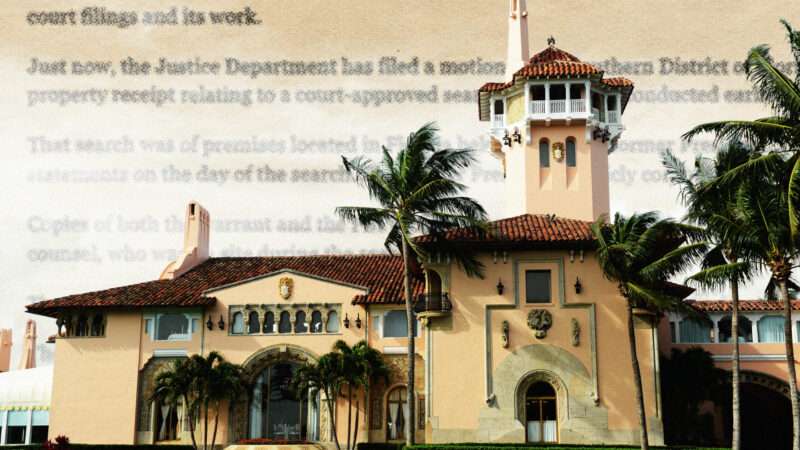
A federal appeals court yesterday restored the FBI's access to more than 100 documents with classification markings that it found last month when it searched Mar-a-Lago, former President Donald Trump's residence and private club in Palm Beach, Florida. U.S. District Judge Raymond Dearie, the special master appointed by U.S. District Judge Aileen Cannon, will continue reviewing the rest of the 11,000 or so documents that the FBI seized, looking for any that may qualify as personal property, attorney-client communications, or material covered by executive privilege. But thanks to the partial stay issued by the U.S. Court of Appeals for the 11th Circuit, the FBI can use the small subset of documents marked as classified to assess not only whether keeping them at Mar-a-Lago damaged national security but also whether Trump or his representatives violated federal law by doing so.
The 11th Circuit's 29-page decision unambiguously rejects the reasoning that Cannon applied when she prohibited the government from reviewing the documents marked as classified "for criminal investigative purposes" and when she refused to issue a stay lifting that part of her order. The appeals court's ruling also highlights the dubiousness and legal irrelevance of Trump's claim that he declassified those records before transporting them from the White House to Mar-a-Lago in January 2021.












