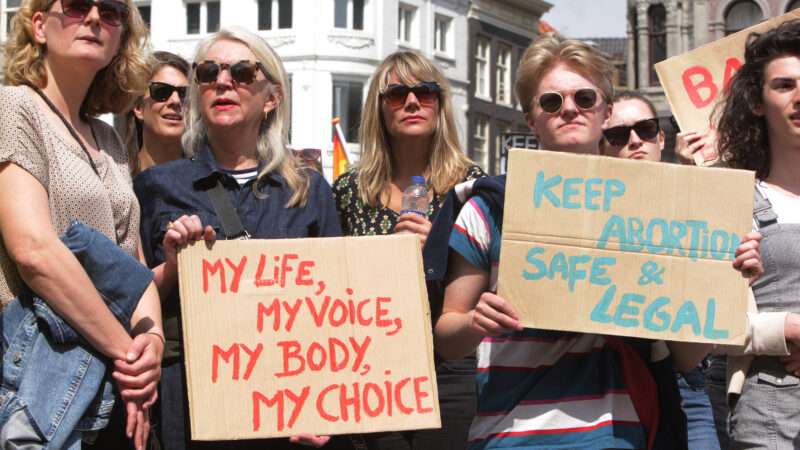
The Senate yesterday rejected a bill that would have blocked state restrictions on abortion, including bans that are likely to be passed or will take effect after the Supreme Court overturns Roe v. Wade, as it is expected to do soon. Democrats touted the bill, which was supported by 49 senators, as a way to preserve the rights protected by Roe. But it goes much further than that, overriding existing regulations that have been upheld by the courts under current precedents or have yet to be tested. And it does that without citing any constitutional authority, a dangerous precedent that invites a future Congress controlled by Republicans to ban abortion nationwide without even paying lip service to limits on the federal government's powers.
The Women's Health Protection Act of 2022 says states may not ban abortion prior to "viability" (i.e., the point at which a fetus can survive outside the womb), which nowadays is generally said to occur around 23 or 24 weeks into a pregnancy. The bill also prohibits bans on post-viability abortions "when, in the good-faith medical judgment of the treating health care provider, continuation of the pregnancy would pose a risk to the pregnant patient's life or health."