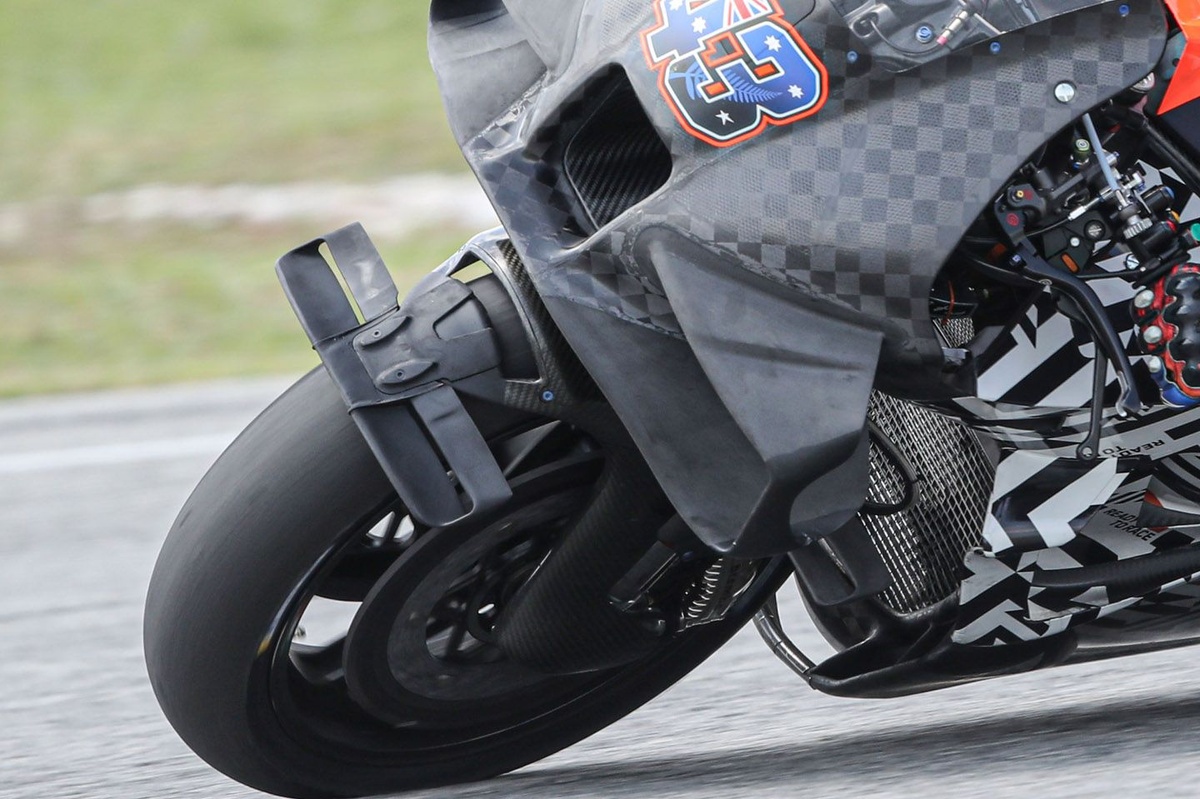
Winglets in MotoGP are now an integral part of modern bike design. Today, hardly any manufacturer has built bikes without these front-mounted wings - an innovation that started as a daring experiment.
Winglets first appeared in 2015, when Ducati introduced striking bodywork elements that jutted out from the front of the bike like tiny wings.
The goal of this innovation was to increase stability under acceleration by generating targeted downforce. As MotoGP machines became more powerful, keeping the front wheel on the ground grew increasingly difficult.
The winglets created extra pressure on the front end, preventing wheelies and allowing riders to open the throttle earlier out of corners - giving them a clear advantage over the competition. But with success came criticism.
Why winglets were initially banned
Some teams complained about rising costs due to aerodynamic development, while riders and officials raised safety concerns.
The winglets were made of sharp carbon fibre elements that could cause injuries in crashes or even during overtakes. In 2016, the FIM stepped in and the winglets in their then-protruding form were banned.
Safety wasn’t the only reason. The governing body also wanted to prevent MotoGP from turning into an arms race, where teams with huge budgets could leave the rest of the field behind with constant technical innovations.
The comeback: Integration instead of add-ons
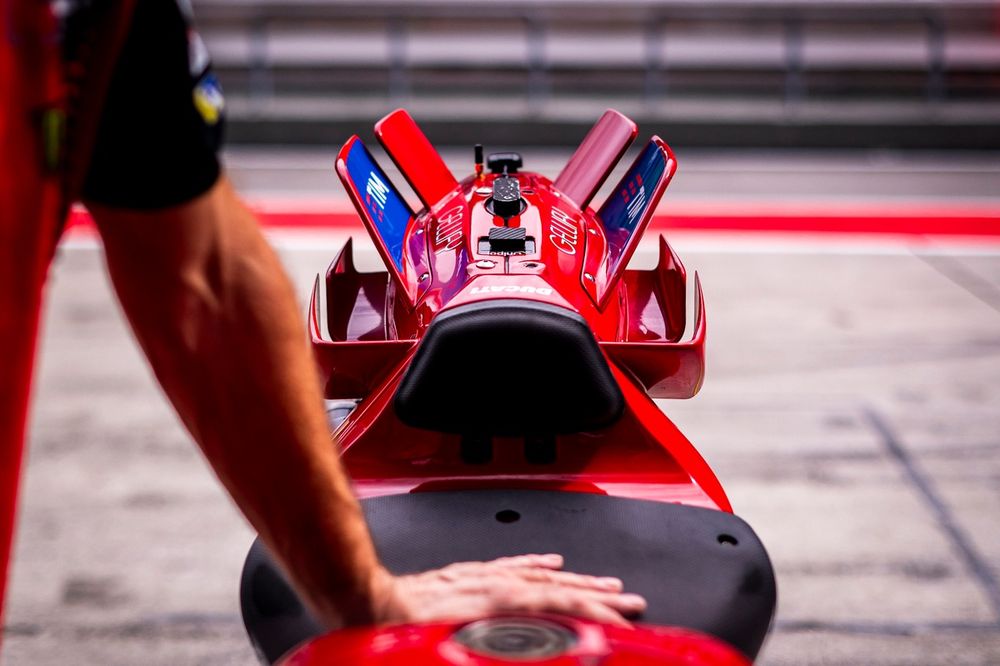
The ban didn’t mark the end of aerodynamic development but the beginning of a new phase. From the 2017 season, the rules allowed aerodynamic elements again, but only if they were integrated into the bodywork and therefore were no longer sharp, protruding parts.
This led to a completely new design philosophy. Instead of visible wings, complex fairing shapes with built-in air channels - so-called “aerobodies” - emerged. These had to be homologated by the FIM, and each team could only use a limited number of designs per season. The goal was to prevent constant testing of new aero fairings - a compromise between innovation and cost control.
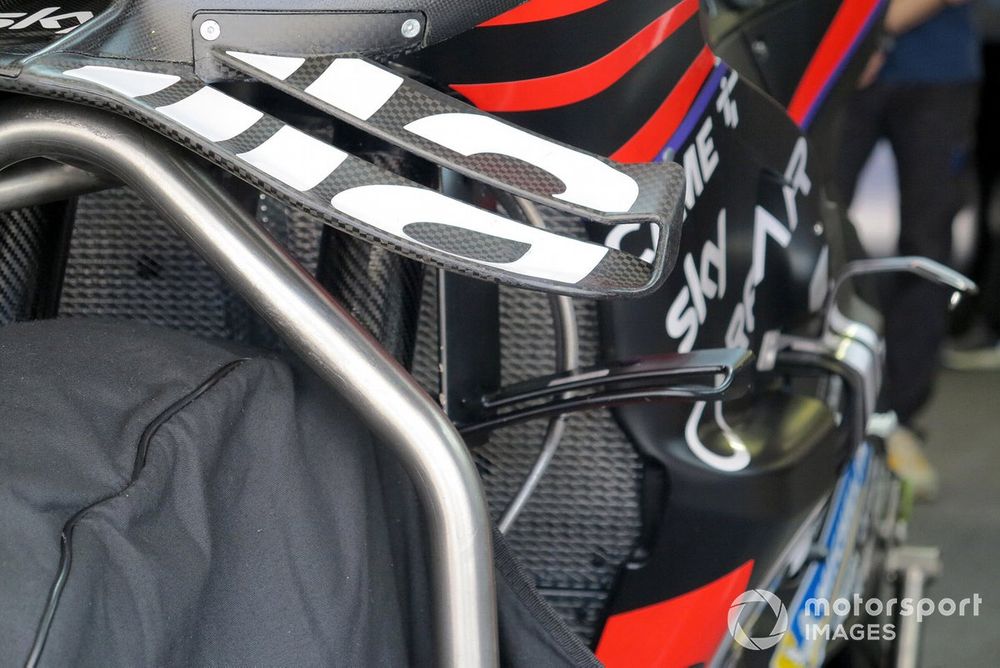
With these changes, the modern era of MotoGP aerodynamics began. Today, bikes feature multi-stage wings, side guides, diffusers and even winglets on the swingarm to optimise airflow.
The benefits are clear: downforce improves stability under braking, makes high-speed handling smoother, and enhances grip when accelerating out of corners. Airflow is deliberately channeled to make the bike more controllable in every phase of riding.
The downside
But these winglets aren’t without flaws. Many riders feel that while aerodynamics enables spectacular lap times, it can worsen the racing itself.
Winglets create strong “dirty air” or turbulent airflow behind the leading bike. This makes it difficult for a rider to stay close without losing front-end pressure. The bike becomes less stable, and tyre pressure - especially on the front - rises.
Because the disrupted airflow reduces cooling, dangerous pressure spikes can occur. Grip drops, making overtaking more difficult. Many riders argue that MotoGP loses some of its excitement, as aero effects complicate classic wheel-to-wheel battles.
New rules from 2027: Aero restrictions
In drafting the new 2027 regulations, the FIM has responded with major technical changes, especially affecting aerodynamics. The goal is to reduce the impact of winglets and fairing design on bike behaviour, making close racing easier.
New rules limit the maximum front fairing width from 600mm to 550mm. Additionally, the foremost point of the “nose” must now sit 50mm further back.
The height of rear aero parts will be reduced by about 100mm. Manufacturers can also only update this area once per season.
These measures aim to reduce the aerodynamic advantage of large winglets and minimise dirty air. Manufacturers simply have less room for wide, prominent wings.
Ride-height devices and holeshot systems, which previously adjusted balance and launch performance by temporarily lowering the suspension, will also be fully banned in 2027. With the advent of the new regulations, racing should once again rely more on rider skill than aerodynamics.
Many welcome these changes, hoping for closer battles and fewer problems with overheated front tyres, though some doubt whether the aero restrictions go far enough.
















Read and post comments