The “casino clip” era has been one of the strangest outcomes of short-form video: a stream of big-win reactions, flashy slot spins, promo-style captions, and comment threads full of “where can I play this?” For anyone trying to understand what’s really happening in Finland right now, a useful starting point is a Finnish-language overview source like Finnish CasinoHEX, which tracks common concepts, terminology, and the broader nettikasino discussion without needing to dress it up as influencer content.
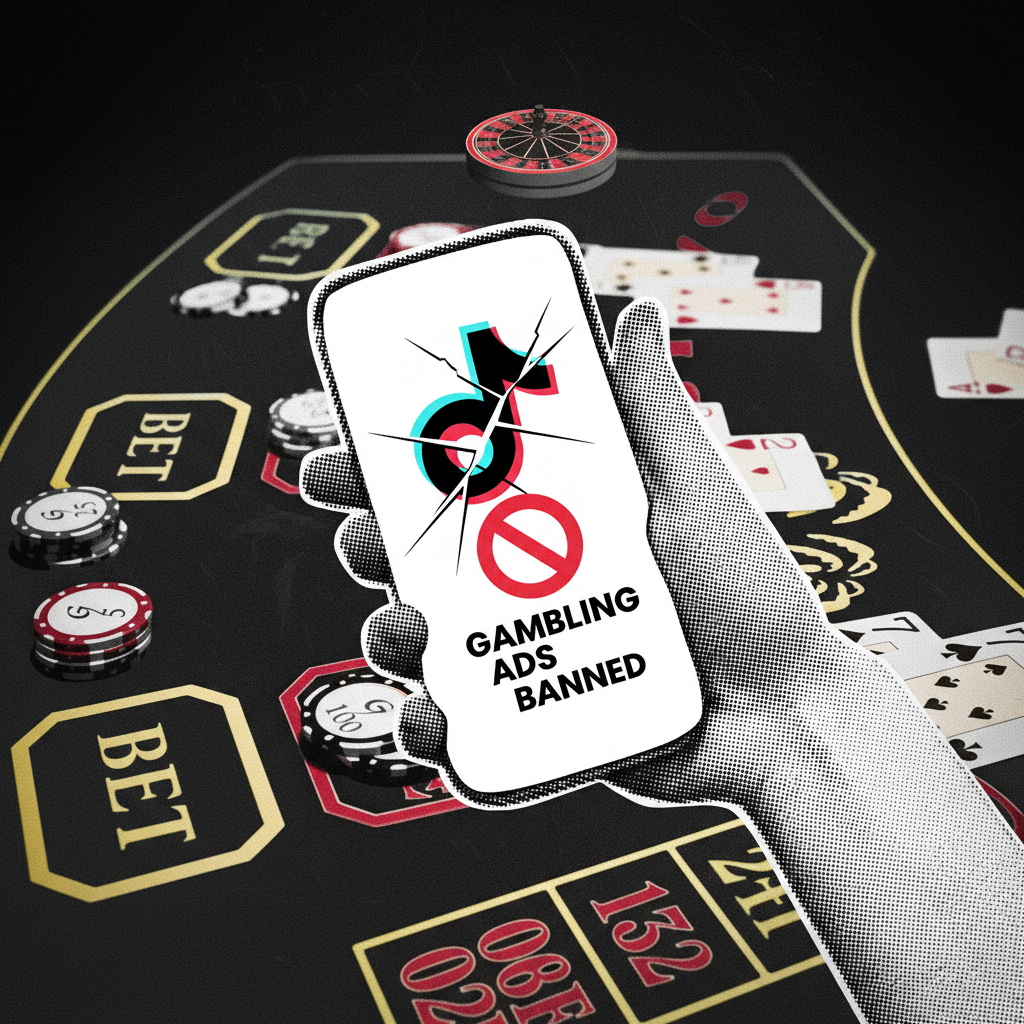
Finland’s regulators and lawmakers have decided that this kind of feed-driven promotion has gone far enough. As the country reshapes its gambling framework, marketing rules are tightening in ways that hit the influencer playbook directly - especially the interactive, personality-led formats that TikTok perfected. The result isn’t just “less gambling content.” It’s a structural shift in what’s considered acceptable marketing, who is allowed to do it, and how audiences in Finland can be reached at all.
Why gambling TikToks became a regulatory headache
TikTok didn’t invent gambling promotion, but it turbocharged the parts that regulators dislike most:
- Interactivity is the product. Comments, replies, duets, stitches, and DMs aren’t side features - they’re the engine that drives reach and conversion.
- Entertainment hides intent. A creator can present an ad-like message as “just content,” which makes disclosure and consumer understanding harder.
- Algorithms expand the audience. Promotions don’t stay within followers. They can reach people who never opted in, including young users.
- Call-to-action is frictionless. A link in bio, a pinned comment, a “code,” or a “DM me” funnel can turn curiosity into sign-up behavior fast.
From a compliance viewpoint, that combination creates two core risks: marketing that’s hard to identify as marketing, and marketing that can land in front of people it shouldn’t - especially minors and vulnerable groups. Finland is far from the only place worried about this, but it has chosen a particularly clear direction: stop the influencer-style model before a licensed market expands it.
The rule that changes everything: “no interactive marketing”
Finland’s newest approach isn’t simply “ban social media.” It draws a sharper line around how marketing can be done - particularly around interaction.
A practical way to read the direction is this: marketing on an operator’s own channels may be allowed, but it shouldn’t become a two-way conversation designed to push people into gambling. That matters because TikTok is built on interaction. If “interactive with consumers” is the red flag, then most creator tactics become non-starters by default.
In real terms, that puts pressure on formats like:
- Replying to comments with “where to play” instructions
- Duets/stitches that react to user questions or wins
- Livestream “chat drops” and link sharing
- “DM me for the site” funnels
- Creator collaborations where the creator becomes the marketing interface
Even if a brand posts from its own account, the moment the post becomes a conversion conversation, it starts to look like exactly what the rules are trying to prevent.
Influencer marketing: not “restricted,” but treated as unacceptable
In many countries, influencer marketing is regulated through disclosure rules: you can do it, but you must label it. Finland’s direction is harsher in spirit: influencer marketing is treated as the kind of practice that should not be used to promote gambling at all (especially when targeting Finnish audiences).
That has a big implication: the “safe” version of gambling TikToks isn’t “add #ad.” The safer version is often “don’t do the creator promotion in the first place.”
For creators, this is where the tone changes. If your content is funded, incentivized, linked to a commercial relationship, or designed to drive gambling participation, the risk isn’t just reputational - it’s legal. And because social platforms are borderless, “I’m not in Finland” is not a magic shield if the content is effectively aimed at Finnish consumers.
What replaces the TikTok funnel: a more boring (and more auditable) model
When influencer marketing becomes radioactive, operators tend to retreat into channels that are easier to control and document:
- Owned media: website pages, app UX, email (where permitted), and official brand announcements
- Traditional placements: where ad formats are standardized and restrictions can be applied consistently
- Non-interactive social posting: more like a noticeboard than a community forum
- Compliance-first creative: age limits, safer gambling messaging, and neutral presentation rather than hype
This is exactly why the change will feel like “the end” of gambling TikToks, even if gambling-related discussion continues. TikTok thrives when a creator can be a persuasive middle layer between product and audience. Finland is trying to remove that middle layer.
The hard part: defining “marketing” when content looks like entertainment
A common argument from creators is: “I’m just showing what I do.” Regulators tend to ask a different question: what is the effect, and what is the intent?
If content:
- repeatedly shows brand elements,
- provides links or instructions,
- uses promotional language or codes,
- encourages participation,
- or is produced under commercial arrangement,
…then it starts to look like marketing even if it’s filmed like entertainment. And in a compliance context, “but it’s funny” doesn’t change the commercial outcome.
This is why platforms and advertisers have moved toward a “risk scoring” mentality for social content: not one single feature, but a cluster of signals that together make it promotional.
This isn’t only about advertising - it’s about compliance and harm prevention
Finland’s policy logic is straightforward: gambling is an age-restricted, high-risk product category, and short-form social platforms reward exactly the kind of emotional, rapid, social proof-driven persuasion that can fuel harm. That’s why marketing rules are being treated as a core safety tool rather than a branding detail.
There’s also a second layer: enforcement and fraud. As rules tighten, regulators want clearer accountability - who is licensed, who is marketing, and who is circumventing safeguards - and Inkl’s feature Inside Europe’s hidden war against online gambling fraud shows how aggressively authorities and platforms are trying to close the loopholes that criminals exploit.
What “safe content” might look like in practice
This is where nuance matters. Finland clamping down on influencer marketing doesn’t mean you can’t publish educational content about gambling-related topics. The safer route is content that is:
- informational rather than persuasive,
- clear about boundaries,
- not built around conversion triggers,
- and not dependent on interactive prompts that drive sign-ups.
For example, a neutral explainer about game providers - how a studio designs volatility, what RTP means, why certain features recur - can be educational without being a TikTok-style funnel. A page like Play’n GO can be referenced as a knowledge entry point (studio background, popular mechanics) rather than as an invitation to chase wins.
The difference isn’t the topic. It’s the frame: education vs. promotion.
What this means for creators, brands, and platforms
Creators: If you’re in Finland - or your content is reaching Finland - assume gambling promotion is high risk. The “I’m just sharing a win” defense gets weaker when money, links, codes, or repeated brand cues are involved. The safest path is to avoid acting as a marketing channel.
Brands/operators: Your social strategy can’t be “creator-led growth” with a compliance disclaimer. You’ll need:
- documented creative guidelines,
- tighter review processes,
- moderation policies that avoid interactive marketing behaviors,
- and a clearer separation between information and promotion.
Platforms: Expect more pressure to treat gambling promotion as a special category - especially where minors can be exposed. Even if the law targets operators, platforms may become the practical enforcement layer through takedowns, restrictions, and account penalties.
So…
Gambling TikToks worked because they turned entertainment into a high-speed funnel: interactive, persuasive, and algorithmically scalable. Finland’s marketing rules are designed to break that funnel - by discouraging interactivity as a marketing tactic and by treating influencer-style promotion as unacceptable for gambling advertising.
So yes, people will still talk about gambling online. But the era where a creator can casually run a gambling conversion engine inside a TikTok comment section - “link in bio,” “DM me,” “use my code” - is exactly what Finland is trying to shut down.