
Get all your news in one place.
100's of premium titles.
One app.
Start reading
LiveScience
LiveScience
Patrick Pester

The 'Doomsday Glacier' is poised to lose its ice shelf this year. An Antarctic researcher explains what that means for global sea levels

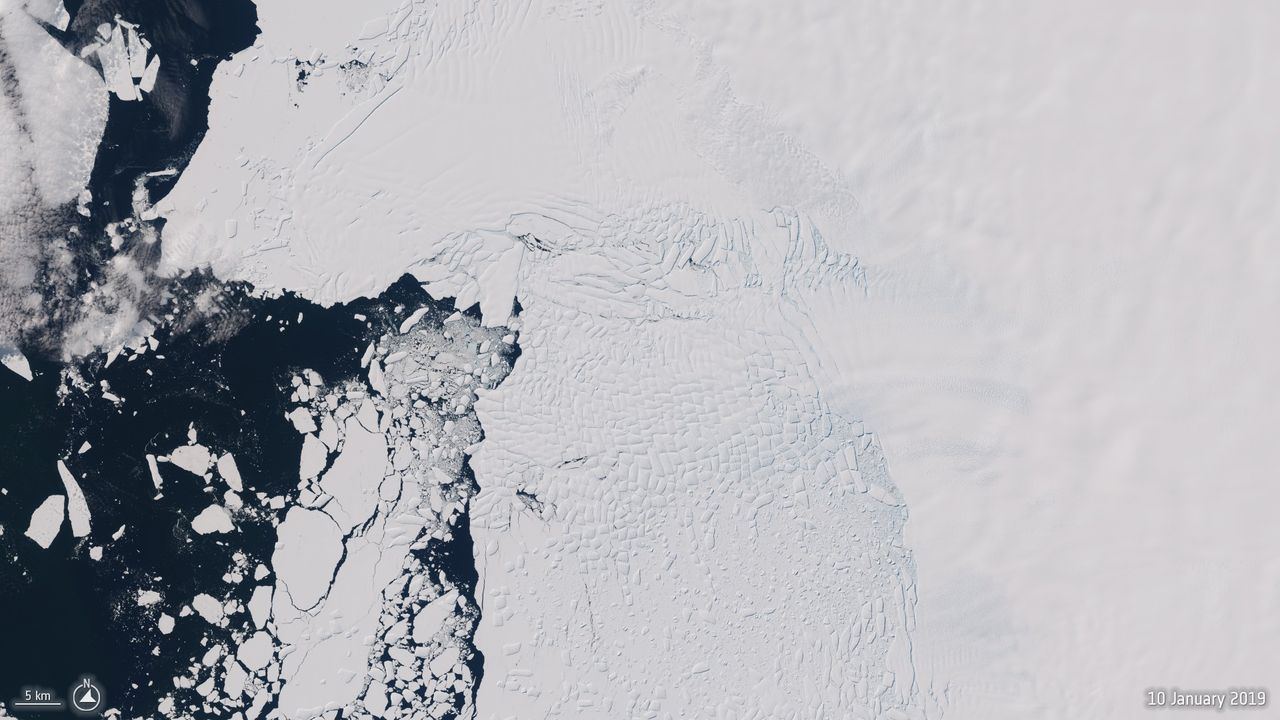
A satellite image of the Thwaites Glacier captured by the Copernicus Sentinel-2 mission on 11 September 2019.

Antarctica's "Doomsday Glacier" is about to lose an ice shelf that protects it from warming ocean waters, which could have devastating long-term consequences for hundreds of millions of people affected by rising sea levels.

The already-melting Thwaites Glacier is nicknamed the "Doomsday Glacier" because if it totally collapses, global sea levels would rise by 26 inches (65 centimeters) and flood coastal communities. Rising sea levels are already threatening the residents of major cities in the U.S. and throughout the world, including New York, Boston, San Francisco and Miami.

Sign up to read this article
Read news from 100's of titles, curated specifically for you.
Already a member? Sign in here
Related Stories
Top stories on inkl right now
One subscription that gives you access to news from hundreds of sites
Already a member? Sign in here
Our Picks
Fourteen days free
Download the app
One app. One membership.
100+ trusted global sources.