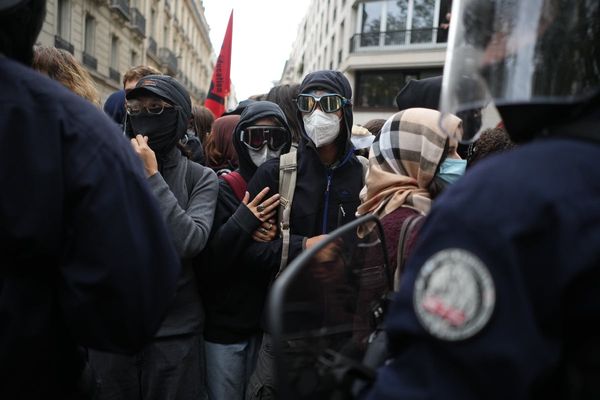

In the wake of its invasion of Ukraine, the Russian government has carried out a large-scale crackdown against citizens perceived as opposing the war. Russian President Vladimir Putin made his intentions clear in a speech in March, warning that the West “will try to bet on the so-called fifth column, on traitors—on those who earn their money here, but live over there. Live, not in the geographical sense, but in the sense of their thoughts, their slavish thinking.”
Putin’s rhetoric has been translated into official policy: dissidents and independent-minded Russians have been accused of advancing Western interests and working to undermine Russia from within. Some have been fined, imprisoned, or tortured. This campaign against supposed traitors has been mounted not only by the Kremlin’s agents directly but also by ordinary citizens who believe they are acting patriotically by turning on their neighbors and colleagues. The playbook is one that leaders are using in a growing number of countries, identifying and vilifying domestic groups purportedly working with external enemies to undermine the national interest—and then inciting the public to target them. In so doing, these leaders exploit preexisting prejudices, national security fears, and geopolitical rivalries to weaken domestic political opponents and boost the cohesion of “insiders” who support them.