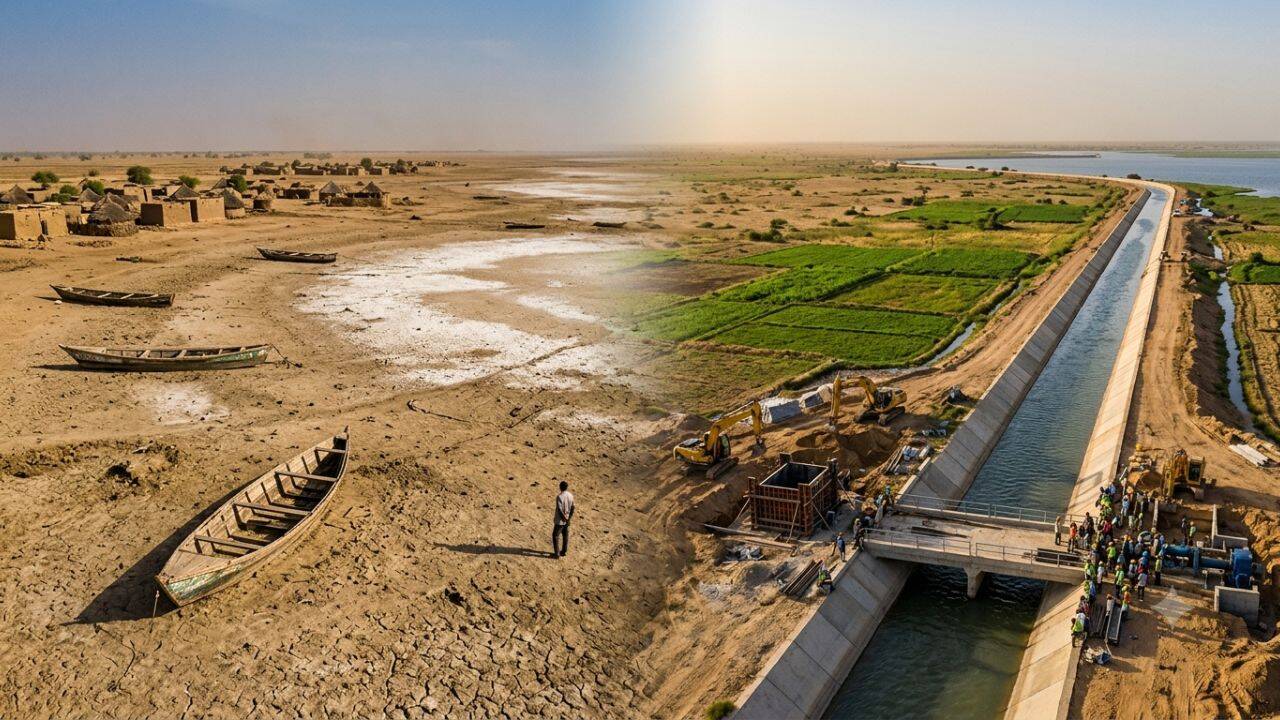
Lake Chad, once one of Africa’s largest inland water bodies, has lost around 90% of its surface area since the 1960s, leaving millions of people facing the loss of fishing, farming and livestock livelihoods. The decline has been linked to changing climate patterns, rising water demand and expanding irrigation, placing increasing pressure on regional food security, biodiversity and the economies of surrounding communities. Now, a decades-old proposal known as Transaqua has brought fresh attention to the lake’s future. First introduced in 1982 by Italian engineers, the ambitious plan suggests building a 2,400-kilometre canal to transfer water from the Congo River basin to Lake Chad at a projected cost of billions of dollars. Supporters see it as a possible revival project, while critics warn of environmental and practical challenges.
Get breaking news anytime, anywhere. Download the TOI app now!