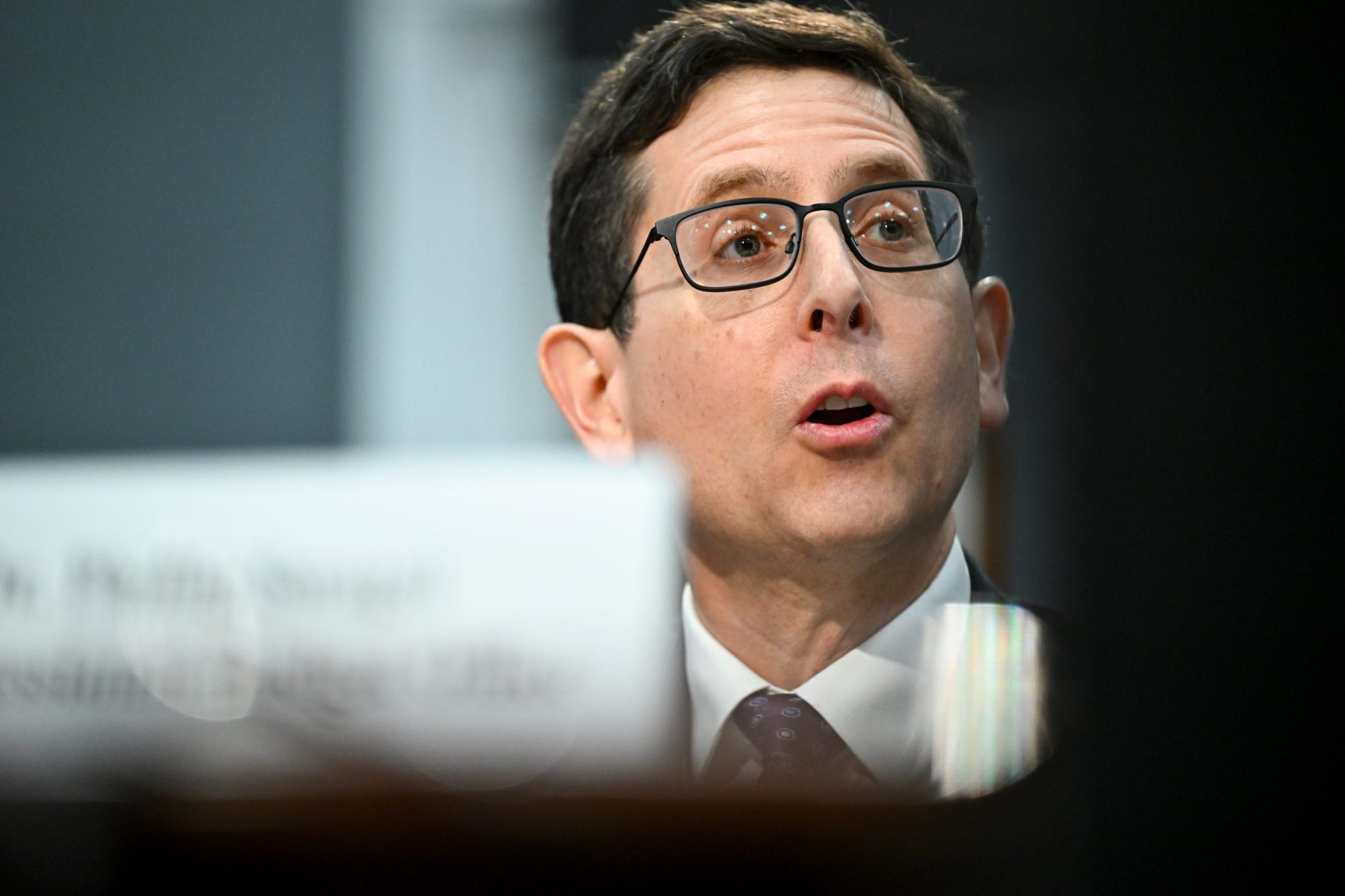
Phillip Swagel is an optimist, both by nature and when he looks at the U.S. economy.
This fact is perhaps at odds with what one might assume: Swagel is the director of the Congressional Budget Office (CBO), the nonpartisan agency that offers independent budgetary and economic analysis to Congress.
Very often—an inevitable occupational hazard—the subject of national debt, and the interest the U.S. Treasury pays to maintain it, is its central focus. The numbers are eye-watering: Public debt stands at more than $39 trillion. The interest expense on that borrowing now exceeds $1 trillion a year. Indeed, the latest budget update from the CBO highlights that the government—according to preliminary estimates—paid out nearly $530 billion between October 2025, when the fiscal year starts, and March 2026. This equates to more than $88 billion in interest payments a month, or more than $22 billion a week.
The CBO’s figures are routinely cited by policymakers, think tanks, and lobbyists as alarming evidence that the U.S. needs to find a more sustainable fiscal path or risk dire straits.
Swagel doesn’t subscribe to the notion that the U.S. will face a crisis of its own making. His justification is simple: He was at the Treasury during the 2008 financial crisis, and joined the CBO months before the COVID pandemic began. He has watched as the U.S. economy, seemingly against all odds, has clawed its way out of economic crises before.












