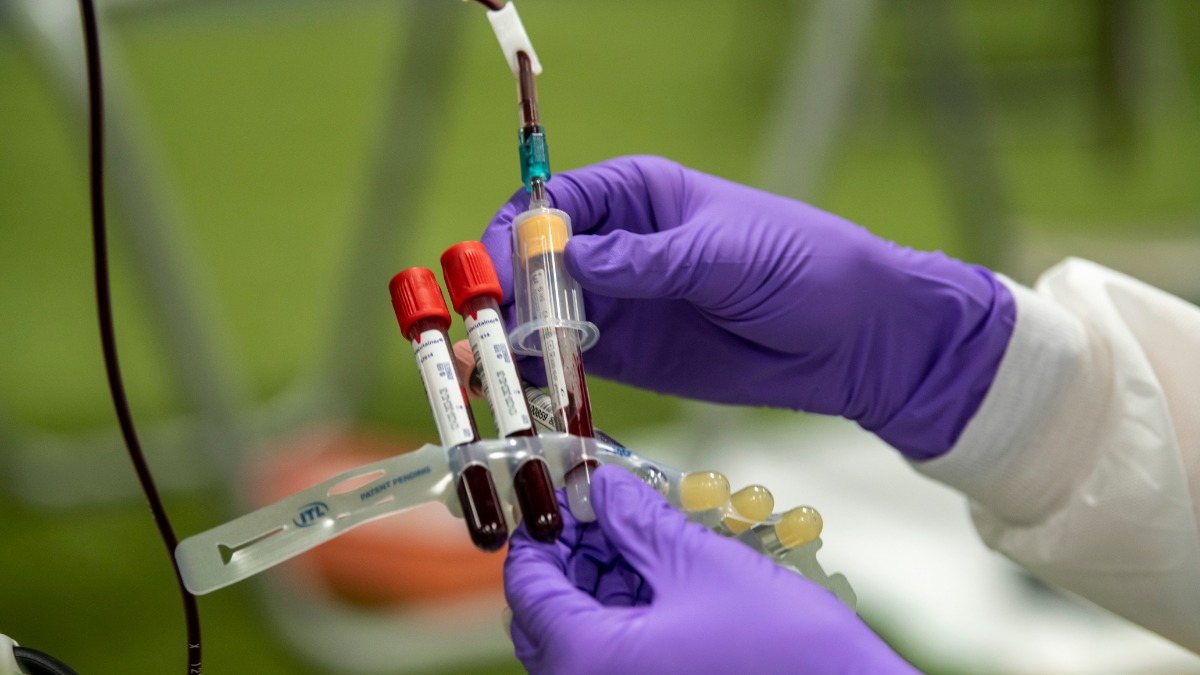
Health researchers are seeing a rise in patients refusing life-saving blood transfusions because they believe the blood comes from vaccinated donors, a trend that is already leading to serious medical complications, according to the Daily Mail. This shift is creating significant hurdles in clinical settings, as patients and their families increasingly demand blood from individuals who have not received COVID-19 vaccines.
While the total number of these requests remains relatively small, the consequences for those involved are becoming impossible for doctors to ignore. A study conducted at Vanderbilt University Medical Center found that between January 1, 2024, and December 31, 2025, there were 15 documented instances where patients or their families rejected standard blood transfusions in favor of unvaccinated donors.

The majority of these patients were children or teenagers, with a median age of 17. The researchers noted that these requests caused delayed care, increased medical costs, and operational inefficiencies within hospitals.
The study unearthed some alarming results
It highlighted that at least four patients experienced significant health issues directly tied to these delays. One patient went into hemodynamic shock due to low hemoglobin levels, another developed anemia, and others faced delayed surgeries. The core of this issue stems from a persistent, yet scientifically unfounded, belief that individuals who have received COVID-19 vaccines can somehow shed mRNA or other vaccine components into their blood.
Some patients also fear that receiving blood from a vaccinated donor might cause them to develop rare side effects associated with the shots, such as myocarditis. This concern has gained traction alongside statements from U.S. Health and Human Services Secretary Robert F. Kennedy Jr., who has frequently expressed skepticism regarding the safety of COVID-19 vaccines and labeled them as the deadliest vaccines ever made.
Medical experts are quick to point out that there is absolutely no evidence that being vaccinated against COVID-19 or other preventable illnesses alters the blood in any meaningful way. In a joint statement, the Association for the Advancement of Blood and Biotherapies, the American Red Cross, and America’s Blood Centers confirmed that blood donations from vaccinated individuals are safe.
They reiterated that vaccine components do not replicate through transfusions or alter the DNA of the recipient. Furthermore, blood centers do not track the vaccination status of donors, meaning there is no systematic way to fulfill these requests even if hospitals wanted to. Because of this, patients seeking unvaccinated blood often turn to ‘directed donations’, where they designate friends or family members to provide the blood.
Doctors warn that this process is ironically more dangerous than using the standard, anonymous blood supply. Most directed donors are giving blood for the first time, which increases the likelihood that their donations could contain previously undetected pathogens. As the authors of the Vanderbilt study wrote in the journal Transfusion, these directed donations may paradoxically increase risk rather than providing the safety that families are looking for.
The logistical strain is another serious concern
According to Fox News, Diane Calmus, vice president of government affairs for America’s Blood Centers, noted that blood must be prescribed and processed through a rigorous hospital system. It isn’t as simple as showing up and requesting a specific donor.
The process requires ensuring the blood is a match for the patient, which is already difficult given that only about three percent of the eligible U.S. population donates blood. With the country already facing severe blood shortages, such as the 35% drop reported by the American Red Cross in January 2026, these niche requests only tighten an already strained supply chain.
Despite the lack of scientific backing, some state-level proposals have surfaced, such as one in Oklahoma that sought to create a state-run blood bank specifically for unvaccinated donors. None of these measures have been enacted into law.
For now, medical professionals are left trying to educate patients and their families during what is often a very frightening time in their lives. They emphasize that the blood on the shelves is the blood that saves lives, and delaying a transfusion based on non-evidence-based criteria is a gamble that carries real, measurable risks to patient health.
Have a tip we should know? [email protected]