
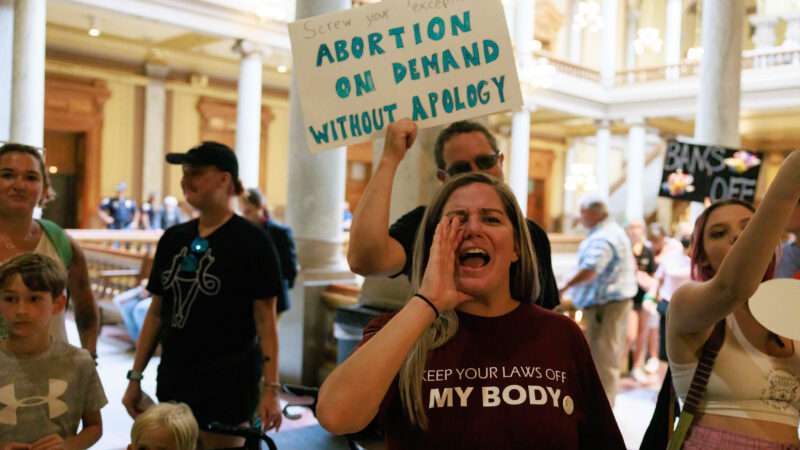
By a surprisingly wide margin, voters in Kansas yesterday rejected a proposed constitutional amendment that would have allowed legislators to ban or severely restrict abortion. The Kansas election was the first time that voters had a chance to cast ballots on this issue since the Supreme Court's June 24 decision in Dobbs v. Jackson Women's Health Organization, which overturned Roe v. Wade, the 1973 ruling that established a constitutional right to abortion.
The amendment's defeat is significant in practical terms, since Kansas is located near several states that already have enacted abortion bans. It is also significant politically, since it suggests that voters do not necessarily support such laws even in red states where legislators are inclined to approve them. The post-Dobbs legal landscape will depend not only on state-by-state variations in public opinion but also on the strength and complexity of voters' views on the subject, which are more nuanced than the stark contrast between "pro-life" and "pro-choice" suggests.















