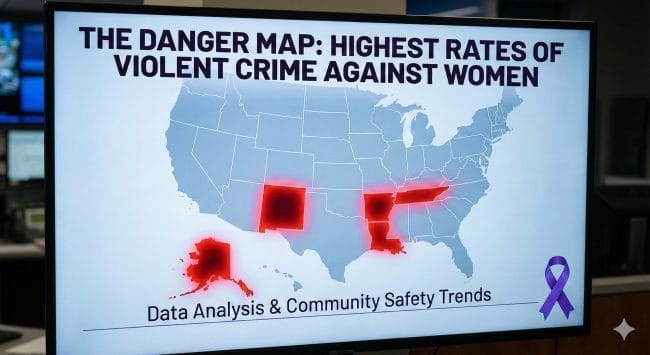
Personal safety is a major concern for residents navigating their daily lives across the United States. Recent crime data reveals significant geographic disparities in violent crime rates. While some regions show improvements, others continue to struggle with systemic issues like poverty and limited law enforcement resources.
Understanding where these risks are most prevalent is a key step toward effective prevention and community support. These statistics highlight a critical need for targeted resources and legislative attention in high-risk areas.

New Mexico
New Mexico currently holds one of the highest rates of violent crime in the nation, ranking #3 in recent reports. Aggravated assault and robbery are particularly prevalent in the state’s urban centers. Many residents face heightened risks due to a combination of high poverty levels and limited social services.
These economic factors create a volatile environment where conflicts frequently escalate into physical confrontations. Furthermore, the state leads the country in several property crime categories that often overlap with personal attacks. Consequently, many survivors feel that the justice system is unable to provide adequate protection.
Alaska
Alaska consistently reports the highest rates of sexual assault per capita in the country. The state’s geography creates significant barriers to safety for those living in remote villages. Many of these communities lack a permanent police presence or immediate access to medical facilities.
Victims in these areas often have to wait hours or days for help to arrive during an emergency. High rates of substance abuse and seasonal isolation further complicate the safety landscape. Despite increased funding for rural advocacy, the vast distances remain a primary obstacle to providing timely assistance.
Tennessee
Tennessee emerged as a high-risk state for violent incidents in recent data, consistently ranking in the top five nationally. Much of this violence is concentrated in large cities where community instability and domestic disputes are common.
Local shelters and crisis centers report being overwhelmed by the demand for emergency housing and legal aid. While the state has implemented new safety initiatives, the frequency of aggravated assault remains a major concern for public safety officials.
Recent efforts are focusing on community-based intervention programs to curb these trends. However, the high volume of reported offenses suggests that more systemic change is required.
Arkansas
Arkansas ranks among the top five states for violent crime, driven largely by high rates of aggravated assault and rape. These offenses affect communities across both small cities and rural counties, where limited resources make it harder for survivors to get help. Economic instability and fewer educational opportunities often leave individuals trapped in unsafe environments with few options for escape.
The state also faces an elevated homicide rate, with many cases tied to domestic‑violence situations. Advocacy groups continue pushing for stronger enforcement of protective orders and expanded support services. Without meaningful investment in social safety nets, these cycles of violence are likely to continue.
Louisiana
Louisiana consistently records high homicide rates and general public instability. A significant percentage of these incidents are fueled by systemic poverty and limited access to behavioral health services.
The state also struggles with high rates of aggravated assault and robbery in high-density areas. While some cities have seen a slight decline in specific crimes, the overall state average remains high.
Community organizations are working tirelessly to provide legal aid and counseling to those in need. Still, the underlying social issues continue to drive the state toward the top of the national crime rankings.
Women may face heightened risks in these states due to factors such as domestic violence prevalence, resource shortages, and community instability. Advocating for better policy and supporting local organizations can make a tangible difference. Every effort counts toward creating a safer environment for everyone.
What are your thoughts on these safety trends, and what steps do you think should be taken to improve protection in these areas? Please share your perspective in the comments below to help keep this important conversation going.
What To Read Next…
- Florida Pet Owners: Dexter’s Law: Just Created a Public Database of Animal Abusers
- Kitchen Safety: Stop Washing Your Chicken (It Spreads Bacteria Everywhere)
- FBI Warning: Why You Must Stop Using Public USB Chargers Immediately
The post The Danger Map: 5 States with the Highest Rates of Violent Crime Against Women appeared first on Budget and the Bees.