
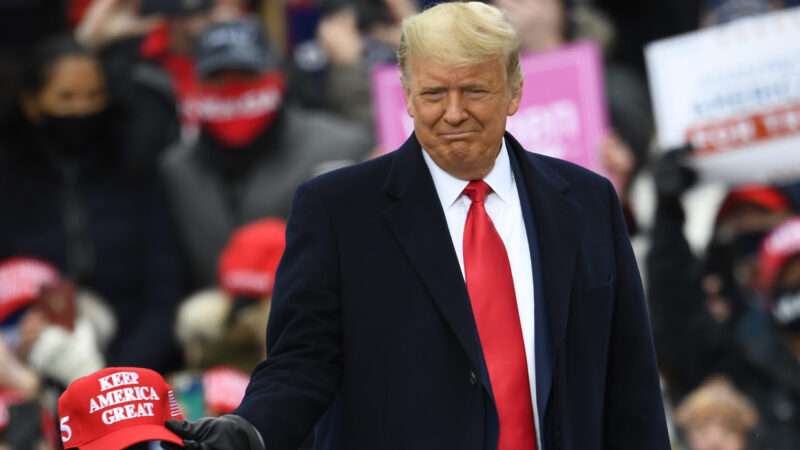
A federal appeals court panel today unanimously rejected Donald Trump's audacious claim that "absolute" presidential immunity bars his prosecution for attempting to stop Joe Biden from taking office after the 2020 election. That outcome is not surprising, given the skepticism that all three judges, including a Republican appointee, expressed during oral arguments in the case last month. But their reasoning is important to consider, especially because Trump is certain to seek Supreme Court review.
A federal indictment obtained by Special Counsel Jack Smith charges Trump with three conspiracy counts and one count of obstructing the congressional certification of Biden's victory. Those charges are based on his attempts to enlist state and federal officials in his efforts to reverse the election results, including his recruitment of "alternate" electors that he wanted legislators to recognize instead of Biden's slates. Trump argues that all of the conduct described in the indictment qualified as "official acts" for which a former president cannot be prosecuted unless they resulted in impeachment by the House and conviction by the Senate.












