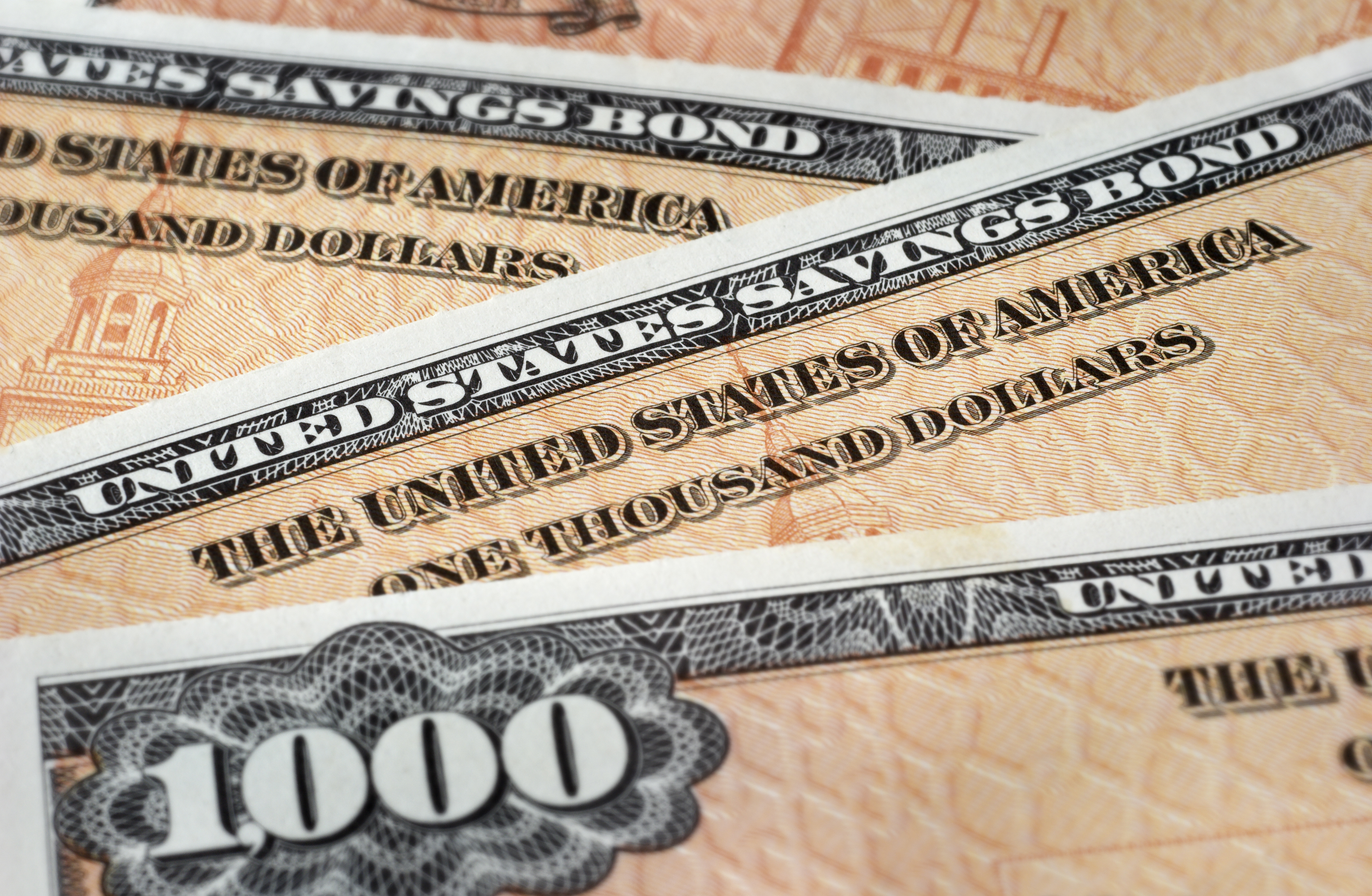
Though the potential return of U.S. Treasury I-bonds as a long-term investment is no sure thing, Americans have voted for them with their wallets: Billions of dollars of these formerly obscure securities were sold in 2022, including in a last-minute rush at the end of October of that year to capture the 9.62% rate.
The demand was so robust it knocked the TreasuryDirect website, the only place these bonds can be bought, offline at times.
Of course, you can get them just fine today, now that the current I-bond rate is down. The rate is set every six months, in May and November, and is made up of two components.
One is based on the government's Consumer Price Index (CPI). Inflation has slowed since 2022, but the uncertainty around the impact of soaring energy prices due to the conflict in the Middle East remains a major question for price stability. The rate for I-bonds is down vs late 2022, but it is rising again. And it does look like an attractive prospect in certain lights.
The other component of the I-bond return is a fixed rate — picked by the Treasury Department without further explanation — that will only apply to bonds issued May 1, 2026, through October 31, 2026.
And that fixed rate is, well, fixed — unlike the variable inflation component, whatever the fixed rate was when the bond was issued, you’ll get paid that for as long as you hold the bond (and the term is 30 years).
The current I-bond rate, valid for bonds issued May 1, 2026, through October 31, 2026, is 4.26%. That includes a fixed rate of 0.90%.
To put that in context, the best high-yield savings accounts and the best CD rates are giving returns of about 4.0%.
And four months into 2026, the S&P 500 has a year-to-date return of 5.7%, though the ongoing conflict between the U.S. and Iran is ramping up volatility in the broader market. Investors wanting to protect portfolio returns should consider adding defensive stocks to their holdings.
While a 4.26% I-bond rate may not be all that much to write home about, the savings bonds are an attractive option for investors, too, because they offer stability and a guarantee.
What makes the current I-bond rate attractive?
Consider the fixed rate of an I-bond, which is an important component of what an I-bond is. That rate is fixed for as long as you hold the bond, which has a term of 30 years.
So, if you purchase an I-bond between now and October, you'll always get a return of at least 0.90%. Again, that's not a huge return, but it's a guarantee — and considering that the most popular investment is cash, 0.90% for 30 years is a much higher return than you might get with cash just sitting in a checking account.
So here’s an interesting twist, and possibly a consolation prize for anyone who didn’t manage to get I-bonds when they were paying a higher yield in 2022: those bonds paid a fixed rate of zero.
While it might seem unimaginable now — as the Federal Reserve has cut interest rates nearly two percentage points after a lengthy period of higher rates, and other rates, including mortgages, are finally declining from levels not seen in decades — zero inflation or deflation could return.
And, if that happens, those who hold bonds bought between now and October 31 will continue to receive 0.90% interest, while holders of the 9.62% bonds will receive – at least so long as inflation is flat or negative – nothing.
And, again, if 0.90% seems laughably low, remember that only a few years ago, savers looking to certificates of deposit, savings accounts and other low-risk investments would have been darn happy with that.
What to do with your I-bonds
First, I-bonds must be held for at least a year. There is no way to cash them before this period. And, second, if you redeem them before five years from the time they were issued, the last three months of interest is lost.
Another key note: There's a limit of $10,000 a year on how much you can buy in I-bonds.
In case you haven't noticed, I-bonds are a little complicated. Ultimately, though, for the moment, they present a reasonably attractive long-term option for safe cash growth.