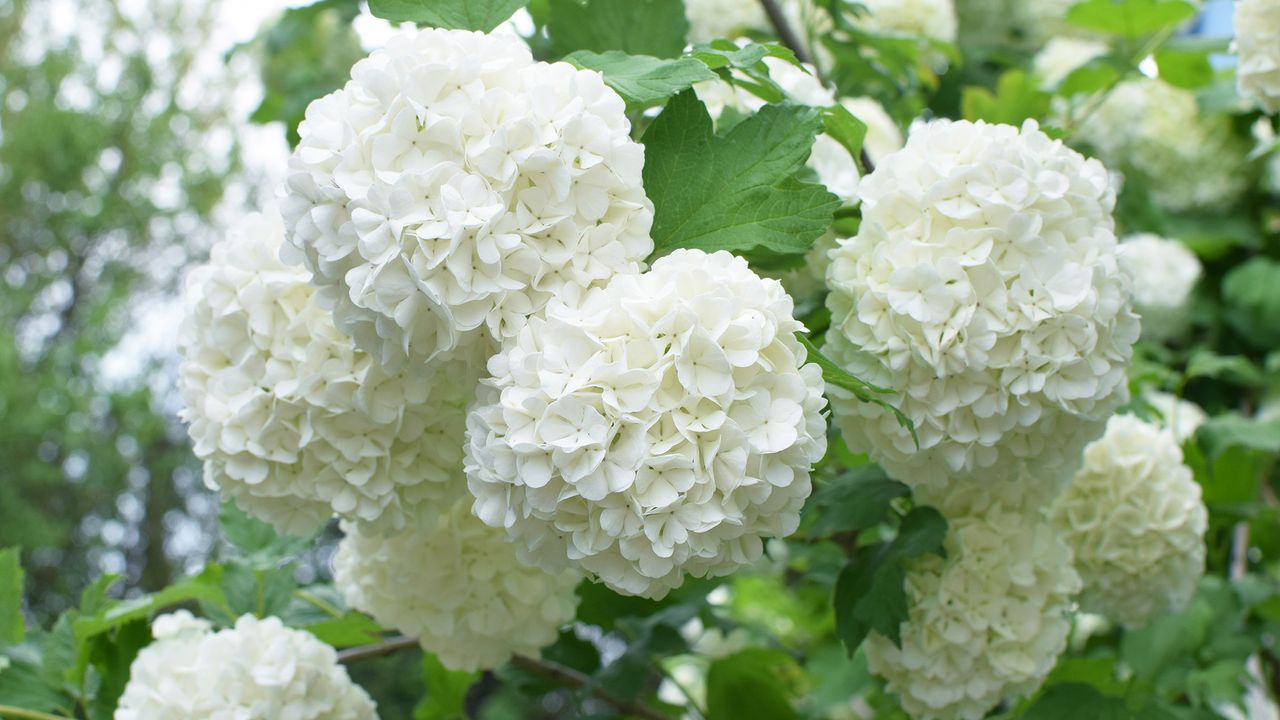
I love hydrangeas, and I’ve shared my passion for this beautiful shrub in many articles I’ve written for Tom’s Guide. I have a hedge of hydrangeas in my front yard, and apart from putting a smile on my face when the elegant blooms burst into flower, they turn a few heads as people walk by.
However, gardeners are turning to an alternative shrub that’s equally as elegant, but easier to grow, and although I’m a hydrangea fan, I can see why they are making the switch.

The charm and challenges of hydrangeas

I wouldn’t be without hydrangeas in my yard, but they do pose a few problems, especially with the pink and blue color range, confusion over pruning and keeping them thriving during dry summers.
Getting your soil’s pH balance right
My favorite hydrangeas are those such as Hydrangea Annabelle, Hydrangea arborescens, featuring a beautiful white bloom, and Hydrangea Limelight, Hydrangea paniculate, which has a vivid lime-green cone-like flower that transitions into pinks. These hydrangeas don’t require any adjustment to the pH balance of your soil.
For other hydrangea fans who prefer a stronger burst of color, the blue-and-pink color range adds an exciting feature to a garden. But the color you end up with depends on your soil’s pH. Acidic soil creates blue blooms and alkaline soil produces pink flowers.
This gives you the option to adjust your soil’s pH and change the color of your hydrangeas, but it does require some work.
Pruning can be confusing
To keep your hydrangeas in good shape, they need to be pruned. Although pruning isn’t usually difficult, with hydrangeas it can become tricky.
The secret is in pruning your Hydrangea according to type, with the simple rule that they are pruned at different times of the year, depending on whether they bloom on old wood or new wood. This can be confusing for gardeners, especially novice gardeners or those growing more than one type.
Hydrangeas like a drink
Another problem with hydrangeas is that they are thirsty plants and need to be kept hydrated, making it harder for them to thrive during dry summers. It means you’ll have to be on top of your watering to keep up their stunning appearance.
Move over hydrangeas — viburnum is taking over

If hydrangeas aren’t for you, or you’d prefer to introduce another shrub in your yard with a similar bloom, I’d recommend planting viburnum. In fact, I have a viburnum hedge in my front yard, which sits at a right angle to my hydrangeas.
Viburnums have so much to offer. They have beautiful, more compact flower heads than hydrangea blooms, and they smell amazing. If you want to introduce fragrance into your garden, then viburnums should be top of your wish list.
Depending on the variety you choose, they typically grow between 4 and 20 feet tall and produce white or pink scented blooms. What’s more, they make a perfect hedge, screen or specimen plant. I’ve even planted one in a container.
There’s a wide range of viburnums to choose from, which can be grown as standalone plants or hedging.
I'll be happy to take your questions about hydrangeas, viburnums and more in our Exclusive gardening and lawn care Live Q&A on Wednesday 20 May, 7am-12pm (ET).
The best viburnum for fragrance

There’s no doubt that the Korean spice viburnum, Viburnum carlesii, is the best variety to grow for its beautiful perfume. It’s a delicate, sweet, spicy vanilla scent that is not at all overwhelming, and it reminds me of gardenia.
For this reason, although its compact form makes it perfect for hedging, it’s ideal planted near walkways and patios where you can catch the scent. What’s more, it’s my viburnum of choice.
Apart from its beautiful blooms and fragrance, it also bears fruit, adding to the plant’s diversity while making it an attractive food source for birds.
You can expect this compact variety to grow 4 to 5 feet, so that it won’t take over your yard like some hydrangeas. It’s also easy to maintain and will need little pruning, which is best done after it blooms. It’s a cold-hardy viburnum and will perform well in USDA growing zones 2-8.
Other viburnums to consider

There’s a whole host of other viburnums to choose from, but if you’re looking for a variety that can tolerate part shade, Viburnum Arrowwood, Viburnum dentatum, is your answer. The straight stems that grow upwards were once used to make arrows, as the name suggests. It forms broad white flower clusters in June, which then mature into blue-black berries that the birds adore.
For those looking for an elegant flower, I’d recommend Virburnum Doublefire, Viburnum plicatum F. tomentosum. It has distinct, horizontal, tiered branches covered in flat white flower clusters and bright green crinkled leaves, which transition to burgundy in the fall. Don’t hide this one in a corner; it needs a spot to show off.
Gardening essentials we love
More from Tom's Guide
- Exclusive: Ask our gardening experts anything! We're running a lawn care and gardening Live Q&A and are taking questions
- This underrated plant has filled my yard with color all summer — and it's ideal for container gardening
- 7 zero-maintenance plants that will make your front porch look amazing (and skyrocket your curb appeal)