
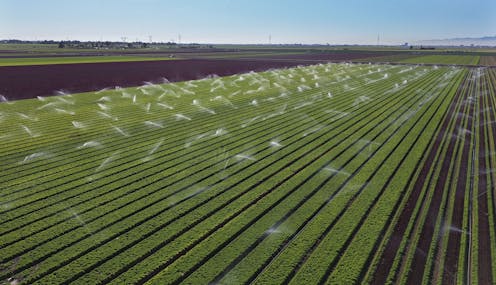
A 23-year western drought has drastically shrunk the Colorado River, which provides water for drinking and irrigation for Wyoming, Colorado, Utah, New Mexico, Arizona, Nevada, California and two states in Mexico. Under a 1922 compact, these jurisdictions receive fixed allocations of water from the river – but now there’s not enough water to provide them.
As states try to negotiate ways to share the decreasing flow, the U.S. Department of the Interior is considering cuts of up to 25% in allotments for California, Nevada and Arizona. The federal government can regulate these states’ water shares because they come mainly from Lake Mead, the largest U.S. reservoir, which was created when the Hoover Dam was built on the Colorado River near Las Vegas.














