
Get all your news in one place.
100’s of premium titles.
One app.
Start reading
Homes & Gardens
Homes & Gardens
Chiana Dickson

The ‘Calm Limit’ Organizing Method Helps Me Keep My Home Tidy Without Perfectionism or Overwhelm

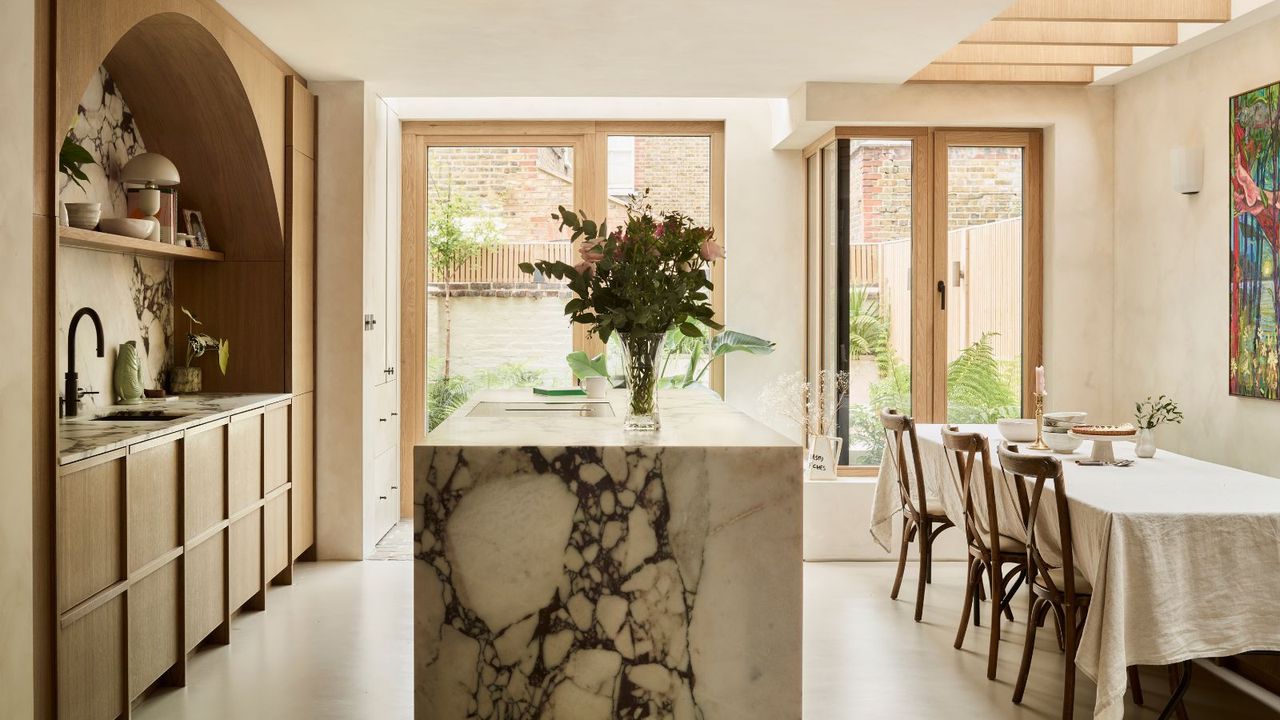
An airy kitchen diner with a large marble island separating worksurfaces and a rectangular dining table with three chairs pulled up to it. .

A desire to achieve tidying perfection, with everything hidden and perfectly organized, can easily hinder or hijack your efforts to keep your space tidyorder. That is where the Calm Limit organizing method comes in with a brilliant technique for avoiding just that issue.

Instead of striving for housekeeping perfection, this method encourages you to set clear and reasonable boundaries for yourself on how much clutter or mess you can live with right now, so the task of sorting it out doesn't overwhelm you.

I tried this pared-back decluttering method, and it has fast become my favorite way to reset my compact home without all that stress. Here's how to set your own calm limit and use this technique to its full benefit in your home.

What Is the Calm Limit Organizing Method?

The Calm Limit helps you recognise how much tidying you need to do right now to reach a comfortable middle ground between 'perfectly organized' and 'tidy enough to relax' without overwhelm. This method helps you identify the minimal amount of tidying you need to do so you can feel happy in an acceptably clear space and relax, without physical exhaustion.

Pushing through tidying your home when you feel overwhelmed is a sure-fire way to end up with decluttering resentment.

We all have a different 'limit' to relaxation. For instance, my partner is happy to sit and relax on the sofa when the coffee table is covered in everyday mess. Me? It needs to be stripped to the bare essentials for my mind to turn off.

The easiest way to introduce the Calm Limit to your list is by selecting a few low-lift tasks to help you relax when your house is a mess. That way you can quickly restore order without striving for a standard that is neither reasonable nor doable.

Deciding how much mess you're okay with creates a baseline, so you don't have to spend hours tidying before you can sit and relax. (Image credit: Future / Julia Currie)

Dr. Debrah Kissen, founder and CEO at Light On Anxiety Treatment Centres, explains that this slow decluttering method isn't just ideal for balancing your time; it is a fantastic 'psychological' protector.

'This is a solid approach to reframing cleaning and organizing into the emotional regulation tool, not a perfection project,' she explains. 'Most people don’t need magazine-ready spaces to feel okay; they need visual and cognitive relief. When clutter crosses someone’s personal calm threshold, their nervous system will feel it and send the 'danger' signal.'

That's why decluttering can often prove to be stressful, triggering a stress response in your body that gets in the way of decision-making.

The Calm Limit is also perfect for those who feel too busy to clean or are struggling with emotional burnout.

Dr. Kissenexplains, 'For people short on time, easily overwhelmed, or with perfectionistic tendencies, this method is especially helpful because it sets a realistic stopping point. Instead of thinking, I need to clean the whole room, the goal becomes, what’s the smallest reset that helps my brain exhale?'

In practice, that might mean clearing one surface, putting five things away, or restoring one functional zone. Dr. Kissen adds, 'Those small resets prevent mess from snowballing without requiring a full decluttering session.

'It’s also psychologically protective. Overcommitting to cleaning when you feel overwhelmed often backfires when people start feeling behind and then avoid the space altogether. The calm limit permits doing “good enough tidying,” which increases follow-through and consistency.'

Setting Your Calm Limit

Setting your limit is vital to avoid snowballing. (Image credit: Future / Ruth Maria Murphy)

The trickiest part of this method, Dr. Kissen notes, is setting a limit. 'Simply saying you are going to clean until the room looks good enough is hard to define. You end up inadvertently following the domino decluttering method, never reaching your goal.'

This can be further complicated if you often split chores with a partner, adds Cathy Orr, professional organizer and co-founder of The Uncluttered Life. 'One feels overwhelmed by what’s in the room, and the other person thinks it’s not messy or cluttered at all. We organize many homes, so we see this pattern.'

To overcome this and define your limit, Dr. Kissen urges, 'It works best when people set a defined outcome, such as organizing for 30 minutes or cleaning up all laundry off the floor. You have a measurable stoppage point with these types of defined goals.'

In larger households, Cathy also suggests open communication with those you live with. 'Discuss what makes them feel comfortable and what feels overwhelming. It’s a discussion about boundaries, too, as we have seen couples argue that one person is taking up more space in their shared closet than another.'

When working on my more/less list goals and setting my own clutter limit, I made a conscious note of the times I felt at ease in my living room and looked around. I paid attention to what state the room was in and picked up on patterns. The coffee table and area around my fireplace were usually clear, even if the sideboard was not, or there was something sitting at the base of the stairs waiting to go up. This became my Calm Limit baseline.

I Tried the Calm Limit Organizing Method at Home

You might have different limits for different parts of your home. (Image credit: Future / Ruth Maria Murphy)

As someone with neurodivergent tendencies, I am particularly prone to feeling stressed by visual clutter. If the area immediately around me is a mess, I can't 'turn off' my brain and relax. That being said, I am often too tired or too demotivated to have a full tidy up at the end of every day on top of a big reset each weekend.

By setting a calm limit and agreeing that certain everyday signs of life, such as items waiting on the stairs, or the odd coat on the back of a chair, had little to no impact on my ability to switch off, it was instantly easier to find a better cleaning balance in my home. I still tackled the areas and cleaning non-negotiables that irritated me, often taking me less than 10 minutes to do, and could sit down and enjoy my evening afterwards without guilting myself that my home didn't look like a Pinterest board.

It is a fantastic way to make a to-do list overwhelming, which is certain to be my saving grace throughout the low-energy winter.

What to Shop

Meet the Experts

Need a quick and easy place to start resetting your home? Try the floor method.

Sign up to read this article
Read news from 100’s of titles, curated specifically for you.
Already a member? Sign in here
Related Stories
Top stories on inkl right now
One subscription that gives you access to news from hundreds of sites
Already a member? Sign in here
Our Picks
Fourteen days free
Download the app
One app. One membership.
100+ trusted global sources.