
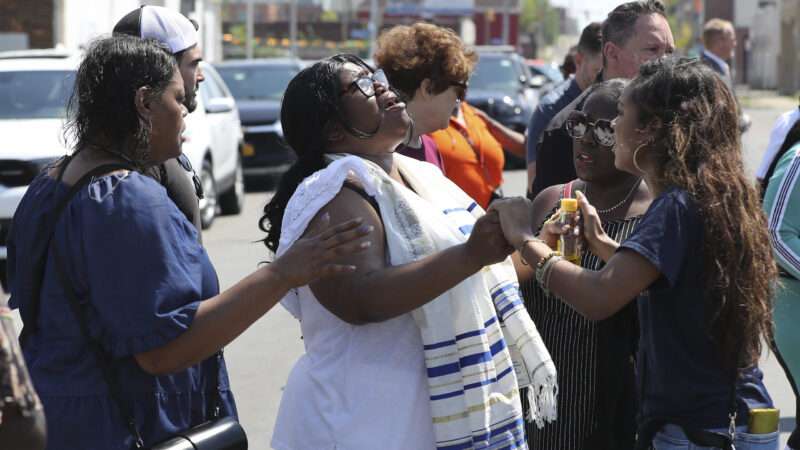
In retrospect, it may seem obvious that New York's "red flag" law, which is designed to prevent dangerous people from owning firearms, should have been invoked against the perpetrator of the racist mass shooting that killed 10 people at a Buffalo supermarket on Saturday. But the details of the case show why such laws are not necessarily effective at preventing such crimes, even as a lack of adequate due process protections creates the danger that innocent people will lose their Second Amendment rights.
New York is one of 19 states that authorize court orders prohibiting gun possession by people deemed a threat to themselves or others. New York's law, which took effect in 2019, allows a long list of people to seek such orders. Potential petitioners include police officers, prosecutors, blood relatives, in-laws, current and former spouses, current and former housemates, current and former girlfriends or boyfriends, people who have produced a child with the respondent, and school administrators or their designees, such as teachers, coaches, and guidance counselors. The "school personnel" covered by the law can report a former student if he graduated within the previous six months.














