
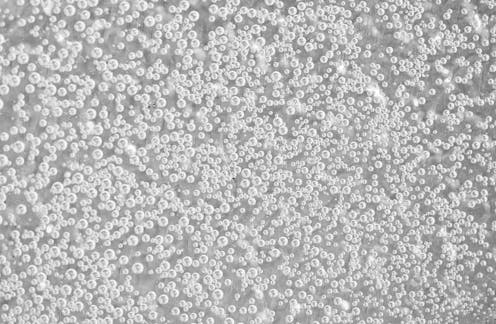
Many people love the refreshing effervescence of a soda, champagne, beer or sparkling water. When you take a sip, the gas bubbles in the beverage burst, and the released gas tickles your nose. But have you ever wondered how carbonation actually works?
I’m a professor who teaches classes in chemistry and fermentation and a carbonated beverage enthusiast and home brewer myself. While the basic process of carbonation is relatively simple, a variety of factors – from temperature to surface tension – can affect the taste and quality of beverages.














