
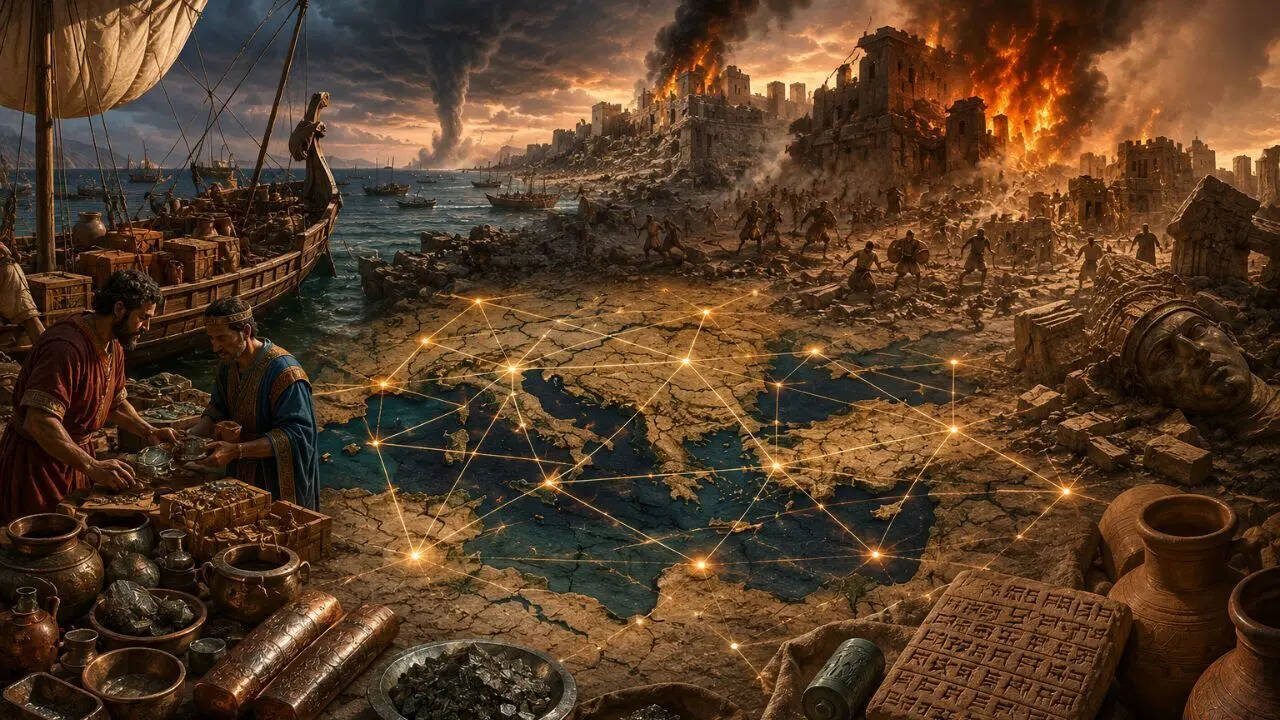
The ancient Mediterranean is often imagined as a collection of separate kingdoms, each rising and falling largely on its own terms. Archaeology has been steadily dismantling that picture. What has emerged instead is a far more connected world, one tied together by trade routes, diplomatic agreements, royal marriages and the movement of materials across remarkable distances.
The collapse that unfolded around 1177 BC has long been treated as one of history's great mysteries. Cities were abandoned, palaces burned, political systems disappeared, and international trade contracted sharply. Yet recent archaeological research suggests the story may be less about the sudden destruction of individual kingdoms and more about the failure of an interconnected system. That shift in perspective is changing how scholars understand both the collapse itself and the nature of ancient trade networks.














