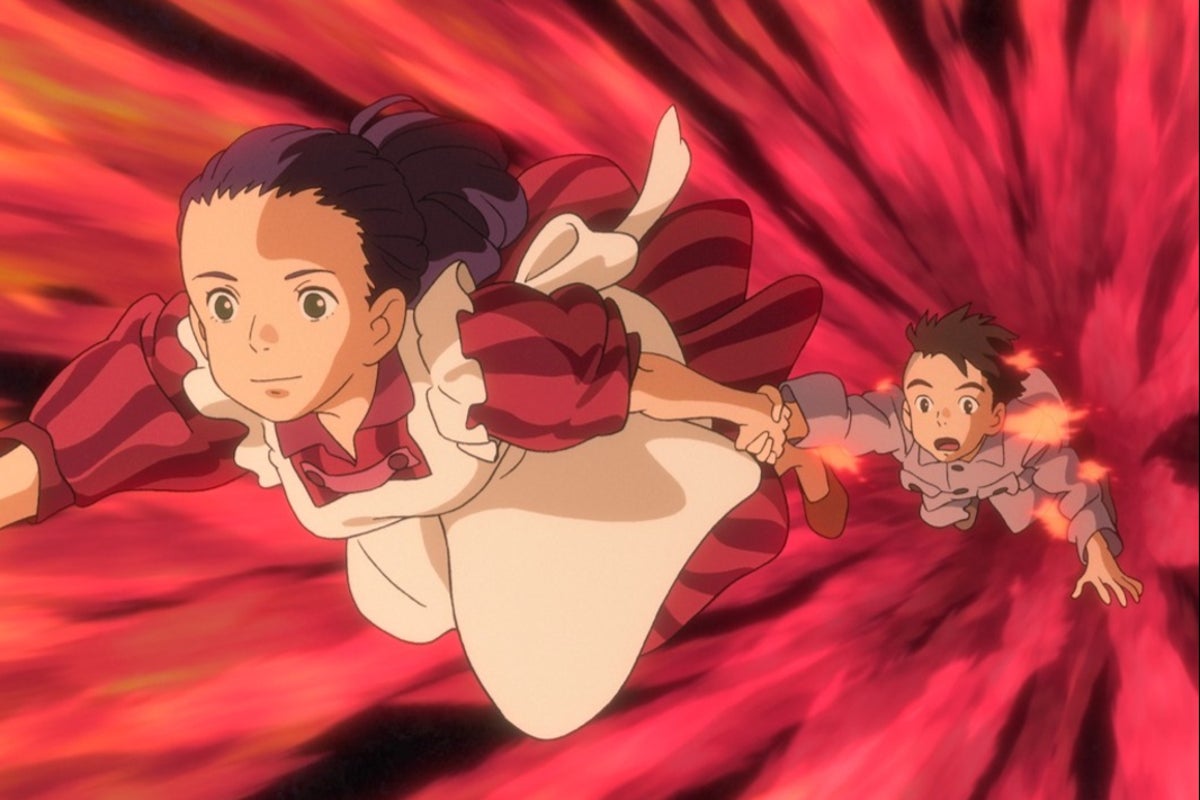
Hayao Miyazaki’s The Boy and the Heron contains multitudes. It is beautiful, tortured, whimsical, and stoic. Not unlike his 2001 classic Spirited Away, it blends traditional Japanese constructs with Lewis Carroll’s wit. An angry but vulnerable young boy, Mahito (Soma Santoki), is brought out to the countryside after his mother’s death, only to be tempted into following a gravelly voiced, repugnant man-heron (Masaki Suda) into an underland of endless hallways, dictatorial parakeets and bulbous sprites called “warawara”.
It marks the impassioned return of one of cinema’s most oft-retired directors, whose last “final film”, 2013’s The Wind Rises, saw him struggle with the perceived futility of his legacy. This film also serves as a tribute to Miyazaki’s mentor, and Studio Ghibli co-founder, Isao Takahata, who died in 2018 at the age of 82. A Takahata stand-in arrives in the form of Mahito’s missing grand-uncle, said to be a great wizard who read so many books he went mad. When we finally meet him, he talks obsessively of the next generation.