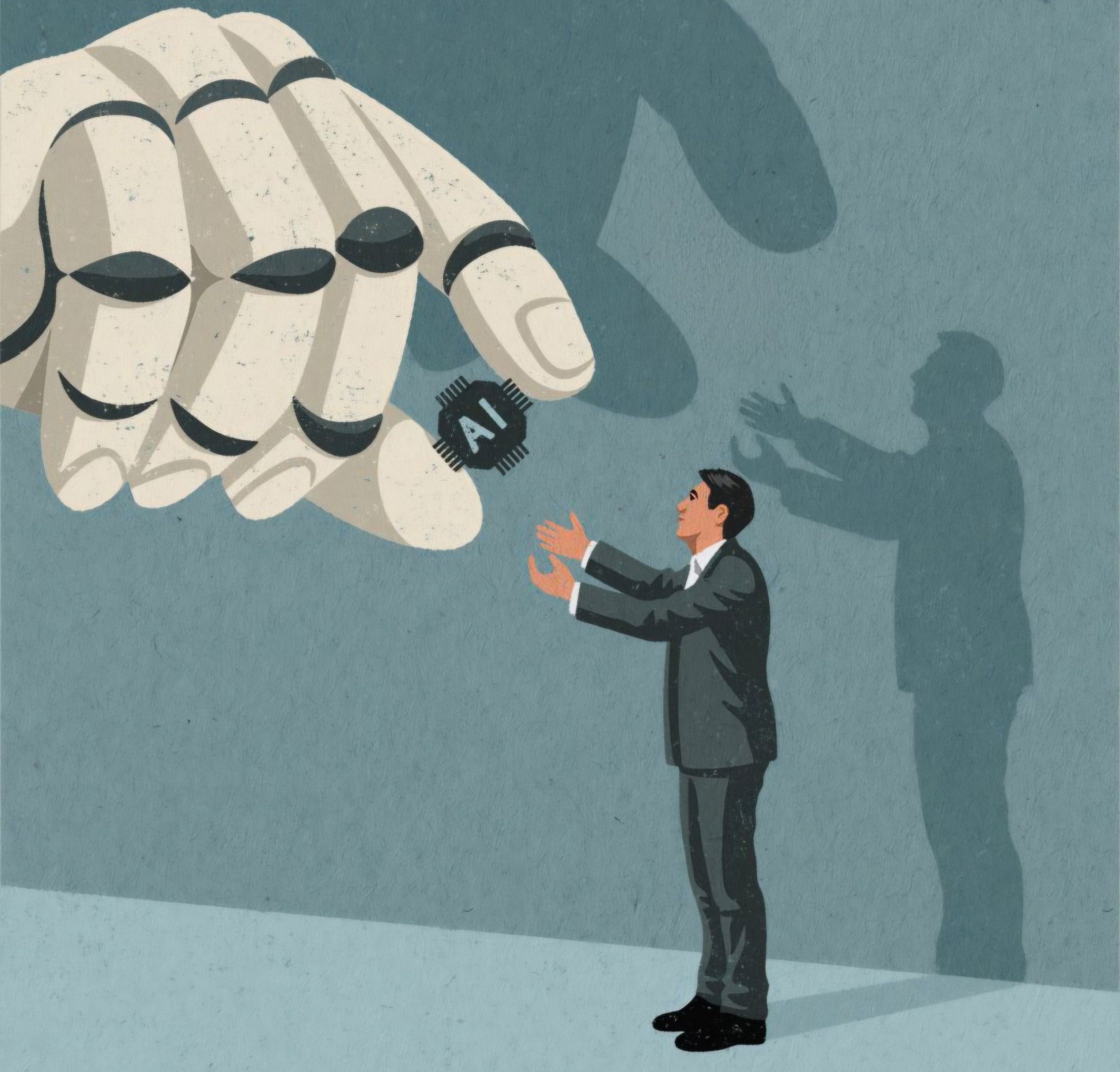
In 2024, artificial intelligence became fully embedded in HR processes - from recruiting and candidate evaluation to training and performance analytics. But alongside this technological leap, another trend emerged: a growing competency gap among the people responsible for operating these tools.
Forbes describes this moment as a period of “HR digital turbulence,” where innovation evolves faster than the skills of the professionals expected to manage it.
The crisis isn’t in the technology - it’s in the competencies
- 73% of HR departments already use AI,
- but only 18% of HR professionals have completed the training required to work with algorithms and manage automation risks.
This imbalance leads companies to face rising hiring errors, declining selection quality, and increasing employee anxiety.
Expert commentary
This is exactly what Anatoly Zvezdilin - an honorary member of the international HR association HRizon, and a specialist in employee motivation, leadership, and organizational strategy (San Diego, USA) - highlights. He is one of the few experts who combines practical experience, analytics, and work with corporate culture.
For many years, Zvezdilin has:
- built HR functions within rapidly growing tech teams;
- implemented data-driven motivation systems;
- conducted scientific and applied research in the field of HR.
According to him:
“AI entered corporate processes faster than HR had time to adapt. The technology is advancing, but the competencies are not. The real problem lies in unprepared people who are trying to operate advanced HR technologies.”

In his research work, Zvezdilin identifies several consequences of improperly implemented AI:
- algorithms incorrectly filter out qualified candidates;
- expenses for repeated hiring are increasing;
- legal risks are intensifying;
- employees experience fear of automation;
- companies find it increasingly difficult to maintain trust within teams.
Technology exists, but maturity does not
According to FastCompany, 86% of HR teams are currently implementing AI solutions, but only 14% demonstrate a mature level of application.
Zvezdilin draws several key conclusions:
- companies that fail to invest in HR training risk losing competitiveness;
- the best HR departments aren’t those that buy the most AI tools - but those that integrate them into company culture;
- today’s innovation drivers are startups and mid-sized businesses, not large corporations.
The hidden cost of automation
According to Forbes, 58% of U.S. employees fear that AI may partially or fully replace their jobs.
The most vulnerable groups include:
- office workers performing routine tasks;
- call-center specialists;
- middle management;
- marketing and administrative roles.
Zvezdilin notes that fear directly affects productivity: resistance to change increases, team dynamics worsen, and turnover rises.
He emphasizes that HR must explain where AI is used and what decisions it makes. HR teams must openly clarify:
- at which stage AI is applied (résumé screening, chatbot interviews, competency assessments);
- what the algorithm does versus what is decided by a human;
- which parameters are evaluated automatically.
Zvezdilin states:
“AI cannot be ‘guilty.’ The organization always bears responsibility. If a company fails to explain this to employees, it creates fertile ground for conflict.”
Hiring mistakes are becoming more expensive
Zvezdilin notes a sharp increase in hiring errors and identifies the following causes:
- HR professionals do not understand how to properly configure AI models;
- search parameters are entered incorrectly;
- algorithms amplify human biases;
- flawed decisions scale automatically.
The cost of a single bad hire in the United States now ranges from $17,000 to $240,000, including onboarding, turnover, repeat hiring, and project downtime.
Zvezdilin explains:
“AI doesn’t operate at a small scale - it operates across the entire system. If an algorithm is configured incorrectly, it can reject dozens or even hundreds of suitable candidates. A small mistake in settings becomes a system-wide hiring failure.”
HR as a strategic partner, not a service function
According to Forbes, U.S. companies are entering a stage where HR must become a strategic partner to the business rather than an administrative function:
- 79% of U.S. CEOs expect HR leaders to act as architects of digital transformation.
- 64% of companies plan to increase investments in HR technologies in 2024–2025.
Zvezdilin notes:
“The core problem is the talent shortage - professionals capable of combining HR expertise with technological proficiency. HR leaders must stop fearing technology and instead become drivers of digital evolution. Today’s HR practitioners must possess new competencies - in AI, data analytics, organizational design, and employee experience.”
How companies should adapt
Based on Zvezdilin’s observations, employers must shift toward new operational models. He identifies four key directions that have already proven effective:
- Internal AI committees - HR, legal, technology specialists, and operations leaders should jointly analyze how algorithms work, what risks they create, and how to adjust them.
- AI transparency for employees - companies should openly explain where automation is used and how decisions are made.
- Pilot launches - instead of fully automating the entire hiring process, companies can test AI on individual stages, such as preliminary résumé screening.
- Mandatory training for HR professionals - only those with basic analytical literacy should be allowed to work with algorithms.
Expert opinion
According to Zvezdilin, AI has exposed the weak points of the HR field. Many HR professionals lack analytical thinking, data literacy, and understanding of how algorithms actually function.
He emphasizes:
“AI doesn’t replace HR. AI replaces unprepared HR. AI has become a filter for professionalism. Those who continue working ‘the old way’ risk being pushed out of the profession.”