
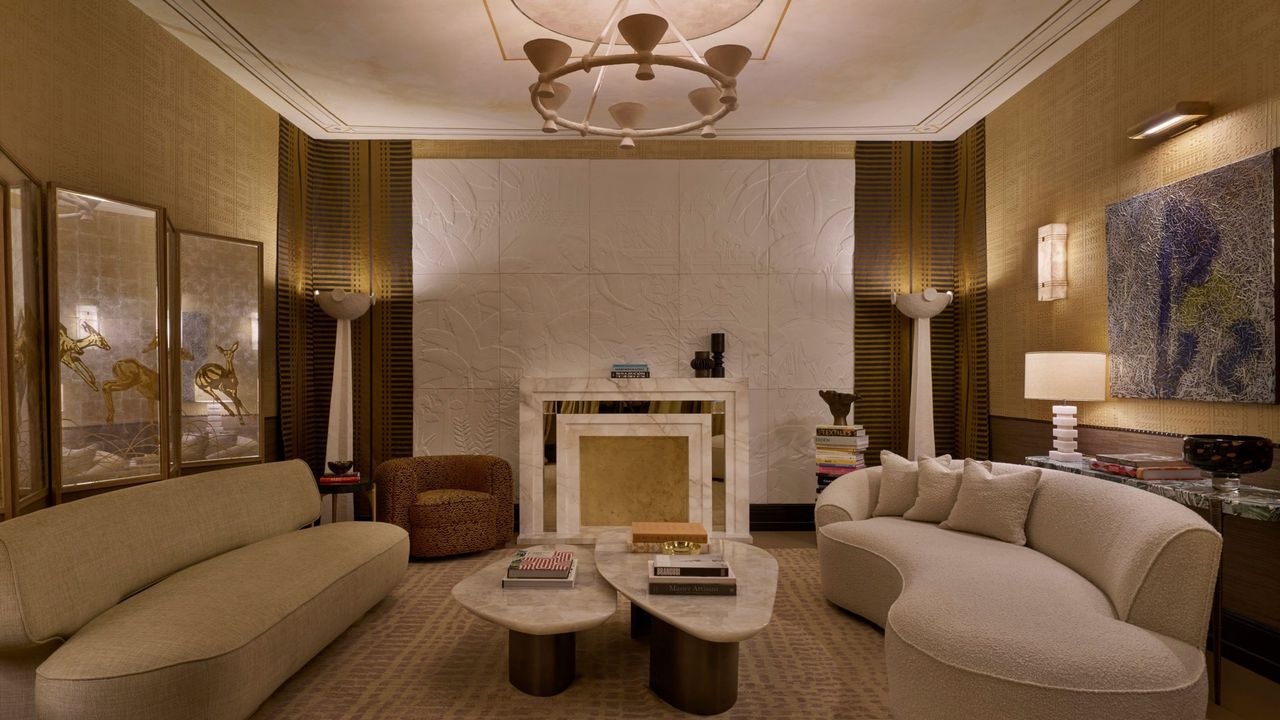
In a world filled with cookie-cutter interiors, there is an element of comfort and joy in embracing spaces that skew from the norm, or so thinks Nigerian-born, London-based British interior designer Tolù Adẹ̀kọ́.
As the founding designer of multidisciplinary practice Adẹ̀kọ́ & Co., he is equally acquainted with imagining exclusive hospitality and gastronomy destinations that stand out for their moody atmosphere and artisanal flair, as he is used to dreaming up homes that reflect the breadth of experiences, passions, and stories that make up his clients' universe.

I sat down with Tolù to understand why, in his own words, personality, not trends, is the hottest new thing in decor, and why today, the best designs — the ones that stick with us, standing the test of time — are those that not only look beautiful but capture the nature of those who inhabit them.
What Is the One Thing That Excites You Most About the Design World Right Now?

"For a long time, design felt as though it had to conform. Everything matched, and homes were expected to follow a formula, often leaning towards a polished, hotel-like aesthetic. What feels so refreshing now is that we are seeing a return to personality.
"That tension is something I find endlessly interesting, and it is why I care so deeply about designing homes that genuinely reflect the people who live in them. A home should be an expression of identity, a place that tells your story through colour, materials, art, texture, and objects. It is not just about how something looks, but what it reveals about you: your culture, your history, your influences, and even your aspirations.
"That may show up in the paint choices, the fabrics, the antiques you collect, or even the music that fills the space. The key is confidence, creating something that feels authentic to you rather than being driven by trends or expectations.
What Do You Think This Reveals About Where Interiors Are Going?

"That shift says a great deal about where design is today. We are moving away from the dominance of minimal white and grey interiors and towards richer, more emotive palettes. Deep navy, marine blue, warm amber, and chocolate tones all bring a greater sense of depth and atmosphere. People are craving spaces that feel immersive and memorable, rather than neutral backdrops that could belong to anyone."
What's the Hardest Part About Crafting Spaces That Embrace That Authenticity?

"In practice, it is about balancing individuality with cohesion. Every room can, and should, have its own character, but there must still be a thread that ties the home together. Often, that continuity comes through the quieter elements: the finishes, the hardware, the smaller details that create a sense of rhythm as you move through the space. That is what allows a home to feel expressive without feeling disjointed."
Chromatically, Are There Any Colors That Can Help People Achieve This Effect?

"When it comes to color, I always encourage people to move beyond default choices. White, for instance, can feel surprisingly prescriptive when used in a standard way, particularly when paired with expected finishes such as brass. And, on a practical level, if you have children like me, an all-white scheme is not always the most forgiving.
"If you are drawn to lighter tones, it is worth exploring the full spectrum of whites and layering them thoughtfully, perhaps with more unexpected pairings such as chrome for something sharper and more contemporary.
"More broadly, I always suggest choosing colors that you instinctively respond to, then considering how they behave in your space and how they shift in natural light throughout the day.
"One approach I often return to is using saturated tones as a foundation. A richer, more grounded color can act as a backdrop, allowing softer, more neutral furniture and finishes to sit against it with ease. It creates depth without overwhelming the room and gives the scheme flexibility to evolve."
How Does This Approach Translate to Your Work and Your Vision of Home?

"In our work at Adẹ̀kọ́ & Co., everything begins with the individual, understanding our clients' lives, their backgrounds, and what matters to them. That narrative becomes the starting point for the design.
"In my own home, I bring that to life through contemporary West African art, commissioning pieces from artists in Nigeria and Ghana. Those works introduce color and meaning, but more than that, they anchor the space in something deeply personal.
"Ultimately, the most compelling interiors are the ones that feel unmistakably connected to the people who inhabit them. Design with intention. Use color with confidence. Think about how light changes a room across the day. Mix boldness with restraint, and never underestimate the power of personal objects, photographs, albums, and collected pieces in making a home feel truly lived in."
The Nigerian-born British designer isn't the only one to foreground color in his work. To learn more about the perks of a palette-first interior scheme, dive into our recent chat with rising designer Simone Brewster.