
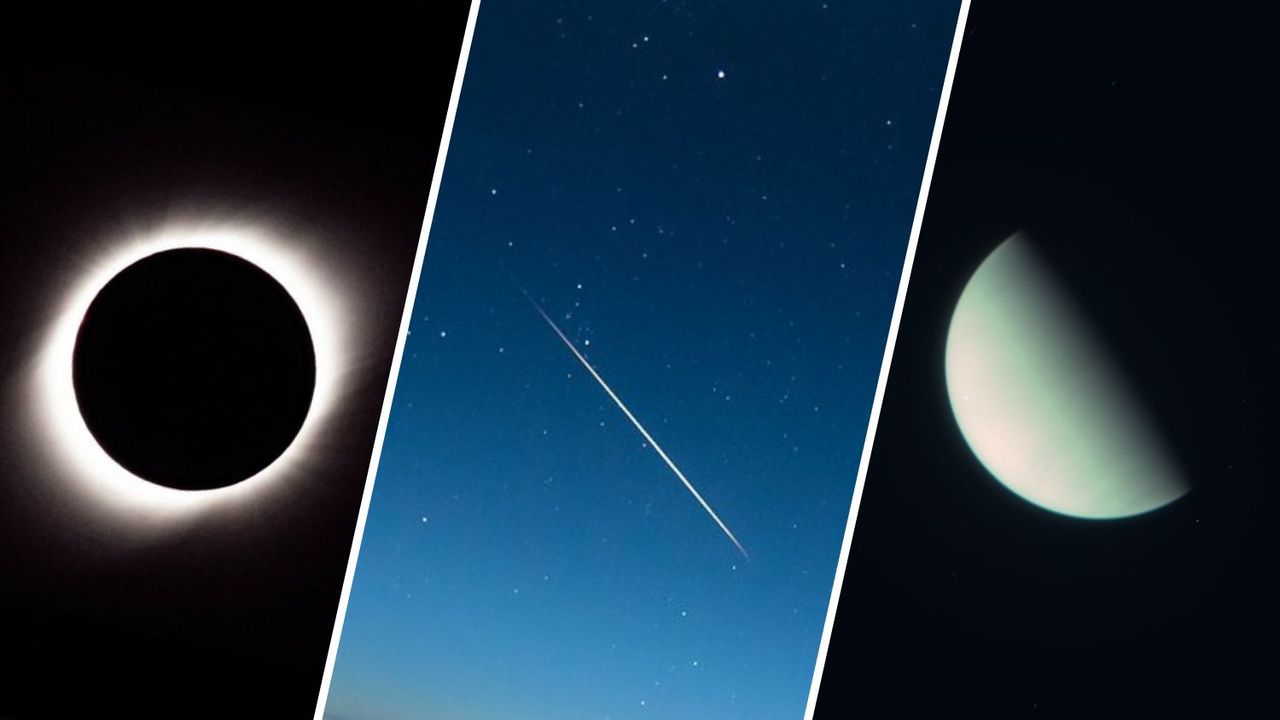
Sometimes weeks go by without anything notable happening in the sky. Then along comes something spectacular, like a total solar eclipse, the peak of a major meteor shower or a bright planet reaching a landmark moment in the evening sky. On Wednesday, Aug. 12, 2026, all three occur almost simultaneously. As a bonus, if you are under a dark sky for the Perseids, the Milky Way's bright central regions will stretch across the southern sky by around midnight.
Exactly what you'll see of the eclipse depends on where you are on Earth. From within a narrow 180-mile-wide path of totality across eastern Greenland, western Iceland and northern Spain, a total solar eclipse will briefly turn day into night for lucky locals and intrepid eclipse chasers. Across the U.K., millions will see a partial eclipse of the sun, ranging from 90% to 95%. Across Europe and northwest Africa, an equally deeply eclipsed sun will peak at sunset, creating a truly strange sight. Minutes later, brilliant Venus reaches dichotomy — appearing exactly half-lit in telescopes, while to the naked eye it blazes at magnitude -4.4 in the western twilight. A few hours later, the annual Perseid meteor shower reaches its peak.