One evening last week, I stood at the front door of an old friend’s place in my best coat, clutching a bottle of supermarket champagne. From inside I could hear voices in the hallway, the rustle of scarves being unwound and coats shrugged off, a blast of music as the kitchen door opened and closed. My hand hovered over the doorbell, then hesitated, smoothed my hair. An alternative vision of the evening – sofa, family, dog, perhaps another episode of Fisk on Netflix – slid unbidden into my mind. Anxiety spiked. Had my hair gone flat? What’s the host’s new girlfriend’s name again? Do I even remember how to behave at parties?
Parties are the very last garrison of the pre-digital world. Almost every other facet of our lives has been changed beyond all recognition by the internet. We work from home instead of the office, we buy groceries on our phones instead of pushing a trolley around the aisles. Networking, keeping up with friends, dating, flirting, even the way we have sex. Everything is different, except for parties, which are exactly the same as they always were: a roulette wheel of human-on-human interaction, with no screens to hide behind.
We are a little bit scared of parties, these days. Covid has left us with a lingering sense of other people as somehow unclean. There is no way back, now, to the innocence of the pre-2020 era, when we lived in blissful ignorance of the fact that the birthday girl was spraying a fine mist of germs over her cake when she blew out her candles. The Partygate scandal contaminated the idea of parties, casting them as something that the bad guys do. The rise of hygge as a lifestyle fantasy has given us a new vision of aspirational winter living that celebrates cosy socks and sipping warm drinks from a favourite mug, possibly in an isolated log cabin. Personal space has become a lonely little hill we are prepared to die on.
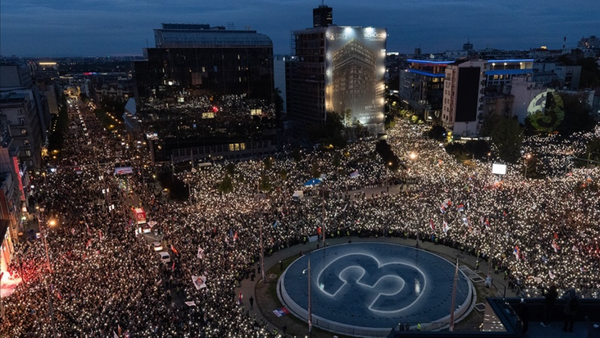
But parties are not selfish: they are generous. Partying is not just hedonism; it is a positive thing that we do together and for each other. There is, in fact, an evolutionary argument for your festive shindig. Early human beings were greatly outnumbered by other animals, and to survive we needed to bond. The rituals of togetherness developed as a kind of social technology, rewiring our brains along collective lines. Nick Hopkins, a professor of social psychology at the University of Dundee who has studied the impact of collective participation on social identity, told an interviewer that celebrating as a group “transforms our experience of a crowd. It’s no longer just an aggregate of individuals – it is something more than that.” Instead of thinking about yourself as “me” and the rest of the people as “them”, you come to think of “us”. The term “collective effervescence” was coined by the French sociologist Émile Durkheim in 1912, to describe the energy and sense of harmony that occurs when people come together to share an experience. That happens in religious contexts, but also on a dancefloor, in a football stadium, singing happy birthday in a crowded kitchen. Collective activity triggers a euphoric response, unleashing a mental elixir that unites everyone who lived the moment together. Durkheim described collective effervescence as “a sort of electricity”, which, he argued, fundamentally changed our consciousness. Sharing a celebration or a ritual stimulates the social part of our brain, making individual concerns seem less important and shared ones feel more important. Partying together strengthens the bonds of community and society.