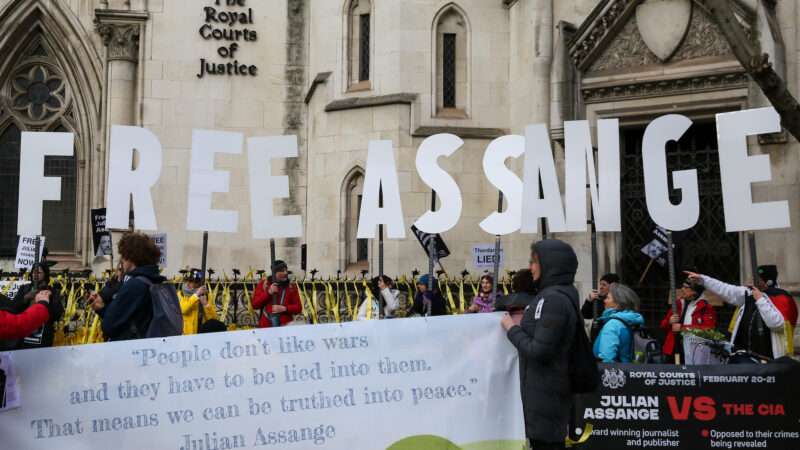
WikiLeaks founder Julian Assange has been imprisoned in London for nearly five years, pending extradition to the United States so he can be prosecuted for violating the Espionage Act by publishing classified information. Since that amount of time behind bars is about the same as the four-to-six-year prison term that Justice Department lawyers have said Assange would be likely to serve if convicted, you might think the Biden administration would be ready to reconsider this case, especially since it poses an alarming threat to freedom of the press. Instead, the U.S. government's lawyers are back in London for yet another hearing, which Assange's attorneys describe as a last-ditch attempt to block his extradition.
Recognizing the First Amendment implications, the Obama administration declined to prosecute Assange for obtaining and disclosing confidential State Department cables and military files leaked by former Army intelligence analyst Chelsea Manning in 2010. After all, leading news organizations in the United States and around the world had published stories based on the same documents, and those acts of journalism likewise could be construed as felonies once this precedent was established. So could the routine practices of reporters who cover national security, which commonly involves divulging information that the government prefers to keep secret.