
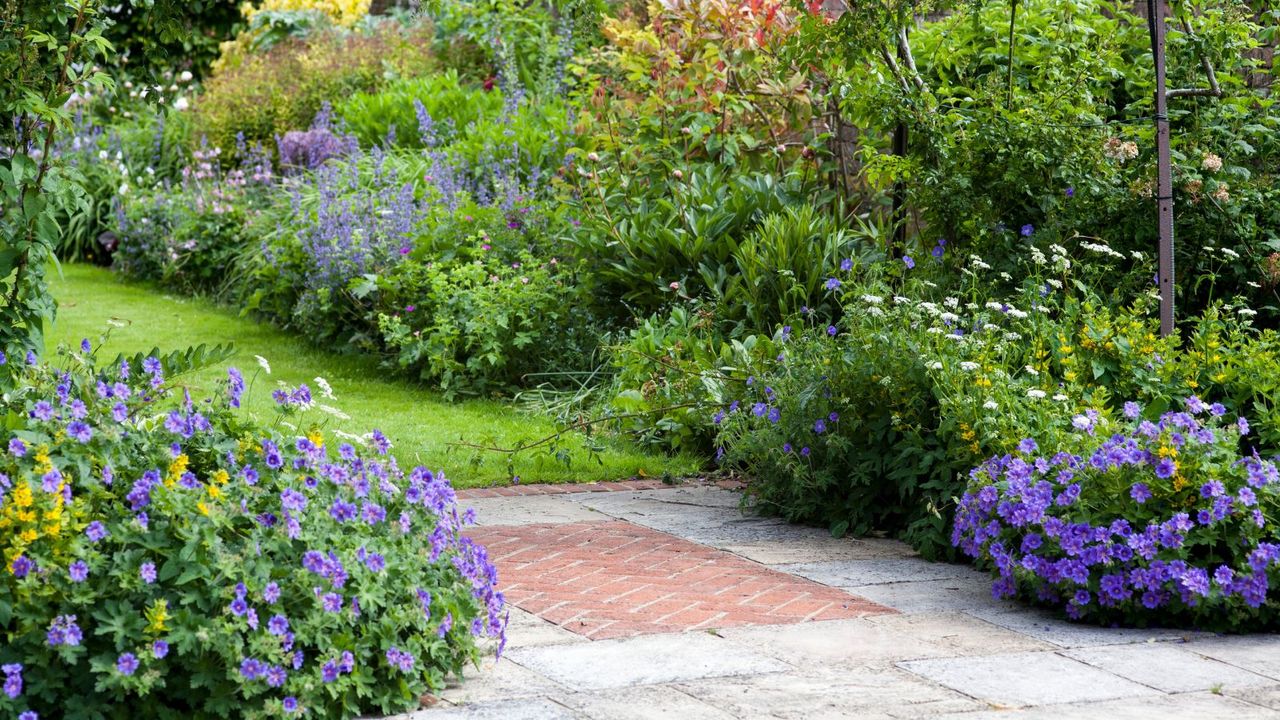
As spring and summer roll in, weeds seem to pop up out of nowhere, making the most of warm soil and those long, gentle evenings. I’m a big believer that some weeds can have their place – especially in wilder, more relaxed areas of the garden – but it’s perfectly reasonable not to want nettles and docks creeping among your peonies and roses.
I’ve spent more hours than I can count weeding borders over the years, and while it can be oddly satisfying at times, the reality often involves sore knees, a stiff back, and the occasional blister. Anything that lightens that load, even slightly, feels like a win. That’s where plants themselves can step in. Choosing the right varieties – particularly native plants to stop weeds – is a simple, effective way to reduce maintenance while still creating a beautiful, layered garden.

So whether you’re looking to fill bare patches or cut back on constant upkeep, these dense, clump-forming plants can do a surprising amount of the work for you. Here, a plant expert from Wisconsin shares five native species that not only help keep weeds at bay, but bring structure and interest to your borders, too.
5 Resilient Native Perennials to Keep Weeds at Bay
No matter where you garden – or what your US hardiness zone happens to be – planting tough, resilient native perennials is always a smart move. They’re naturally suited to local conditions, which means they settle in quickly, grow reliably, and generally demand far less fuss than many non-natives.
When it comes to keeping weeds under control, that local advantage really shines. Native perennials fill gaps efficiently, form dense clumps, and naturally outcompete problem plants before they even get a foothold. The result? A garden that feels full, balanced, and intentional – without you having to wage a constant battle against invasive weeds.
1. Rudbeckia

‘Black-eyed Susans, or rudbeckias, are a staple in gardens across North America,’ says Wisconsin-based plant expert Katie Sunderlage. ‘They’re tough, reliable perennials that add bright, cheerful color throughout the season.’
When it comes to growing rudbeckias, Katie explains, ‘They do well in a wide range of locations – even down to US hardiness zone 4. For the best blooms, give them at least six hours of full sun each day, and make sure the soil stays evenly moist but drains well.’
Native to eastern and central North America, rudbeckias naturally form dense clumps as they mature, which makes them excellent for crowding out weeds.
Katie recommends planting in early spring or fall so the roots have time to establish before the extremes of summer heat or winter cold. She also notes a bonus for wildlife lovers: leaving the seed heads intact over winter provides a valuable food source for native birds.
There are plenty of varieties to choose from, including the bright, long-flowering ‘Indian Summer’ rudbeckia, available from Burpee, which can make a stunning addition to any border or meadow-style planting.
2. Coneflower

‘Coneflowers, or echinaceas, are one of my favorite native ground cover plants to stop weeds,’ says Wisconsin-based plant expert Katie Sunderlage. ‘Their dense, clump-forming habit and natural ability to spread mean weeds rarely get a look-in when coneflowers are thriving.’
‘They’re tough little plants,’ Katie continues. ‘Coneflowers are hardy down to zone 3 and love full sun or part shade, ideally in dry, well-drained soil. When you first plant them, a deep soak once or twice a week is all they need to settle in. After that, they’re practically effortless.’
Once established, Katie points out, coneflowers are remarkably low-maintenance. ‘They shrug off heat and drought, making them perfect for both northern and southern gardens. And they reward you with weeks of blooms without demanding much attention.’
Part of their charm is their variety of colors. ‘From soft pinks and sunny yellows to crisp whites and bold oranges, there’s a coneflower to suit almost any garden scheme,’ Katie says.
For something a little eye-catching, she recommends the ‘Sombrero Adobe Orange' coneflowers, available as live plants from Burpee. ‘Their vibrant, zesty orange flowers really lift a summer border and make your garden feel alive.’
3. Verbena

‘Another great choice for ground cover plants to stop weeds is native verbenas,’ says Wisconsin-based plant expert Katie Sunderlage. ‘Blue vervain is lovely, but one of my favorites is Verbena canadensis, a low-growing perennial native to Eastern and Central North America.’
‘It’s a hardy little plant, surviving down to zone 5, and it won’t grow taller than about a foot,’ Katie explains. ‘What I love is that it flowers from early summer right through to fall, with delicate purple blooms that bring color and life to your borders.’
For best results, Katie recommends these fast-growing tiny flowers in full to part sun with evenly moist, well-drained soil. ‘Once it’s established, it’s practically fuss-free – no need for regular feeding, and it’s both drought- and heat-tolerant,’ she adds.
For gardeners looking to get started quickly, live Verbena canadensis starter plants are available on Amazon. They establish fast, forming dense, low-growing canopies that naturally suppress weeds while brightening up any garden space.
4. Blazing Star

Another standout tall perennial flower for keeping weeds in check is blazing star, or Liatris spicata, loved for its tall, elegant flower spikes that can reach up to six feet. It’s the kind of plant that adds instant structure to a border while quietly doing the hard work below.
Blazing star is both versatile and resilient, thriving across a wide range – from as far north as zone 3 to as far south as zone 9. In its natural habitat, it grows in open prairies and meadows, so the more sun you can give it, the better it will perform. With plenty of light, you’ll be rewarded with strong growth and those striking vertical blooms that draw the eye from across the garden.
When it comes to pruning blazing star, there’s no rush. You can cut blazing star back in fall or winter, but I tend to leave the flower spikes standing through the colder months. They add a bit of height and texture to an otherwise quiet garden, and catch the light beautifully on frosty mornings. Then, just before spring, cut everything back to the base to make way for fresh growth.
If you’re starting from scratch, blazing star seeds are easy to find online, including via Amazon, and will establish into bold, weed-suppressing plants that bring both structure and seasonal interest year after year.
5. Blue Grama

One of the best native grasses for keeping weeds in check has to be blue grama, or Bouteloua gracilis. It’s a familiar sight across the Great Plains and much of the Midwest, and for good reason – this is a plant that quietly delivers all year round and is a good ornamental grass for winter interest.
In spring and summer, it brings soft texture and movement to a border, but I think it really comes into its own in winter. Those distinctive, eyelash-like seedheads catch the light beautifully and add interest when much of the garden has faded, giving it real staying power through the colder months.
It’s also incredibly tough. Blue grama is hardy down to zone 3 and thrives in full sun, where it will gradually form dense, low-growing clumps. Once established, it needs very little water – even in the height of summer – and does an excellent job of crowding out opportunistic weeds like dandelions.
If you’re starting from seed, blue grama grass seed is easy to source online, including via Amazon, and is well worth adding if you’re looking for a low-maintenance, weed-suppressing grass that looks good in every season.
FAQs
What Are Good Native Perennials for Colder Regions, Including Zone 3 and 4?
If you’re gardening in a colder region, creeping phlox, or Phlox stolonifera, is a lovely native perennial to consider. You’ll often find it growing naturally in woodlands and along stream banks across the eastern United States, which gives you a good sense of how adaptable and resilient it can be.
It’s also refreshingly easy to grow. Give it a sunny spot – ideally with around six hours of light each day – and moist, fertile soil, and it will settle in happily. Even in colder areas, including zone 3 across parts of the northern Midwest and Northeast, this low-growing plant performs reliably year after year.
Once established, creeping phlox forms a soft, spreading carpet of foliage and spring flowers, making it perfect for filling gaps and gently suppressing weeds. If you’re looking to get started quickly, creeping phlox live plants are easy to find online, including from Amazon.
Shop Essential Weeding and Flower Growing Kit
These long-sleeved gardening gloves help protect your hands and arms while you work, making longer sessions in the yard far more comfortable.