
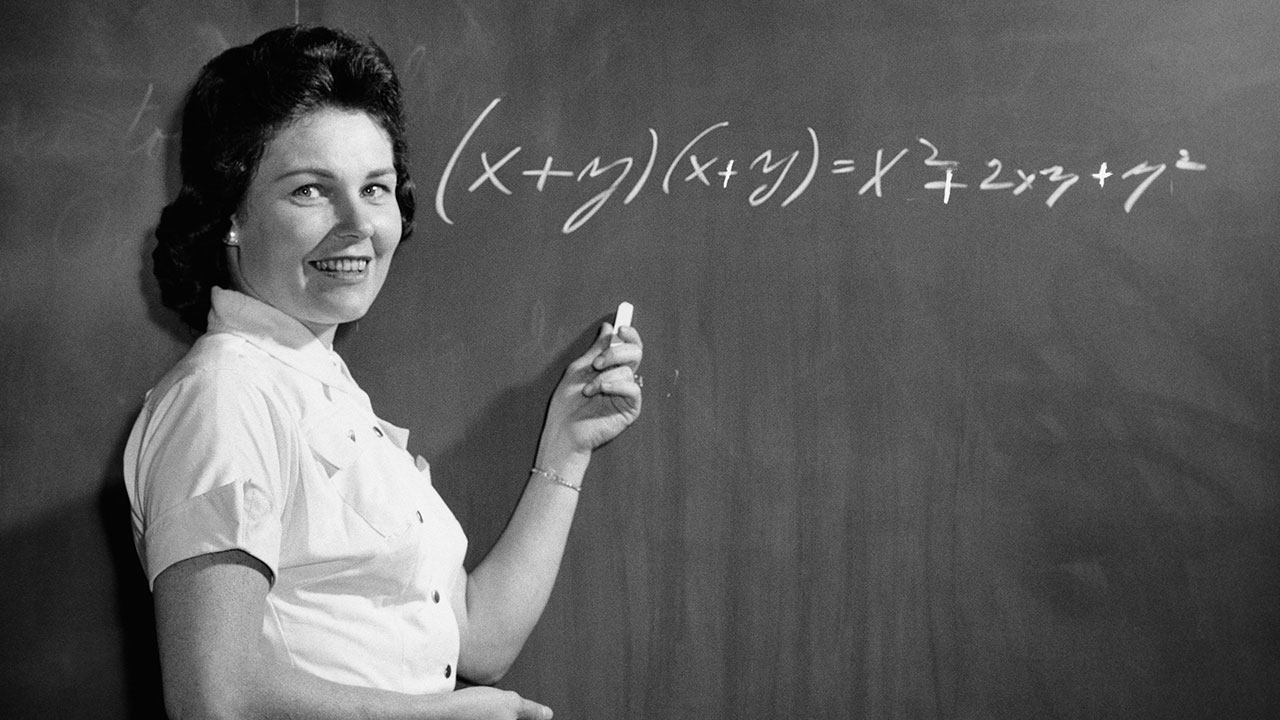
For many, the idea of math will bring back endless hours of formulas and equations at school. So it may seem hard to imagine, but there once was a time when arithmetic didn't exist. Of course, there was still the need to use complex computations to solve real-world problems, but it wasn't until Muhammad ibn-Mūsā al-Khwārizmī, the so-called "father of algebra," established the fundamentals for solving equations that we began to set the foundations for modern mathematics.
In this excerpt from her new book "Vector: A Surprising Story of Space, Time, and Mathematical Transformation", mathematician Robyn Arianrhod explores the 4,000-year evolution of the language of mathematics — from complex descriptions to the symbolic form we know today.














