Get all your news in one place.
100's of premium titles.
One app.
Start reading
The Conversation
The Conversation
Catherine Clarke, Professor in the History of People, Place and Community, School of Advanced Study, University of London

The Bayeux Tapestry tells only the winner’s story – but the other side can be found in old English texts

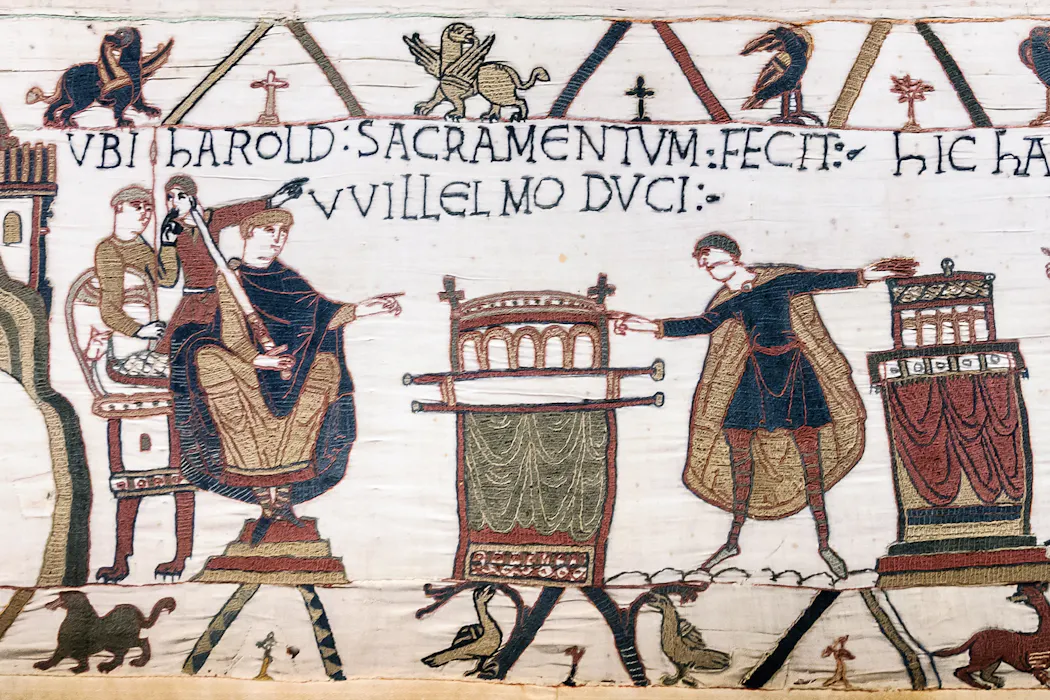
King Harold swearing oath on holy relics to William, Duke of Normandy Wikimedia, CC BY

As the Bayeux Tapestry comes to London, the year 1066 and the Norman Conquest are in the spotlight. The tapestry – an embroidered cloth nearly 70 metres long, created soon after the events it depicts – tells the story of the Battle of Hastings in 1066 and William of Normandy’s triumphant defeat of Harold Godwinson, King of England.

The tapestry depicts William of Normandy as the victor, and Harold as a slippery oath-breaker who promises the English throne to William then goes back on his word. But it shows little of the wider impact of the battle on English people – except for one glimpse, just after William’s ships land at Pevensey on England’s south-east coast, when we see a woman and child fleeing a burning building, torched by Norman soldiers.

Sign up to read this article
Read news from 100's of titles, curated specifically for you.
Already a member? Sign in here
Related Stories
Top stories on inkl right now
One subscription that gives you access to news from hundreds of sites
Already a member? Sign in here
Our Picks
Fourteen days free
Download the app
One app. One membership.
100+ trusted global sources.