Get all your news in one place.
100's of premium titles.
One app.
Start reading
Guitar World
Guitar World
Entertainment
Trevor Curwen

“The basic rotary sound is very convincing”: Crumar Burn review

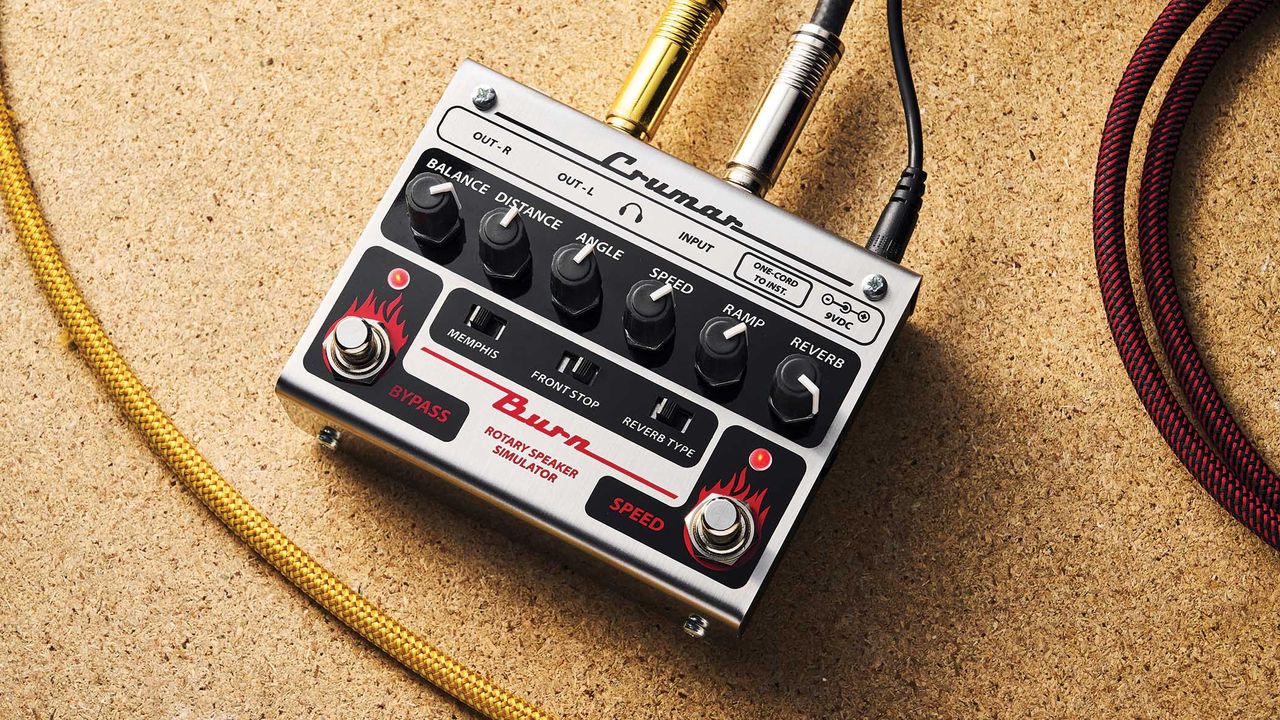
The Crumar Burn is a rotary speaker emulator that is designed for keyboards but works just fine for guitar – it has a brushed metal chassis with black dials and control panel.

What is it?

(Image credit: Future/Phil Barker)

Crumar might not be a name that’s familiar to most guitarists, but the long-established Italian keyboard company has recently released the Burn, a mono in/stereo out rotary speaker simulator designed for both electric guitar and keyboard use.

This is a new take on a pedal originally introduced in the 2010s by Genuine Soundware (Gsi). But where the original offered menu-based operation, this one has an instantly accessible interface with loads of hands-on control.

Specs

(Image credit: Future/Phil Barker)
  • PRICE: $309 | £229 | €259
  • ORIGIN: Italy
  • TYPE: Rotary pedal 
  • FEATURES: Buffered bypass, switchable noise gate, switchable low or high input gain, reverb, optional cabinet simulation
  • CONTROLS: Balance, Distance, Angle, Speed, Ramp, Reverb, Memphis switch, Front Stop switch, Reverb Type switch, Hi/Lo input gain switch, Bypass footswitch, Speed footswitch
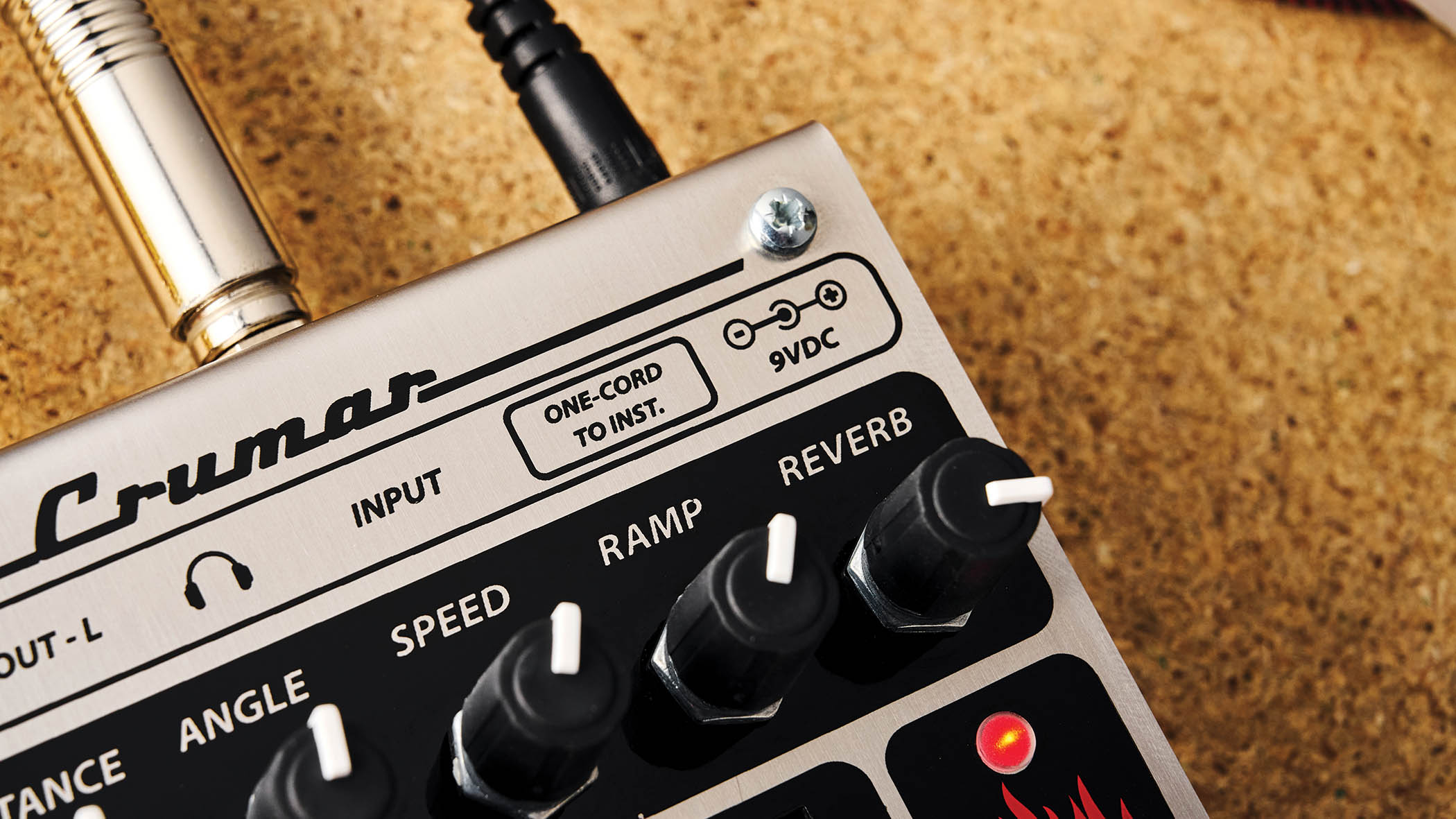
  • CONNECTIONS: Standard input, standard outputs L & R, 1/8” headphone output, standard TRS expression pedal input, Crumar ‘One-Cord’ connector, System connector
  • POWER: Supplied 9V DC adaptor 300 mA
  • DIMENSIONS: 118 (w) x 96 (d) x 34mm (h) 
  • CONTACT: Crumar

Usability and sounds

(Image credit: Future/Phil Barker)

The pedal offers adjustable parameters, not just for rotary speaker sound but also reverb.

Two reverb types are available via a toggle switch, delivering great-sounding yet diverse sonic outcomes via a spring reverb emulation that feeds into the rotary sound, or a larger-spaced ambience at the pedal’s output.

Another switch offers ‘Memphis’-style disabling of the spinning of the emulated bass rotor, which can have the effect of making your low-end more focused.

(Image credit: Future/Phil Barker)

Speed switching options from the dedicated footswitch toggle between slow and fast speeds but can also bring the speaker to a halt when pressed. A Speed knob adjusts the available range by up to 15 per cent up or down, and you can also set how long the Ramp is from one speed to the other.

The basic rotary sound is very convincing, as are the speed changes with the acceleration/deceleration of the horn and rotor proceeding at different rates like the real thing. The pedal can be run with or without cabinet simulation, giving you two different sonic options to start with.

(Image credit: Future/Phil Barker)

The overall sonic signature can be adjusted to taste by a knob that balances the level of horn against rotor and parameters representing the simulated mic’ing, particularly the Distance control, which ranges between a focused or more diffused effect.

While rival pedals offer a drive feature to emulate the growl of a vintage Leslie valve amp, there’s none of that here, so you’d have to employ a drive pedal for the more driven speaker sounds.

Verdict

Verdict: ★★★★

(Image credit: Future/Phil Barker)

It may lack some of the connective flexibility of its rivals that have optional stereo input and a designated mono output, but if mono input with a stereo output suits your signal chain needs, it could do the job for you.

Guitar World verdict: The Burn offers a really good representation of rotary speaker sound with plenty of practical sonic adjustments on tap and the added bonus of reverb.

Hands-on videos

Crumar

Sign up to read this article
Read news from 100's of titles, curated specifically for you.

Already a member? Sign in here
Related Stories
Top stories on inkl right now
One subscription that gives you access to news from hundreds of sites
Already a member? Sign in here
Our Picks
Fourteen days free
Download the app
One app. One membership.
100+ trusted global sources.