Get all your news in one place.
100’s of premium titles.
One app.
Start reading
Tom’s Guide
Tom’s Guide
Technology
Peter Wolinski

The Audeze Maxwell 2 just ruined every other gaming headset for me — here’s why

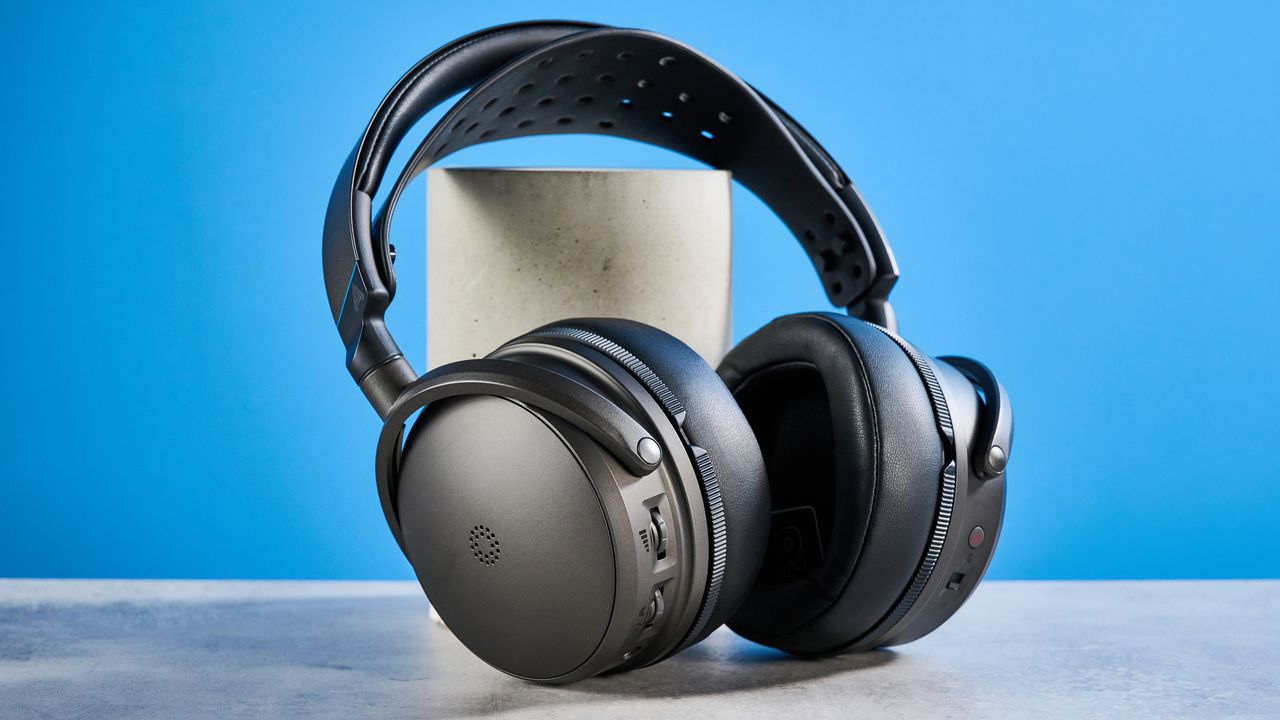
Audeze Maxwell 2 against a blue background.

The Audeze Maxwell 2 is the latest gaming headset from Californian audio manufacturer Audeze (pronounced Awd-Ee-Zee: a rough portmanteau of “audio” and “odyssey”), a brand famed for its high-end open-back audiophile headphones.

Succeeding the original Audeze Maxwell — a headset I’ve also reviewed and been using for around 18 months as I write this — the new model packs the same enormous 90mm planar magnetic drivers. There are a few modest updates, though, including Audeze’s SLAM driver modulators and microphone “AI” noise reduction.

I’ll get this out of the way early: if you’re wondering whether you should upgrade from the OG Maxwell, don’t bother. In its own right, though, the Maxwell 2 is one of the best gaming headsets out there, especially for gamers who moonlight as music connoisseurs.

Find out more in my full Audeze Maxwell 2 review.

Audeze Maxwell 2 review: Cheat sheet

  • What is it? A gaming headset with planar magnetic drivers
  • Who is it for? Audiophiles who also game
  • What does it cost? $329 / £339
  • What’s good? The sound quality, mic clarity, equalizer, comfort and battery life
  • What isn’t? The annoying headband adjustment and lack of simultaneous connectivity

Audeze Maxwell 2 review: Specs

Price

$329 / £339

Colors

Black/gray

Platforms

PC, Mac, Xbox, PS5, Switch

Connectivity

Wired, 2.4Ghz, Bluetooth

Battery

1,800mAh rechargeable

Battery life

80 hours

Frequency response

10-50,000Hz

Drivers

90mm planar magnetic

Multipoint connectivity

Yes

Paired devices max

2

Microphone

1x detachable boom mic

Weight

1.2lbs

Audeze Maxwell 2 review: The ups

The Maxwell 2’s core features are impressive. Planar magnetic drivers deliver a refined (albeit un-bassy) sound profile, the mic is excellent and it’s a comfortable headset to wear for long stints.

Fantastic sound quality

Like its predecessor, the Maxwell 2’s sound quality is solid. Via its 2.4G Wi-Fi dongle, the Maxwell 2 can wirelessly stream 96kHz/24-bit high-resolution audio — the same as the SteelSeries Arctis Nova Elite. Xbox and PS5 can only output CD-quality 44kHz/16-bit, though, so PC gamers are the only beneficiaries of the headset’s full wireless range in-game.

(Image credit: Future)

Frequency response is 10Hz-50kHz, meaning any high frequency you can hear, it’ll reproduce. Extension down to 10Hz means the Maxwell 2 can reproduce deep sub bass, while the 50kHz top end delivers increased clarity in high frequencies and a more spacious sound.

Like the original Maxwell, the second iteration headset uses enormous 90mm planar magnetic drivers instead of the dynamic drivers found in most headsets and headphones. Planar magnetic drivers start and stop vibrating much quicker than dynamic drivers, delivering tighter sound with more clarity and definition, plus more bass notes relayed.

The trade-off is volume: more bass notes, less loudness to those notes. To the end user, that means a lack of oomph down low. One Maxwell 2 update is Audeze’s SLAM technology: plates that modulate pressure in the drivers and, according to Audeze, deliver up to 6dB more volume in the bass. In a back-to-back test with the two headsets, the Maxwell 2’s bass felt that much thicker and richer, although I wouldn’t say enough to warrant an upgrade.

There isn’t the sheer “slap-you-in-the-face” bass you’ll get from hefty dynamic drivers, as in the Arctis Nova Elite, for example. Artillery explosions in Isonzo or Hell Let Loose (HLL) felt a little thin through the Maxwell 2 — when I’m in the midst of an artillery barrage, for immersion’s sake, I want to feel it. You can obviously dial up bass substantially via EQ, and the magnetic drivers ensure everything stays clean and distortion-free. But the Maxwell 2 still lacks that super thick, subby power of dynamic drivers.

The Maxwell 2's Footsteps EQ preset. (Image credit: Audeze / Future)

That said, the pared-back bass isn’t a huge deal in competitive titles like Counter-Strike 2 (CS2), where the Maxwell 2’s flatter sound profile and high-end clarity help with the detection of footsteps. Spatial audio helps here, too, and I was able to detect where enemies were approaching from in CS2 and HLL. Note that the Xbox variant is pricier because it includes a subscription to Dolby Atmos software, although both Xbox and PS5 variants support Dolby Atmos, which is all handled at the source device.

Where I’ve enjoyed the Maxwell 2 most, though, is in immersive, music-heavy titles. The drivers aren’t overly bassy, sure, but their strong extension, balanced profile and wide soundstage lend themselves perfectly to games with magnificent soundtracks and/or elaborate audio effects. Kingdom Come Deliverance 2’s (KCD2) medieval score sounded beautiful through the Maxwell 2, with strong tonal separation — no mistaking your lute for your harp here, thank you very much.

The spacious sound worked wonders for immersion, too. In KCD2, I could feel the dank spaciousness of a medieval Kuttenberg cellar, the echo of each character’s voice on the masonry, the hubbub of the upstairs tavern in the background. I don’t spend much time in medieval cellars, but that’s exactly how I imagine they should sound.

Great for music

Unsurprisingly, given Audeze’s pedigree, the Maxwell 2 is arguably the best headset on the market for music consumption. The soundstage is spacious, and there’s plenty of tonal separation. Just like the original Maxwell, I’d recommend the second iteration for any gamers who also take their music seriously. For $329, these are a decent set of dual-purpose cans.

(Image credit: Future)

Lighter, layered productions sound particularly lovely. Mk.Gee’s diaphanous Dream police was a spacious experience — each of the analog, discordant elements perceptible in three dimensions as they materialized and dissipated around me.

Floating through the ethereal intro of Dusky’s atmospheric Falling was equally enjoyable, demonstrating the headset’s airy treble and strong tonal separation: the layers of delay-filled percussion and echoed claps ricocheting and delicately fading in stereo sound, each staccato note distinct from its neighbors.

Falling gets pretty bassy, too, with a deep, plodding, tubular bassline. Again, no points to the Maxwell for pure bass loudness, but everything low was present and clean, if not a little restrained.

For something really bassy, I tried Skream’s Sub Island, an early U.K. dubstep deep cut composed almost entirely of an enormous bass and sub-bass warble. The upper bass notes were relayed nicely; warm and fuzzy but free of distortion. Again, even with some EQ dialed in, I missed a little of the song’s thick, skull-shaking sub-bass.

10-band equalizer

(Image credit: Audeze / Future)

Complementing the inherently strong sound is the Audeze companion app, which has received a wholesale redevelopment for the Maxwell 2… literally — it’s an entirely different app. The previous companion app looked rather dated, so I appreciate the slicker entry this time.

The app’s primary purpose is as a delivery vehicle for the 10-band graphic equalizer — it serves very little purpose otherwise, aside from updating the headset/dongle or adjusting game/chat and sidetone mixing.

The EQ is reason enough for an app, though. And it’s good! 10 bands, 6 presets and 4 custom presets give you a lot of space to play around with sound. Admittedly, I mostly stuck to the Immersive preset, which, as a “U” curve, worked well for general-purpose EQ.

Excellent microphone

(Image credit: Future)

The Maxwell 2’s detachable boom microphone sounds fantastic. A day into testing, I used the headset for a work call to reports of excellent sound — clear vocals with a rich, warm and bassy profile. I had no problems communicating in games either, especially playing the strategic Hell Let Loose, which is heavily reliant on mic communication.


In the clip above, recorded without microphone noise cancellation, my voice sounds clear and warm, so I’d recommend the Maxwell 2’s mic to streamers.


For comparison purposes, above and below are two control tests featuring background noise, with no noise reduction applied.


Obviously, there's a fair amount of background noise making it into the recordings, but the sound quality is still great and my voice is clear. Compare these clips to the Noise Reduction samples below.

Noise reduction (Low)

The Maxwell 2 features an “AI-powered” noise reduction (NR) filter. I’m always skeptical of brands bandying the “AI-powered” crap, but the NR turned out to be pretty good (with caveats).


In the clips above and below, the “Low” NR did a solid job at removing background noise. Above, ambient sound from a loud coffee shop backing track was removed while I was silent, and only just crept in when I spoke.


Above, keyboard noise was more noticeable as I spoke, although not too intrusive. This was a better show than the Arctis Nova Elite’s NR, which was fairly poor in comparison.

Noise Reduction (High)


“High” NR works slightly more effectively, cutting more of the ambient sound in the clip below as I speak.


And it’s more of the same story with keyboard noise in the track below.


In both NR modes, though, and especially “High,” audio quality takes a big hit. My voice sounds thin, compressed and clippy. This is a natural drawback of noise reduction, but best not to use NR for streaming.

There’s no microphone EQ, though, which is a shame. Given the Maxwell 2 is marketed as a “professional” gaming headset with streamers included in that sphere, it would’ve been nice to see presets for quickly tailoring sound — as with SteelSeries’ headsets. Still, there are third-party mixing applications that’ll do the job, including SteelSeries’ Sonar.

Comfortable cans

(Image credit: Future)

With such fat cans, you’d expect the Maxwell 2 to be comfy, and it is. Those enormous earcups provide plenty of padding, while maintaining breathability. I had no issues gaming for over six-hour stints without hot ears. The suspended inner headstrap, meanwhile, has been resized and widened, for more support and ventilation, and I find it more comfortable than the OG Maxwell’s thin band.

Importantly, the shape of the Maxwell 2’s inner earcup has been widened versus the original to accommodate more users — a big win for me. The OG Maxwell earcup opening didn’t fit my ears properly, causing pressure on my lobes and upper ear. This has also helped mitigate an ongoing problem with the strap adjustment, which I’ll cover later.

I’ve seen mixed reports online about comfort, with some users disliking the tighter fit of the second iteration. Comfort is always going to be a personal affair — what one person finds comfortable, another may not. But in general, I’ve found it to be a very comfortable headset.

Strong battery life

(Image credit: Future)

As I mentioned above, planar magnetic drivers generally deliver more clarity, but to achieve loudness, they need to be fed extra power. As such, the battery in this headset is chunky, at 1,800mAh — the same as the original Maxwell.

But that hefty battery also delivers impressive battery life. Audeze claims 80 hours, and I’ve no reason to doubt it. I’ve gamed with this headset for two weeks and still have 64% charge left. For context, the SteelSeries Arctis Nova Elite’s 670mAh delivers 30 minutes per charge, while the Arctis Nova Pro’s 700mAh delivers 44 minutes — although each comes with two for no downtime while charging.

Audeze Maxwell 2 review: The downs

My grievances with the Maxwell 2 are all fairly minor and can be fairly easily overlooked given the excellent sound quality, which, let’s face it, is what you’re paying for.

Annoying headband adjustment

(Image credit: Future)

My biggest grievance with the OG Maxwell is the ridiculous headband adjustment. Unlike virtually every other headphone and headset, there’s no sliding stepless adjustment mechanism. Instead, you adjust by unclipping the inner suspended headband and moving up or down to one of three levels.

This is cumbersome and provides nowhere near enough precision. What if, like me, you’re between two levels? The answer: tough. You have to set one side at a different height than the other, resulting in a lopsided headset.

Unfortunately, the Maxwell 2 employs the same system. It’s mitigated somewhat by the reshaped earcups, but still vexes me. Why not employ a sliding stepless adjustment mechanism? If there’s no space on the earcups, fine: add one to the outer handband. The headset’s suspended inner band means Audeze could’ve used any design it wanted on the outer band without affecting comfort.

No simultaneous wireless connectivity

(Image credit: Future)

The Maxwell 2 lacks simultaneous wireless connectivity. So, while you can connect to two devices (1x Wi-Fi and 1x Bluetooth), you can’t play the audio from both simultaneously. If you get a call while you’re gaming, your game audio will mute.

It’s incredibly handy to be able to take calls while gaming and hear both. That might sound like a mess, but when done well, it’s more seamless than it might appear. On the SteelSeries Arctis Nova Pro and Arctis Nova Elite, you can mix the levels of each channel using the included USB stations, as per your requirements, to keep the channels balanced. So handy.

Chunky design

(Image credit: Future)

The Maxwell 2 is thicker than a bowl of Scottish porridge (that’s oatmeal to those in the U.S.). That’s mostly fine, because it’s primarily designed for home use. But I enjoy using other headsets out and about as typical headphones — not really possible with the Maxwell 2… unless you want to look like you work on the F1 Pit Wall.

The large size and increased weight over the original Maxwell (up from 490g to 560g or 1.2lbs, thanks to the SLAM plates) also makes the Maxwell 2 cumbersome. Tilt your head forward — if you’ve dropped something, for instance — and it’s off.

Obviously, closed-back planar magnetic cans were never going to be small, especially with a 1,800mAh battery. It’s still something to consider based on your wants and needs, though.

Driver tick

This one’s super minor and is common on planar magnetic drivers, but the Maxwell 2 suffers from driver tick. Essentially, the ultra-thin drivers are moved by changes in air pressure, resulting in a ticking sound.

You’ll only hear this when audio isn’t playing or is very quiet, so it isn’t a huge deal, but if you think it’ll annoy you, opt for something with dynamic drivers, like the SteelSeries Arctis Nova Pro or Razer BlackShark V3 Pro.

Kinda pricey

(Image credit: Future)

What a world we live in, where the Maxwell 2 and its $329 / £339 price tag is now considered mid-range. Thanks, SteelSeries (which launched the Arctis Nova Elite at $600). $329 is objectively still on the pricey side, though.

Now, does that mean it’s overpriced? I don’t think so. This is an excellent gaming headset with a stellar mic and, most importantly, a refined audio profile. Indeed, the Maxwell 2 can (just about) double up as a set of audiophile headphones (and in the audiophile headphone arena, $329 is beginner territory).

Regardless, if you’re on a tighter budget, look elsewhere. The Alienware Pro Wireless Gaming Headset costs $229; the SteelSeries Arctis Nova 5 and Asus ROG Pelta cost $129; and the Cherry XTRFY H3 costs $99. All scored very highly in our testing, although they won’t deliver the Maxwell 2’s sheer audio fidelity.

Audeze Maxwell 2 review: Verdict

The Maxwell 2 is a solid gaming headset. Its planar magnetic drivers offer refined sound, suiting the headset well to immersive gaming and music. The inherent limitations of the drivers mean it isn’t the bassiest headset around, but what it lacks in loudness it makes up for in fidelity.

(Image credit: Future)

The microphone is particularly impressive, sounding extremely clean, with effective noise reduction also on hand to clear up environmental noise, albeit at the sacrifice of recording quality. Battery life is excellent, too, offering weeks of gameplay from a single charge.

Admittedly, the changes made to the formula aren’t substantial enough that I’d recommend OG Maxwell owners dump another $329 into the upgrade. That said, I’m a big fan of the earcup redesign, which has dramatically improved comfort for me over the first model.

My complaints with the Maxwell 2 are mostly just annoyances: the lack of simultaneous wireless connectivity, the frustrating headback adjustment and enormous size of the things. Nothing that’d stop me buying the Maxwell 2, nor make me regret it afterwards.

Sign up to read this article
Read news from 100’s of titles, curated specifically for you.
Already a member? Sign in here
Related Stories
Top stories on inkl right now
One subscription that gives you access to news from hundreds of sites
Already a member? Sign in here
Our Picks
Fourteen days free
Download the app
One app. One membership.
100+ trusted global sources.