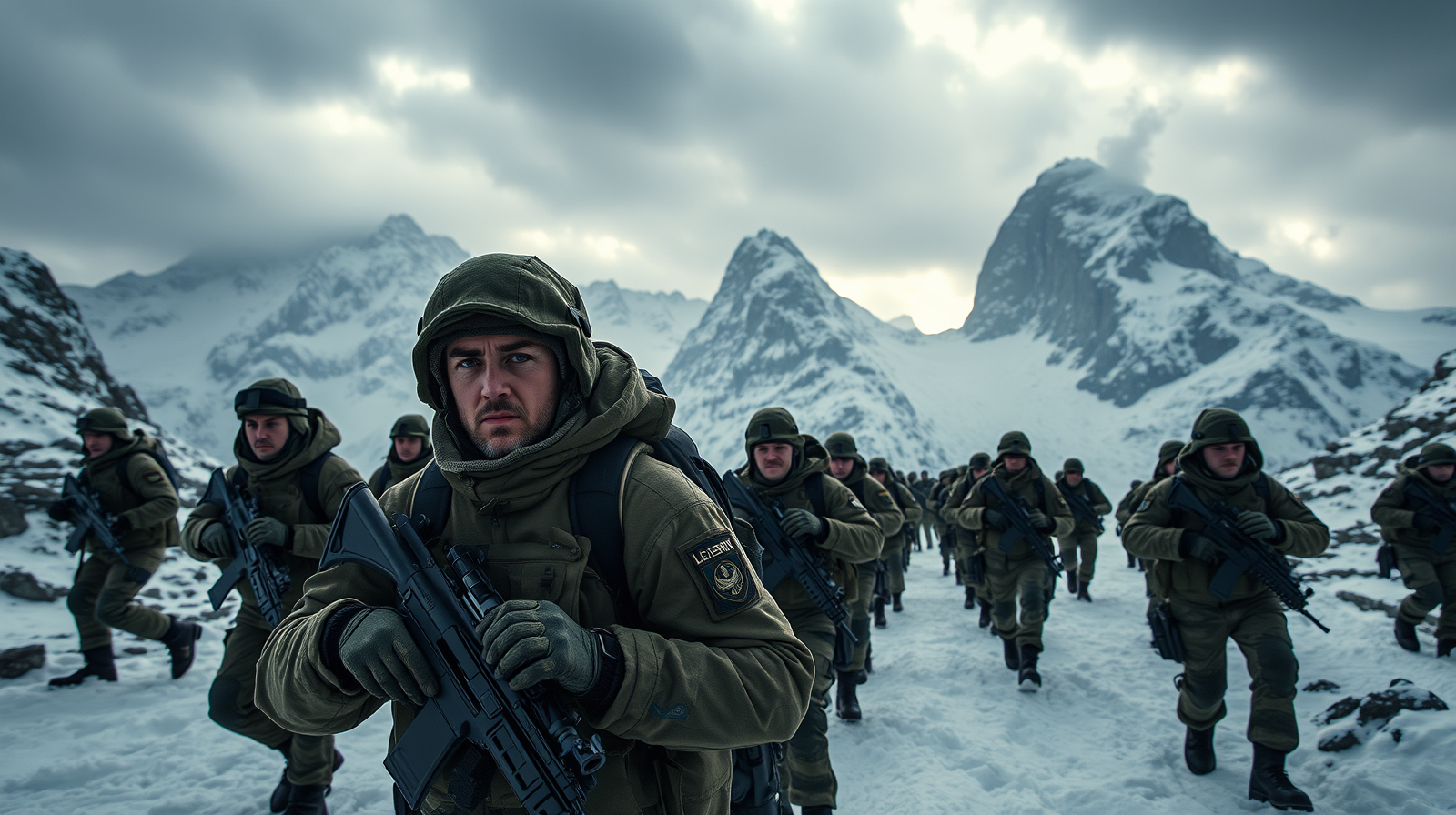
In the summer of 1866, one of Europe's smallest states sent one of history's smallest armies to one of the continent's largest conflicts, and came back having gained a man nobody has been able to officially account for since. Liechtenstein, a tiny principality of roughly 7,000 people wedged between Austria and Switzerland, dispatched 80 soldiers to the Austro-Prussian War, known also as the Seven Weeks' War, in support of its Austrian allies. The soldiers saw no combat, suffered no casualties, drank wine in the mountains, and marched home to a ceremonial welcome in the capital, Vaduz. When they arrived, they numbered 81. Two years later, Liechtenstein disbanded its army entirely and has not raised one since, making that bloodless alpine posting the last military deployment in the principality's history.
Get breaking news anytime, anywhere. Download the TOI app now!
Why Liechtenstein went to war at all in 1866
The Austro-Prussian War of 1866 was, in essence, a contest over who would lead the unified German state that 19th-century nationalist politics had made increasingly inevitable. Prussia, under Chancellor Otto von Bismarck, sought to sideline Austria from German affairs entirely, while Austria led a coalition of smaller German Confederation states that included Liechtenstein. Prince Johann II of Liechtenstein, who had just come to the throne, placed his soldiers at the Confederation's disposal but with a specific condition: they were to defend German territory only, and were not to fight against other Germans. The 80-man contingent was led by Commander Peter Rheinberger and assigned to guard the Stelvio Pass and the wider Brenner Pass region between Austria and Italy, watching for Italian forces who had allied with Prussia and might attempt an incursion from the south.
What Liechtenstein's soldiers actually did during the war
The posting turned out to be one of the more comfortable assignments in 19th-century European military history. Italy made no serious push through the Alpine passes, and Liechtenstein's contingent spent the roughly five weeks of the conflict sitting at high altitude with little to do but observe the scenery. Contemporary accounts, cited by We Are The Mighty , describe the soldiers passing their time drinking wine and beer, smoking pipes, and relaxing in the mountain air. Meanwhile, the decisive action of the war played out hundreds of miles away at the Battle of Königgrätz in Bohemia on July 3, 1866, where Prussia dealt Austria a crushing defeat that effectively ended the conflict in under seven weeks. With the war over by July 22, Liechtenstein's untested, entirely untroubled army began its march home.
Who was the 81st soldier and why nobody knows for certain
The mystery at the centre of the story is the extra man who walked back into Vaduz with the regiment. Several versions of the story circulate without any one of them being definitively confirmed. The most commonly cited explanation, according to History Facts , is that an Austrian liaison officer attached himself to the Liechtenstein contingent on the march back and simply kept going. Other accounts describe him as an Italian farmer who had befriended the soldiers during the long, uneventful posting. Still others suggest he may have been a deserter from a larger force looking for safe passage. None of these stories has ever been documented with primary sources, and no official record in Liechtenstein appears to name him. The identity of the 81st man has remained one of European military history's more cheerful unresolved footnotes for over 150 years.
Why Liechtenstein abolished its army just two years after coming home
The 1866 campaign, far from inspiring martial confidence, appears to have had precisely the opposite effect on the principality. The German Confederation that had made Liechtenstein's military obligations necessary dissolved immediately after the war, removing the political framework that had required the army's existence in the first place. Maintaining 80 soldiers was also genuinely expensive for a state of Liechtenstein's size, and the campaign had not been popular at home. According to CountryReports' historical profile of Liechtenstein , on February 12, 1868, just under two years after the soldiers returned, Liechtenstein officially disbanded its army and declared permanent neutrality, a status it has maintained without interruption ever since. The last surviving member of the regiment, a farmer named Andreas Kieber who had been deployed to the Stelvio Pass as a young man of 21, died in April 1939 at the age of 94.
How Liechtenstein has maintained its neutrality for over 150 years
Liechtenstein's neutrality has proven remarkably durable in the century and a half since the army was disbanded. The principality remained neutral and unoccupied through both World Wars, in 1943 going so far as to ban the Nazi Party within its borders despite sharing no formal military capacity to enforce its independence. In 1919, Liechtenstein entrusted its external relations to Switzerland, and the 1923 customs and monetary union with its western neighbour deepened those ties further. The only subsequent military incident of note occurred in 2007, when approximately 170 Swiss infantry troops accidentally wandered more than a mile across the unmarked border during a training exercise, armed with rifles but carrying no ammunition. Liechtenstein registered no formal complaint. Today the principality has no standing army, no military budget, and no apparent plans to change either arrangement, making the 80 men who drank wine in the Alps in 1866 the entire sum of Liechtenstein's military legacy.