
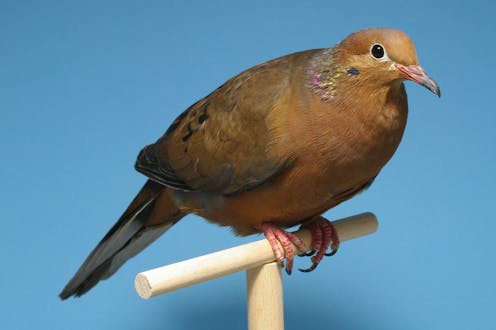
It was April in 1981 when a party of four camped for two days and nights on the forested slopes of Mount Evermann, the central peak of Socorro, a volcanic island in the Pacific some 400 kilometres southwest of Baja California, Mexico. Their fruitless search confirmed their suspicions: the Socorro dove, an endearingly tame bird unique to the island, had disappeared, eaten by the cats of Spanish colonists, pushed out by grazing sheep and shot from the sky by hunters.
But the species had not vanished. Fifty six years prior to this search, in 1925, 17 Socorro doves had been collected from the island and transported to a bird keeper in California in the US. Somehow, almost 100 years later, the descendants of these birds – the last Socorro doves on the planet – are still with us, distributed across captive facilities in Europe and North America.
.jpg?w=600)













