
Get all your news in one place.
100's of premium titles.
One app.
Start reading
Digital Camera World
Hillary K. Grigonis

The analog photography trend is about photography without “tracking likes and comments” –Instant film is trending, but Gen Z isn’t entirely to blame, Fujifilm says

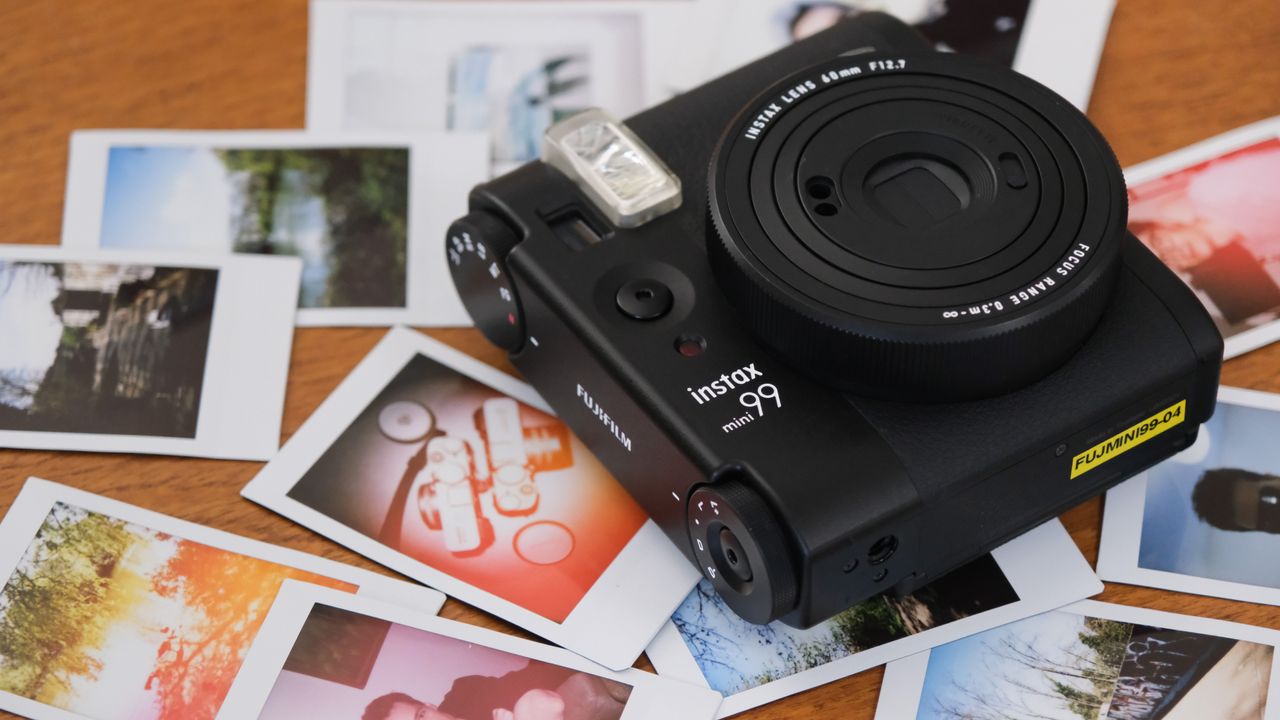
Fujifilm Instax Mini 99 surrounded by Instax Mini prints.

From the compact camera trend to disposable film cameras, much of the recent fads in the photography industry have been driven by younger generations such as Gen Z. But while Fujifilm sees a clear Gen Z influence on the rise in disposable film, instant film has a more diverse range of ages driving the analog trend.

I recently chatted with Ashley Reeder Morgan, the vice president of marketing and consumer products for Fujifilm North America, about the rise in popularity for disposable cameras and the QuickSnap line. But inevitably, it’s hard to talk about Fujifilm's disposable film cameras without acknowledging another highly popular lineup: Instax.

Morgan said that Fujifilm’s research suggests that the resurgence of analog photography isn’t just a short-term fad. While disposable film tends to lean heavily towards Gen Z, Morgan says that Instax has a more diverse range of users, though it is still a favorite among younger generations.

The Instax Mini 99 (Image credit: Gareth Bevan / Digital Camera World)

“When it comes to Instax, our consumers have actually evolved over time,” Morgan said. “At the beginning, the Instax user base skewed quite young, say ages 13-17, but as our product portfolio has diversified, so have our users.

"At our core, we are still a youthful, culture-forward brand and we are still beloved by younger generations, but some new models in our lineup also speak to other generations, either for themselves or as gifts for others.”

While Fujifilm's disposable cameras and instant film cameras are driven by different trends, Morgan says the underlying cause behind the analog resurgence is the same.

“For Gen Z digital natives that grew up with the ubiquity of smartphone photography and social media, using analog and instant film adds an opportunity to stay ‘present in the moment’ versus significant screen time being spent reviewing, posting, editing, and tracking likes and comments,” Morgan said.

The Instax Mini Evo (Image credit: James Artaius)

While both disposables and instant film are inherently analog, Instax caters to a film experience without the cost (or wait) of sending film to a lab.

Some of Fujifilm’s Instax models are digital hybrid instant cameras that, instead of using traditional optics to expose a piece of instant film to the light, capture a digital image and spit out Instax prints using a built-in printer.

That enables options like the Instax Mini Evo and Wide Evo to skip printing the photos that didn’t turn out – and keep shooting even if the film runs out.

Morgan says that Fujifilm doesn’t see the QuickSnap and Instax lines crossing over. “While both of course appeal to analog fans, we don’t see QuickSnap or Instax competing with each other.

"We think of it as a continuum of gratification; smartphone photography is immediate but digital (utility), Instax prints develop in 90 seconds, right in front of your eyes and create an instax print you can hold (and with that iconic white border!), whereas QuickSnap images might be in-camera days, week, months or even years, until the consumer decides to develop and see them again and re-live that moment.”

You may also like

Take a look at the best instant film cameras, or the best Fujifilm cameras.

Sign up to read this article
Read news from 100's of titles, curated specifically for you.
Already a member? Sign in here
Related Stories
Top stories on inkl right now
One subscription that gives you access to news from hundreds of sites
Already a member? Sign in here
Our Picks
Fourteen days free
Download the app
One app. One membership.
100+ trusted global sources.