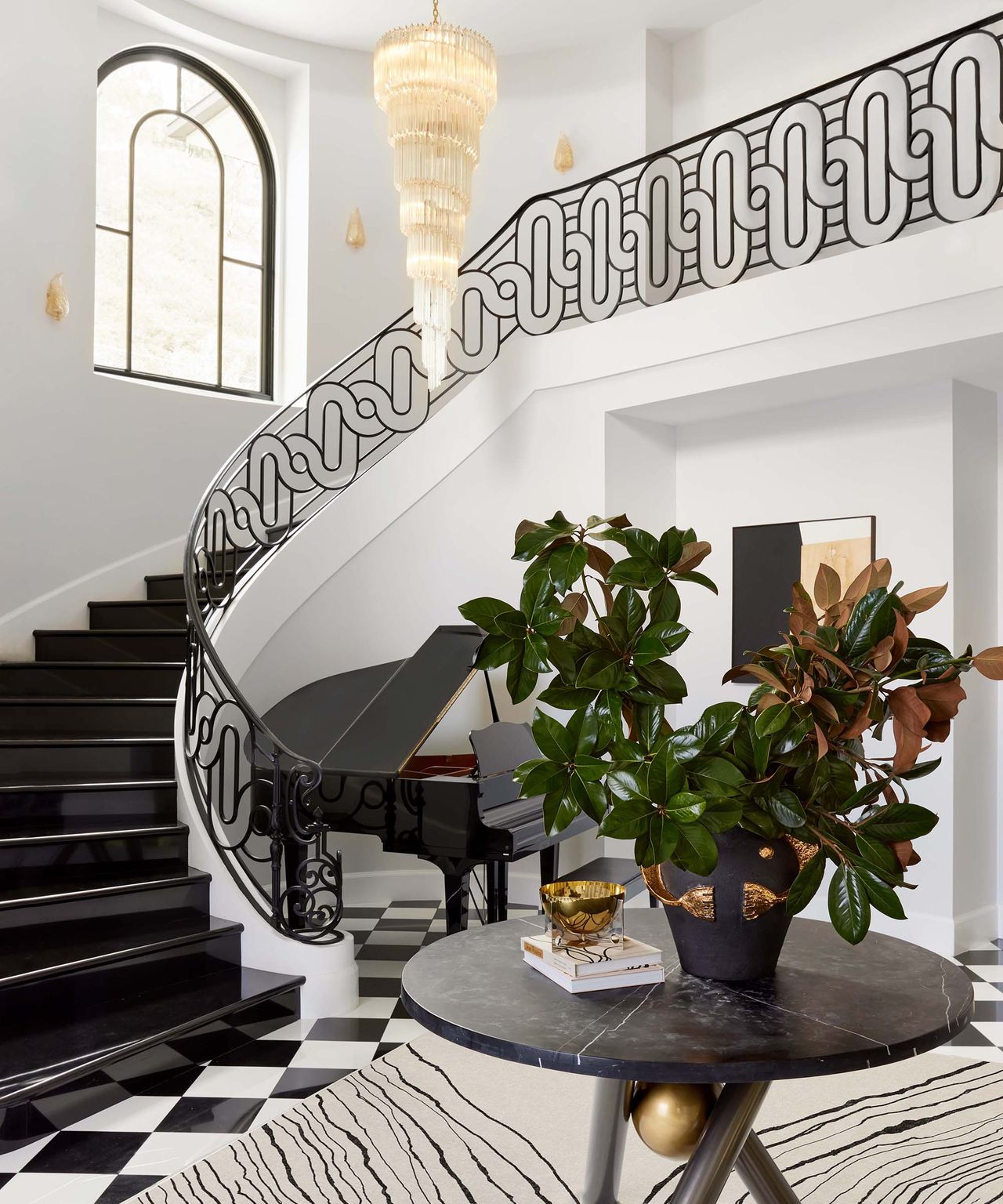
The entryway is the first thing people see. Get it right, and the rest of the house already feels considered.
The entryway is the most skipped room in any renovation. People run out of budget, run out of time, or assume it's too small to matter. It always matters. It's the room that sets expectations for everything that follows – and when it's done well, it makes the whole house feel more intentional from the moment someone walks in.

These are the five rules I apply to every entryway I design, regardless of size or style.
1. Lead with One Piece of Furniture That Has Real Presence

Not a shelf. Not a slim console you found because it fits the space. A piece that looks like it was chosen – something with weight, material interest, or an unexpected silhouette. This is the anchor of the room.
If the space is narrow, that doesn't mean you default to something generic. A narrow console in a beautiful material does more work than a deeper one in a forgettable finish.
2. Hang the Mirror Before You Do Anything Else

A mirror opposite or adjacent to the front door does two things: it bounces light back into the space, and it gives the room a focal point that isn't just wall. The size matters more than most people think. Too small and it reads as an afterthought. As a general rule, the mirror should fill at least half the width of whatever it's hanging above.
Round mirrors tend to work well in entryways because they soften what is often a corridor of right angles. But the shape matters less than the scale.
3. Get the Lighting Right Before You Pick a Single Decorative Object

Most entryways rely entirely on a single overhead fixture. That's a mistake. Overhead light flattens a space and makes it feel functional rather than considered.
Add a wall sconce at eye level – around 170–175 cm from the floor – and the whole room changes. It adds warmth, draws the eye to the wall, and creates the kind of layered light that makes a space feel designed rather than lit.
If there's only budget for one lighting change in the whole house, I'd put it here.
4. Treat the Floor like a Statement, Not a Transition

The floor in an entryway takes more visual space than any other surface in the room. A checkerboard tile, a patterned stone, a contrasting material to the rest of the house – any of these signals that the space was thought about. Using the same flooring throughout the entry and the adjoining rooms is a missed opportunity.
The floor is also the first surface guests look down at. Make it interesting.
5. Leave Room for One Object That Has No Function at All

A sculptural bowl. A vase. Something that exists purely because it's beautiful. Entryways that feel considered always have at least one object that isn't earning its place through utility – it's there because someone chose it.
This is the detail that separates a finished entryway from a styled one. Everything else can be perfectly specified, but without one object that feels genuinely personal, the room reads as assembled rather than lived in.
The entryway doesn't need to be large to feel luxurious. It needs to feel decided. Every choice visible from the front door should look like it was made on purpose.