
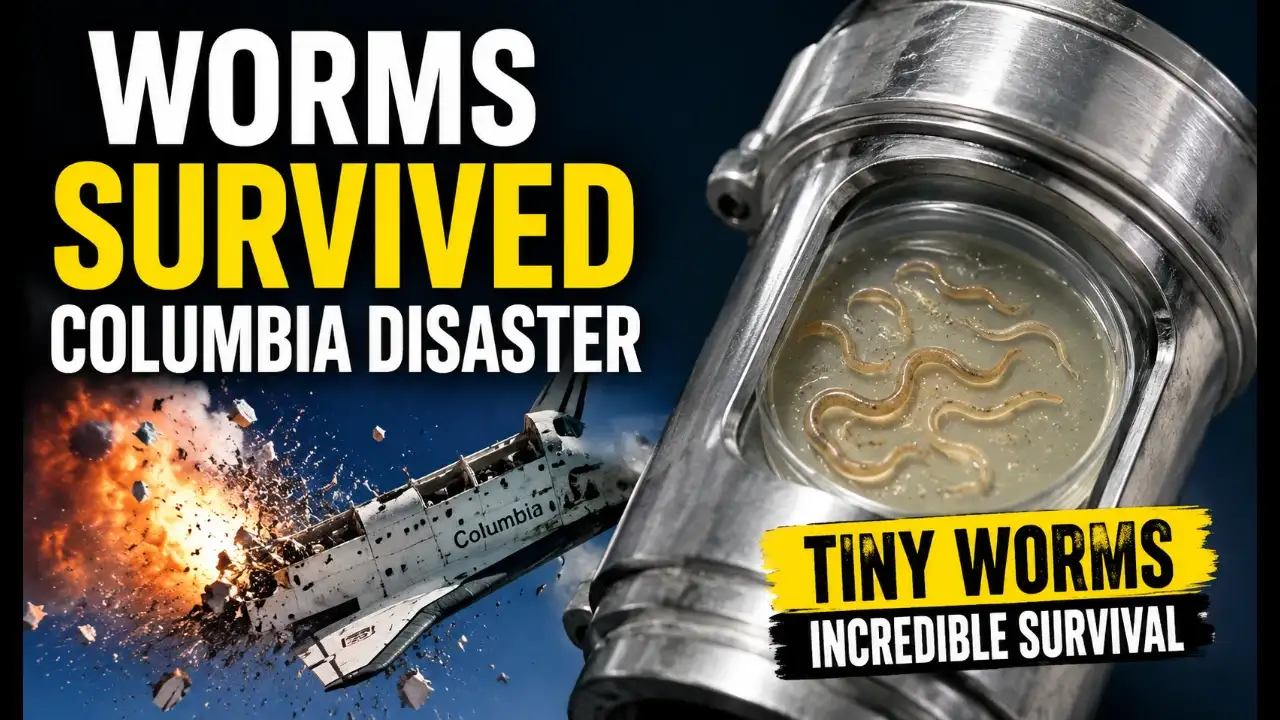
On February 1, 2003 , NASA's Space Shuttle Columbia broke apart during re-entry over Texas, killing all seven astronauts aboard and marking one of the most tragic days in American spaceflight history. Amid the devastation, however, scientists made an astonishing discovery. A colony of tiny laboratory worms had survived inside a damaged research container recovered from the debris field.
More than two decades later, that unexpected survival continues to shape scientific research into how living organisms endure extreme conditions and what it could mean for future missions to the Moon and Mars. The story is not about miracle survival or chance alone. Researchers say the worms lived because of a combination of their own biological resilience and the protective design of the experiment, particularly its aluminum housing , which helped shield the samples during the shuttle's catastrophic breakup and impact. The finding has become one of the most remarkable scientific legacies of the Columbia mission.












