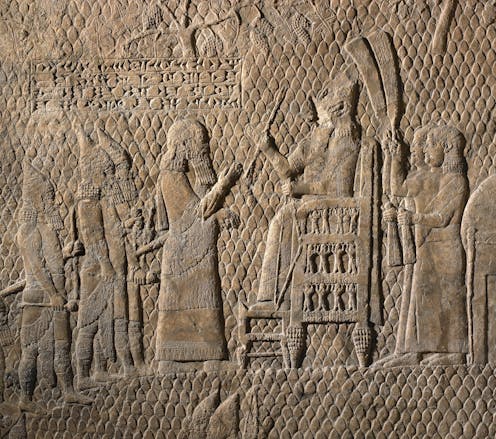
Archaeologists in northern Iraq, working on the Mashki and Adad gate sites in Mosul that were destroyed by Islamic State in 2016, recently uncovered 2,700-year-old Assyrian reliefs. Featuring war scenes and trees, these rock carvings add to the bounty of detailed stone panels excavated from the 1840s onwards, many of which are currently held in the British Museum. They stem from the ancient city of Nineveh which, for a time, was likely the most dazzling in the world.
There is evidence of occupation at the site already by 3,000 BC, an era known as the late Uruk period. But it was under King Sennacherib (705-681 BC), son of Sargon and grandfather of Ashurbanipal, that Nineveh became the capital of Assyria, the greatest power of its day.