
Get all your news in one place.
100's of premium titles.
One app.
Start reading
Homes & Gardens
Homes & Gardens
Sarah Wilson

The 0-5-30 Planting Rule Is Changing How Americans Design Fire-Resilient Gardens – Here's What It Means for Your Yard

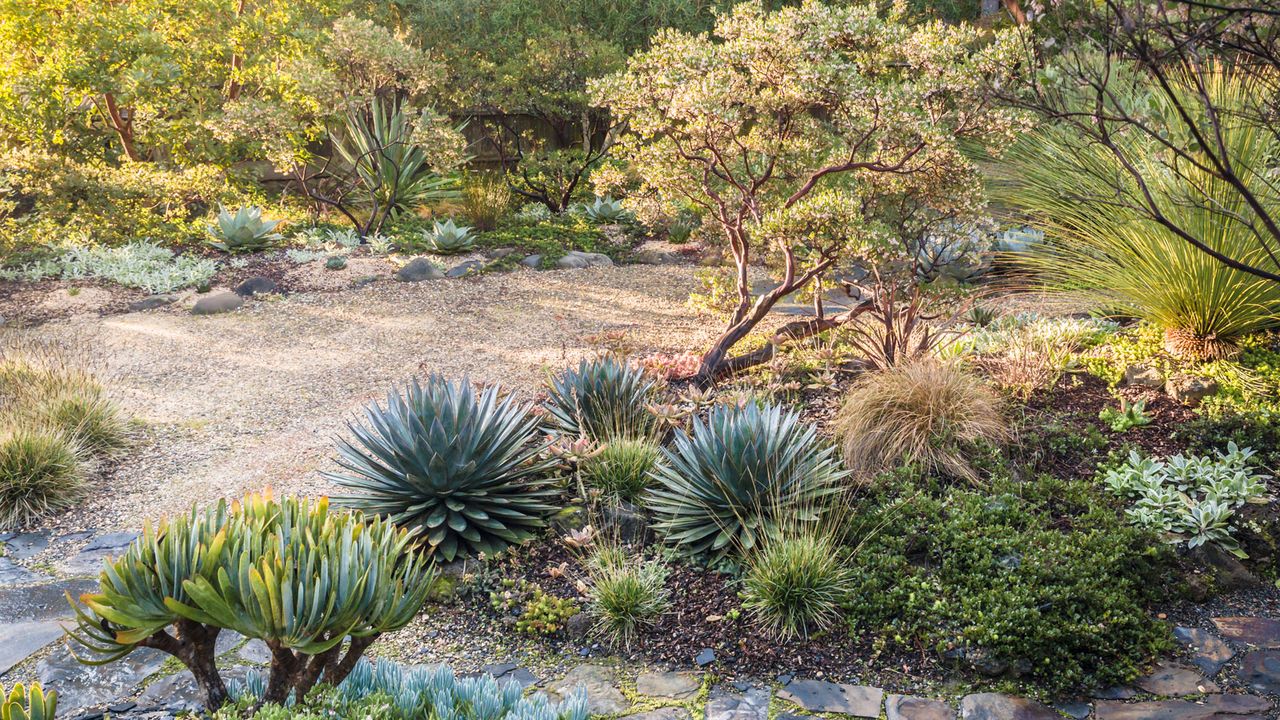
Californian drought tolerant landscaping featuring gravel, succulents, cacti and scrubby trees.

In the US fire zone landscaping shows a growing emphasis on distance-based planting zones as the way to go. This means following the 0–5–30 planting rule, which is fast becoming design shorthand to help you get ahead of a wildfire before it gets to you. And while it might seem counter-intuitive you may be surprised to find out that removing as much vegetation as possible is not necessarily the best course of action.

The successful creation of a fire-resilient property largely depends on how you manage the space around your home. But how do you stay safe yet still achieve a certain landscaping aesthetic that looks elevated and considered? The trick is to create a cohesive outdoor space where planting, materials, and layout work harmoniously together with the goal of firescaping your property first and foremost, yet with the resulting design still feeling balanced, natural and connected to the landscape.

It is possible to have beautiful landscaping around your home that includes a managed planting zone that fulfils all the criteria for creating a defensive space. First we spoke to leading wildfire mitigation experts to get the latest take on fire zone landscaping and how to make it work for you, then we explain the planting rule everyone's talking about.

The 0-5-30 Planting Rule: Fire-Smart Landscaping

(Image credit: Jacky Hobbs/Future)

Fire-smart landscaping goes beyond looks. It’s about function. In wildfire-prone areas, the right plants and thoughtful design can slow fire spread, reduce radiant heat, and block embers from reaching your home.

Defensible space can be organized into three main zones where the density of vegetation is closely controlled. The planting formula is pretty straightforward. In the zones closer to your property, plant density should be low; in the zones further away the acceptable plant density increases.

Here's a little more information on how exactly the 0-5-30 planting rule works (thanks to Jim Sprouse for the guidelines below).

Zone 0
0-5 feet around your home or to property line
Choose non-wood, low-growing herbaceous vegetation such as succulents or other fire-resistant plants. Prune any touching or over-hanging branches to a distance of at least 10 feet from the roof. Rake and remove flammable vegetation, such as leaves and needles or wood mulch, from underneath your deck and away from your home.

Zone 1
5-30 feet around your home or to property line
Create vegetation groups or islands to break up continuous fuels around your home. Remove ladder fuels to create a separation between low-level vegetation and tree canopies to keep fire from climbing into trees. Remove leaf and needle debris from the yard. Keep lawns, native grasses, and wildflowers less than four inches in height.

Zone 2
30-100 feet around your home or to property line
Create and maintain a minimum of 10 feet between the tops of trees. Safely remove ladder fuels up to a height of 10 feet, while retaining at least 75 percent of the foliage, to create separation between the ground and tree branches. This keeps fire from climbing into the tree canopies. Create space between shrubs and trees to eliminate a continuous fuel bed at the ground level. Remove dead trees, shrubs, and all other dead or dry vegetation.

The Landscaper's POV: Take Your Cue From Regional Character

Gravel landscaping can be a great asset in areas at risk of wild fires (Image credit: Yardzen)

'In fire-prone areas, thoughtful design incorporates fuel breaks, such as pathways, gravel, and hardscape interruptions, so that beauty and fire safety work together rather than against each other,' says landscape architect and design director Kevin Lenhart.

Resilient native planting is always a good option. Ideally your landscape will include a diverse mix of native trees, shrubs, grasses and flowers that bloom over a long time period to attract pollinators.

Choose heat and fire spark resistant plants wherever possible, such as white sage available from Walmart, and snow-in-summer, also available from Walmart.

'The best plant palettes take their cues from local wild lands, including meadows, chaparral, woodland edges, and the high desert of each region, then do something new with those "ingredients",' says Kevin. "In the arid Southwest, for example, this tends to result in an open and textural look. Regional character is the starting point, not a constraint.'

Choosing a high-quality stone color drawn from the regional palette can root a design in its local landscape more effectively than almost any other material decision, says Kevin. It gives your space a sense of belonging to its place, its ecology, and its climate.

The Fire Mitigation Expert's POV: Establish A Defensible Space

Create vegetation groups or islands to break up continuous planting around your home. (Image credit: Noelle Johnson/Dry Climate Gardening)

'Getting ready for wildfire starts with creating a defensible space and installing a wildfire defense system (WDS),' says wildfire mitigation specialist Jim Sprouse. 'Defensible space means creating and maintaining a buffer between buildings and the plants, brush, trees and other combustible items in the vicinity.

This buffer helps to keep wildfire away from your home by reducing the fire’s intensity and slowing or halting the spread.'

Creating an area of defensible space is critical for increasing the resistance of your property to wildfire in addition to safeguarding the lives of firefighters as they protect your home.

Implementing fire zone landscaping practices where plants and hardscape are selected and maintained so that they do not transmit fire is key. Not adhering to the guidance on the zones within this defensible space is one of the firescaping mistakes to avoid at all costs.

There is a need for more intense reduction of wildfire fuels within the 100-foot perimeter of a home, advises Jim. 'Start at the house and work your way out 100 feet or to your property line, whichever is closer. Many local government agencies have ordinances for defensible space. These will often be more stringent than the state of California’s minimum requirement.'

Check with your local fire department or fire protection district for additional information.

The Plant Ecologist's POV: Plant Placement Is Everything

It's best to choose non-wood, low-growing herbaceous vegetation such as succulents or other fire-resistant plants near the house (Image credit: Grace Stufkosky/Noelle Johnson Landscape Consulting)

'How you manage the space around your home can have a tremendous influence on the behavior of embers, as well as potential sources of radiant heat or direct flame exposure,' according to plant ecologists Adrienne Edwards and Rachel Schleiger, authors of Firescaping Your Home: A Manual for Readiness in Wildfire Country, available on Amazon.

'A major misconception about defensible space is that all vegetation (dead or alive) surrounding your home increases fire risk, so you must remove as much vegetation as possible. Unfortunately, fire risk is not that simple.'

Structures can burn because of too much surrounding vegetation, too little surrounding vegetation, or completely independently of vegetation, according to the plant ecologists. 'Embers cause the majority of exterior-ignited structure fires and require no contribution from adjacent vegetation at all. Radiant heat and direct flame contact are of greater concern when too much vegetation is immediately adjacent to structures.'

Keep Goldilocks in mind when planning defensible space for your property: aim for a “just right” number and placement of plants, not too many or too few. 'Live, healthy green vegetation can capture, block, and/or slow windborne embers from reaching structures. Considered placement of plants can decrease and change wind speeds around structures, and potentially shield structures from embers for some time.'

What to Shop For a More Fire-Safe Yard

These fire zone landscaping suggestions will go a long way towards helping you protect your home. It's also a good idea to find out how to design a drought-tolerant yard as well as familiarizing yourself with drought-tolerant landscaping ideas and landscaping with gravel ideas to enable you to take a 360 approach.

Love inspiring garden ideas, outdoor advice, and the latest news? Sign up for our newsletter and get the latest features delivered straight to your inbox.

Corten Steel Planter Box Solar Pathway Lights Grey Pea Gravel Flat Soaker Hose Ceramic Bird Bath Concrete Planter
Sign up to read this article
Read news from 100's of titles, curated specifically for you.
Already a member? Sign in here
Related Stories
Top stories on inkl right now
One subscription that gives you access to news from hundreds of sites
Already a member? Sign in here
Our Picks
Fourteen days free
Download the app
One app. One membership.
100+ trusted global sources.