Get all your news in one place.
100's of premium titles.
One app.
Start reading
TechRadar
TechRadar
Leon Poultney

'That’s where the danger lies': Uber's former self-driving car boss sounds safety alarm after near-death Tesla experience — as Cybertruck crash sparks fresh controversy

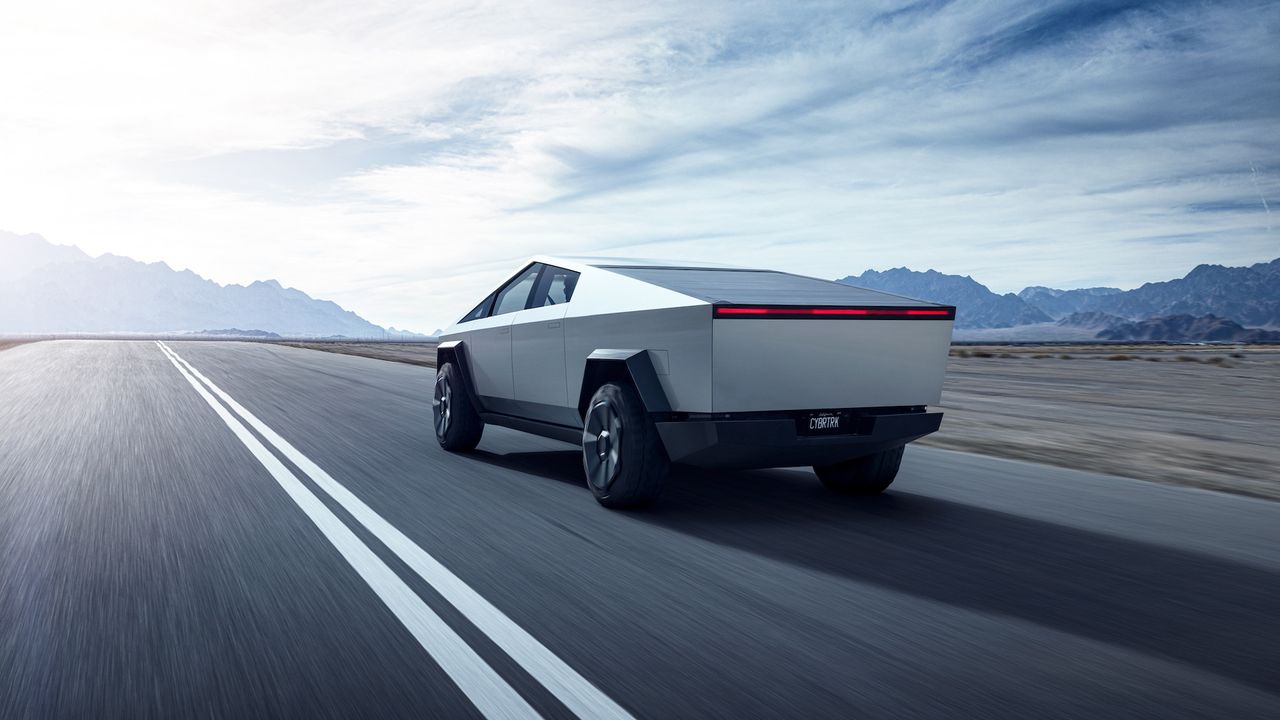
Tesla Cybertruck.

  • Tesla’s Full Self-Driving systems have come under scrutiny again
  • Uber’s former head of self-driving crashes Model X using FSD
  • A Cybertruck also violently crashed into an overpass barrier

Two recent high-profile Tesla crashes have once again shone the spotlight on the company’s Full Self-Driving (FSD) technology. They highlight the issue with “asking humans to supervise systems designed to make supervision feel pointless”, as Uber’s former head of self-driving cars wrote in an article for The Atlantic after his Model X crashed into a wall.

Raffi Krikorian, the Mozilla CTO and former Uber self-driving boss, said he was navigating the residential streets of San Francisco’s Bay Area with his Model X set to Full Self-Driving mode, when the steering wheel “jerked one way, then the other”.

Moments before colliding with a wall, Krikorian says he turned the wheel to take over, but it was too late.

In a similar but altogether much scarier scenario, dash cam footage captured by Justine Saint Amour’s Cybertruck reveals the moments just before the vehicle careered into an overpass barrier at speed, almost sending it over the edge and potentially killing the driver and her one-year-old child.

Saint Amour says the vehicle was in Full Self-Driving mode before the incident, but her attorney Bob Hilliard acknowledged that his client disengaged the system moments before impact. Tesla’s CEO, Elon Musk, immediately picked up on this fact.

He took to X to write: “Logs show driver disengaged Autopilot four seconds before crashing” — an argument he has used in FSD's defence a number of times before.

But Raffi Krikorian, who used to run Uber’s self-driving car division, argues in his article that drivers need "five to eight seconds to mentally reengage after an automated driving system gives control back”. In his opinion, this middle ground simply doesn’t work.

"A machine that constantly fails keeps you sharp. A machine that works perfectly needs no oversight. But a machine that works almost perfectly? That’s where the danger lies,” he writes.

Saint Amour suffered two herniated discs in her lower back, one in her neck, sprained tendons in her wrist, and experienced numbness and weakness in her right hand, according to Electrek , and is suing Tesla for over $1m as a result.


Analysis: Tesla’s messaging has long been misleading

(Image credit: Tesla)

Tesla may have stopped referring to its advanced cruise control system as “Autopilot”, but that hasn’t prevented the company from pursuing and promoting its Full Self-Driving technology.

Despite adding ‘Supervised’ to proceedings, Elon Musk has long peddled the myth that his technology is more capable than it actually is.

He has made claims a Tesla should be able to autonomous drive “90 per cent of miles” way back in 2013, as well as stating that drivers could soon “go to sleep in your car and wake up in your destination” on multiple occasions, with the most recent being the end of last year.

The mounting number of court cases and high profile crashes are testament to the fact that we are still a long way from that point, and despite Tesla’s website warning Full Self-Driving users not to “become complacent”, customers are clearly placing more trust in the systems than they should.

As Raffi Krikorian writes: “when a car’s marketing says “self-driving” but the fine print says “driver responsible,” that’s a warning sign".


Sign up to read this article
Read news from 100's of titles, curated specifically for you.
Already a member? Sign in here
Related Stories
Top stories on inkl right now
One subscription that gives you access to news from hundreds of sites
Already a member? Sign in here
Our Picks
Fourteen days free
Download the app
One app. One membership.
100+ trusted global sources.