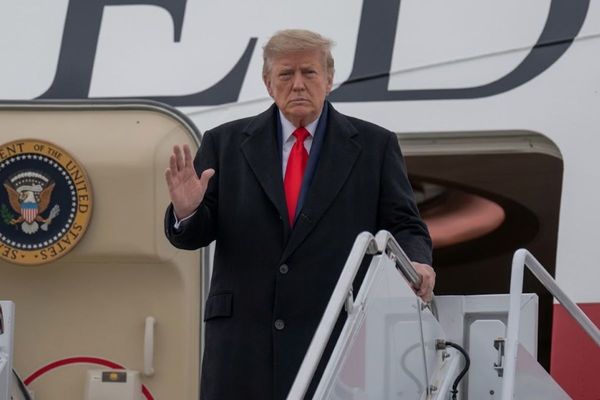
The Trump administration on Monday announced that all 50 states will receive proceeds from a $50 billion rural health fund, the creation of which helped secure the support for President Trump’s tax cuts law from Republican senators worried about the impact of Medicaid cuts in their states.
In 2026, the first year of the program, states will receive between $147 million and $281 million, with Texas securing the largest amount, the Centers for Medicare and Medicaid Services said. Others at the top of the funding list are Alaska, California, Montana and Oklahoma, with New Jersey slated to receive the lowest amount next year at $147 million.
[Related: States eager for final decisions on $50B health care fund]
Congress had directed half of the $50 billion to be distributed equally among all states whose applications were approved over the fund’s five-year horizon. The rest is being distributed based on a scoring process.
States will typically receive more funding for having larger rural populations, which contributes to 50 percent of the scoring, CMS Administrator Mehmet Oz said on a call with reporters on Monday.
Twenty percent of the score was determined by a state’s policy actions, including vows to pursue waivers to ban SNAP users from buying certain items like soda and candy, reinstating the presidential fitness test for schoolchildren and requiring that medical schools teach students about nutrition, among other things. States could lose money in future years through a “rescoring” process if they don’t follow through on those initiatives, Oz said.
The remaining 30 percent is based on the strength of the ideas that states proposed in their applications.
Projects highlighted by CMS on Monday include ones that aim to expand access to preventative, primary, maternal and behavioral health care. States also are pursuing “food as medicine” initiatives, models to address chronic disease prevention and programs to shore up their health care workforce.
Critics had argued the amount of funding available is nowhere near large enough to offset reductions in federal Medicaid spending made by the reconciliation law, which amounts to $911 billion over 10 years. Sen. Susan Collins, R-Maine, who voted against the bill, had pushed for at least $100 billion in rural health funding.
The $50 billion would offset only about 37 percent of the estimated loss of federal Medicaid funding in rural areas, according to KFF, a health policy research organization.
Oz says the intent of the funding is not to offset reductions.
“The purpose of this $50 billion investment in rural health care is not to pay off bills,” he said. “The purpose of this $50 billion investment is to allow us to right-size the system and to deal with the fundamental hindrances of improvement in rural health care.”
The post Texas gets largest share of reconciliation law’s rural health fund appeared first on Roll Call.