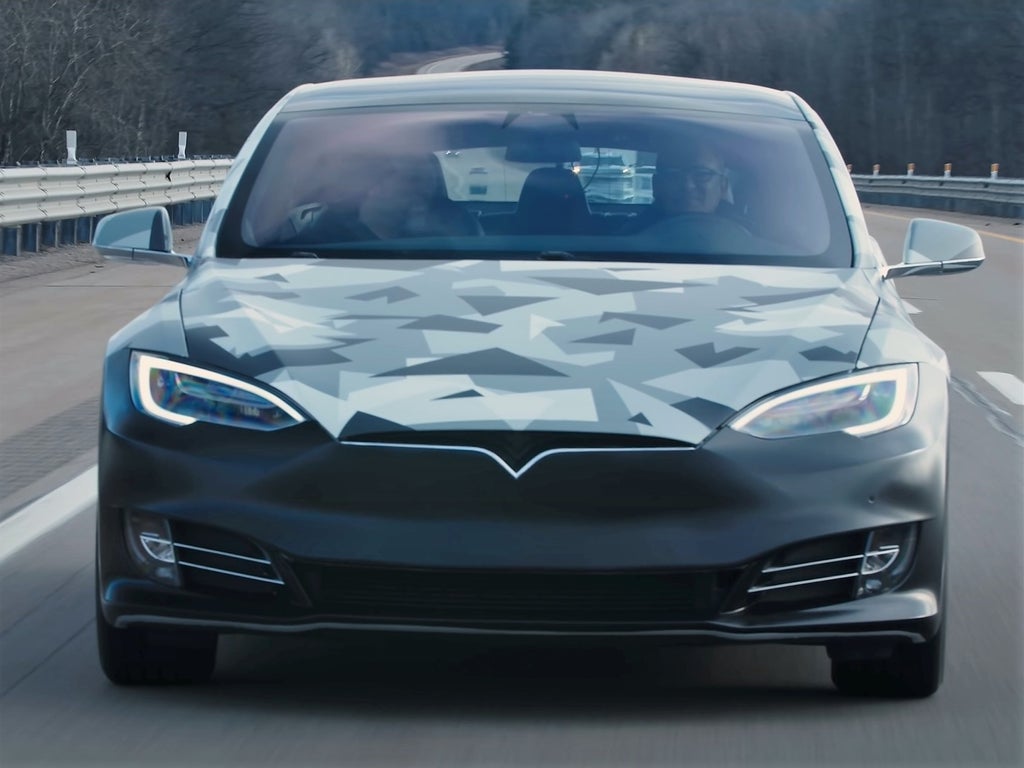
A Tesla vehicle equipped with a next-generation battery was able to travel more than 1,200km (750 miles) on a single charge.
The first road test of the Gemini battery, developed by Detroit-based startup Our Next Energy (ONE), achieved nearly double the typical range that a standard Tesla Model S is able to achieve, and more than the highest range of any mass-produced gasoline-powered vehicles.
Travelling across Michigan, the results “set a new benchmark for the entire automotive industry”, according to ONE founder and CEO Mujeeb Ijaz.
“We want to accelerate the adoption of electric vehicles by eliminating range anxiety, which holds back most consumers today,” he said.
“We are now focussed on evolving this proof-of-concept battery into a new product called GeminiTM, which will enable long distance trips on a single charge while improving cost and safety using sustainable materials.”
The proof-of-concept solves the issue of range anxiety with electric vehicles, which until now has been addressed through making charging stations more ubiquitous. This comes with its own issues however, most notably the length of time it takes to recharge an electric car compared to refilling a fuel-powered vehicle.
The battery used in the ONE prototype is an innovative lithium iron phosphate design, which the company hopes will be used in commercial trucks later this year.
The technology was presented at the CES 2022 tech conference in Las Vegas earlier this month, where several other companies and startups displayed ambitious battery life designs.
Mercedes promised a 965km range for its Vision EQXX prototype vehicle, while HyperX’s wireless gaming headphones boasted of a 300-hour charge cycle – a 10-fold improvement on standard wireless headsets.
Energy density limitations of lithium-ion batteries, which are found in most consumer technology products, have been augmented by new anodes and ultra-efficient processors, but researchers are now looking to next-generation batteries like lithium-sulfur.
So far, any breakthroughs with these new battery types are yet to make it out of the lab, but are could one day replace their conventional counterparts due to their vastly superior capacity and improved environmental credentials.