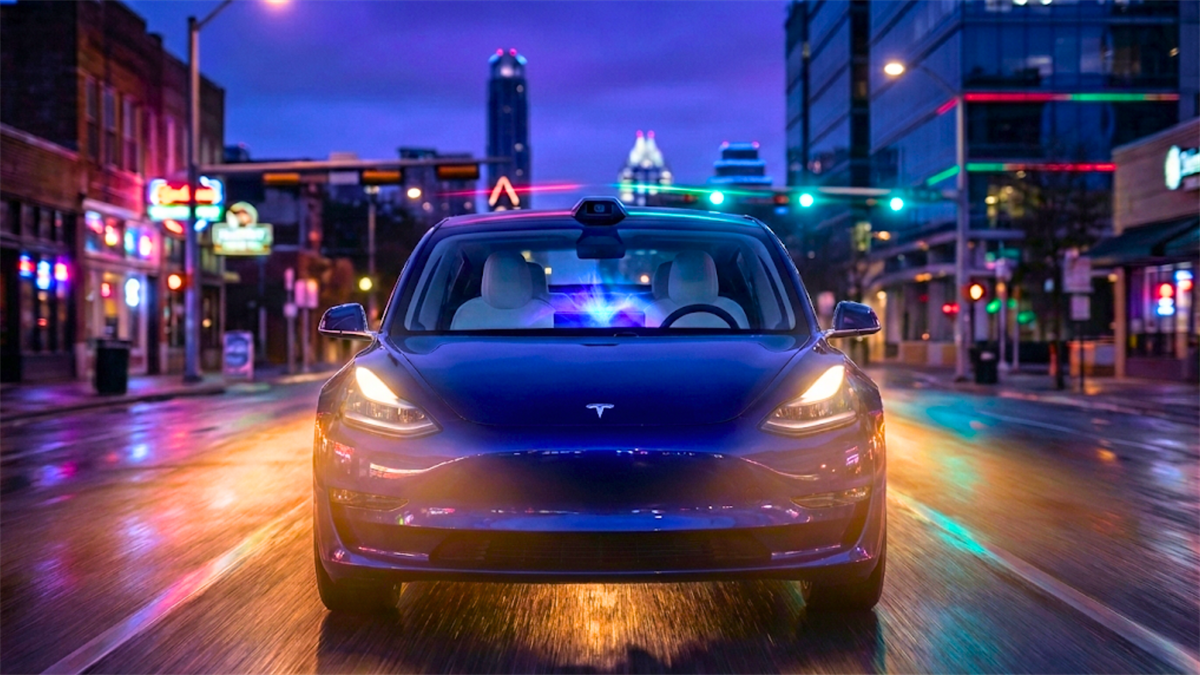
For years, the promise of self-driving cars has fueled Tesla’s (NASDAQ: TSLA) massive stock valuation. That promise has transitioned from a theoretical concept to a physical reality on public roads. On Thursday, Jan. 22, Tesla officially confirmed the launch of unsupervised Robotaxi rides in Austin, Texas.
This development marks a critical turning point for the company. Until now, autonomous testing required a human safety driver behind the wheel, ready to take control if the software failed. The removal of that human safety net indicates that Tesla’s internal data finally meets the strict safety thresholds required for commercial operation.

Investors have responded positively to the news. Tesla stock is currently trading near $448, pushing the company’s market capitalization to approximately $1.43 trillion. While critics continue to point out declining car sales, the market is aggressively pricing in a massive shift in the business model. Tesla is no longer just an automaker; it is rapidly becoming an artificial intelligence (AI) and robotics ecosystem. The launch in Austin provides the first tangible proof that this transition is on schedule.
Safety Drivers Step Aside: The Unsupervised Era Begins
The significance of today’s launch cannot be overstated. In the world of autonomous driving, the move to unsupervised operations is the ultimate technical and regulatory hurdle. It indicates that the software can handle complex urban environments without human intervention.
For investors, this milestone validates the aggressive timeline set by CEO Elon Musk. The dedicated Cybercab Robotaxi is scheduled to enter limited production in April 2026. By successfully deploying unsupervised vehicles now, Tesla is demonstrating that the software stack will be ready when the dedicated hardware rolls off the assembly line later this spring. This significantly reduces the execution risk that has hovered over the stock for the last two years.
The Lemonade Deal: Insuring the Uninsurable
Alongside the technical achievement in Austin, a new financial partnership offers a different kind of validation. Lemonade Insurance (NYSE: LMND) has announced a specialized product for Tesla drivers utilizing FSD (Full Self-Driving). This program offers significant rate discounts through direct integration with Tesla’s driving data.
This is a bullish signal for the stock because it addresses a major risk factor: liability. One of the biggest questions surrounding Robotaxis has been whether they are insurable. When a third-party insurance company is willing to underwrite these risks and offer discounts to do so, it implies that the safety statistics support Tesla's claims. This external vote of confidence helps mitigate fears regarding regulatory roadblocks, clearing a path for mass commercial adoption.
The $1.4 Trillion Question: Why Energy and AI Trump Auto Sales
Looking strictly at traditional automotive metrics, Tesla’s current stock price seems difficult to justify. The company delivered 1.63 million vehicles in 2025, a 8.6% decline from the previous year. Despite shrinking sales volume, the stock trades at a price-to-earnings ratio (P/E) of approximately 288x.
For context, traditional automakers typically trade at single-digit P/E ratios (often between 6x and 8x). Why is Tesla trading at nearly 300 times its earnings?
The divergence exists because investors are no longer valuing Tesla as a car manufacturer. They are valuing it as a high-growth technology platform. The market is paying a premium today for the potential future earnings of the Robotaxi fleet. Tesla aims to operate these vehicles at a cost of roughly 20 cents per mile. If successful, this software-based revenue would carry significantly higher profit margins than selling hardware, justifying the massive multiple.
49% Growth: The Energy Division Steals the Show
While the AI future is promising, Tesla has a tangible growth engine operating right now that helps support its valuation: the Energy division. Even as car sales cooled, the energy storage business posted record-breaking numbers. This segment is becoming a critical financial stabilizer for the company.
Key Energy data points for 2025 include:
- Q4 Record: Tesla deployed 14.2 Gigawatt-hours (GWh) of energy storage in the fourth quarter alone.
- Annual Surge: Full-year deployments reached 46.7 GWh.
- Growth Rate: This represents a massive 49% increase over 2024.
As the automotive business faces cyclical pressure and price cuts, this high-growth division provides a revenue floor. It reassures investors that the company can continue to fund its expensive AI ambitions without burning through its cash reserves.
Earnings Preview: Margins Matter More Than Revenue
While the long-term thesis is strong, short-term volatility is likely. Tesla is set to report its fourth-quarter earnings on Wednesday, Jan. 28. Analysts are forecasting revenue of approximately $24.8 billion. However, smart investors should look past the headline revenue number.
The most critical metrics to watch next week will be:
- Operating Margins: In the third quarter of 2025, margins slumped to 5.8% due to vehicle price cuts and heavy spending on AI infrastructure. Investors need to see if the booming Energy division has helped stabilize profitability.
- Delivery Guidance: Will Tesla forecast a return to growth for vehicle sales in 2026?
- International FSD: There is growing speculation that regulators in Europe and China could approve Supervised FSD as early as February 2026. Confirmation of this timeline during the earnings call would act as a massive catalyst, opening up two of the world’s largest markets to Tesla’s high-margin software subscriptions.
A New Chapter for Tesla Investors
Tesla is effectively two companies operating under one ticker symbol: a maturing automaker facing demand headwinds, and a booming robotics startup on the verge of a breakthrough. The successful launch of unsupervised rides in Austin serves as the proof-of-concept investors needed to maintain their faith in the latter.
While next week’s earnings report may show the financial scars of a tough year in the auto industry, the fundamental thesis remains intact. The transition to AI is happening, the technology is working, and the Energy division is growing fast enough to buy the company time. For investors, the premium valuation is a bet on execution, and as of today, Tesla is executing.
Where Should You Invest $1,000 Right Now?
Before you make your next trade, you'll want to hear this.
MarketBeat keeps track of Wall Street's top-rated and best performing research analysts and the stocks they recommend to their clients on a daily basis.
Our team has identified the five stocks that top analysts are quietly whispering to their clients to buy now before the broader market catches on... and none of the big name stocks were on the list.
They believe these five stocks are the five best companies for investors to buy now...
The article "Tesla’s Robotaxi Goes Unsupervised: Is the Rally Justified?" first appeared on MarketBeat.