Get all your news in one place.
100's of premium titles.
One app.
Start reading
The Economic Times
The Economic Times

TERI study finds CNG has lower lifecycle environmental burden than EVs under India's current power mix

New Delhi [India], September 30 (ANI): As India steps up efforts to accelerate electric mobility and reduce its dependence on imported crude oil, a new study by The Energy and Resources Institute (TERI) has found that compressed natural gas (CNG) currently has a lower overall lifecycle environmental burden than electric vehicles (EVs) across most vehicle categories, primarily due to the country's coal-dependent electricity generation mix.

The findings assume significance as India seeks to expand EV adoption through incentives, charging infrastructure and support for domestic manufacturing, while also navigating wider energy security challenges and dependence on imported energy and critical minerals.

Under the government's PM E-DRIVE scheme, incentives have been provided to promote electric vehicle adoption, while Rs 2,000 crore has been allocated for setting up public EV charging stations.

However, TERI's "Study on Comparative Assessment of Vehicular Fuels in India's Energy Transition" said the environmental performance of different vehicle technologies needs to be assessed across their entire lifecycle rather than solely on emissions produced during vehicle operation.

"Under the current Indian electricity mix, CNG generally demonstrates the lowest overall environmental burden across most vehicle categories, owing to performance across several of the LCA indicators considered in the analysis," the report said.

Lifecycle assessment (LCA) considers impacts across the entire value chain, including fuel or electricity production, vehicle manufacturing, operation and end-of-life disposal. TERI assessed parameters such as climate change, particulate matter, human toxicity, water consumption, fossil-resource use and consumption of minerals and metals.

The report noted that EVs have a clear advantage in terms of operational air pollution as they produce no tailpipe emissions. However, their overall lifecycle performance remains sensitive to the source of electricity used for charging and the environmental footprint associated with battery manufacturing.

"EVs perform favorably when considering operational air pollutants loading, which are present in other fuels; however, their current life-cycle assessment was found sensitive to electricity generation mix (which at present is predominantly coal-dependent) and battery manufacturing," TERI said.

The study, however, does not suggest that EVs perform poorly across all vehicle segments. TERI found that EVs currently have the lowest ownership costs for two-wheelers and three-wheelers, supported by lower running costs and high utilisation rates.

At the same time, the challenges associated with electrification become more pronounced in larger vehicle categories due to charging infrastructure requirements, payload considerations, battery-related environmental impacts and dependence on imported critical minerals and components.

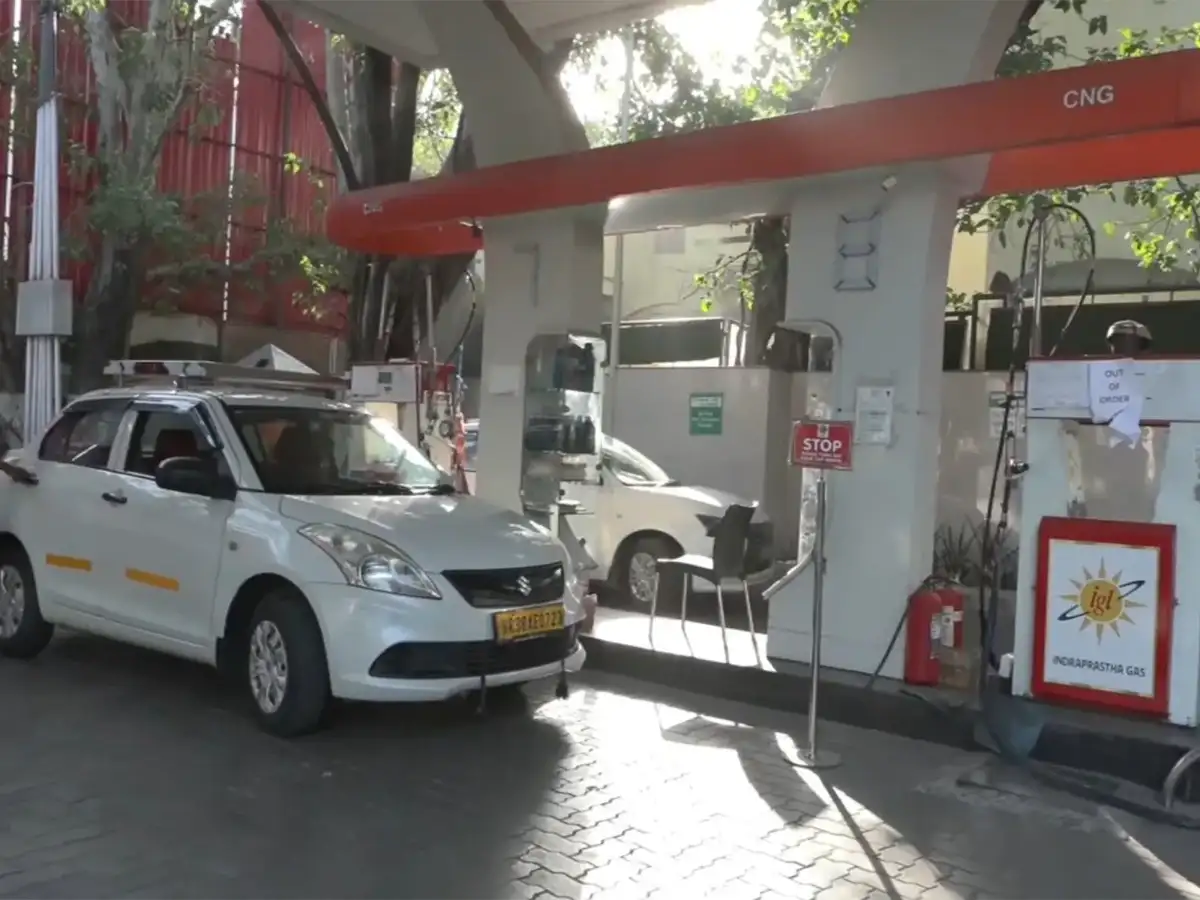
According to the study, electric mobility emerges as a preferred option for two-wheelers, three-wheelers and certain urban mobility applications. CNG, meanwhile, currently offers a stronger balance of economic, environmental and operational considerations for passenger cars, taxis, buses and light commercial vehicles.

The report also outlined a differentiated transition pathway for heavy-duty transport. CNG is expected to remain relevant for regional freight movement, while LNG could gain importance in long-haul transport. Battery-electric trucks, meanwhile, are expected to remain suitable for select applications under the conditions assessed by the study.

TERI also highlighted an important dimension of India's energy transition: electrification can reduce direct dependence on imported crude oil, but it can simultaneously increase exposure to global supply chains for critical battery minerals.

Lithium, cobalt, nickel and graphite are among the key materials used in battery manufacturing, making supply-chain resilience an important consideration as India expands its EV ecosystem.

The study assessed petrol, diesel, CNG, electricity and LNG across six vehicle categories, examining technical, environmental, economic, social and geopolitical factors for the current period as well as projections for 2030, 2040 and 2050.

Its broader assessment is that there is no single fuel or powertrain that consistently performs best across every vehicle category and evaluation criterion, underscoring the need for a differentiated approach to India's energy transition. (ANI)

Sign up to read this article
Read news from 100's of titles, curated specifically for you.
Already a member? Sign in here
Related Stories
Top stories on inkl right now
One subscription that gives you access to news from hundreds of sites
Already a member? Sign in here
Our Picks
Fourteen days free
Download the app
One app. One membership.
100+ trusted global sources.