Fires, floods, murders, a missing child and a massacre – 2025 in Australia brought some of the very worst news.
Threaded through the year were themes that persisted from 2024 and will carry on into 2026 – the cost of living, interest rates, immigration debates, the housing crisis, global instability, AI and Aukus.

And, of course, the effects of the climate crisis, the battle against it, and the battle against the battle against it.
But the year also brought twisty tales, uniquely Australian moments and events that will change the nation for ever.
January
A range of charges were brought under the Australian federal police’s special operation Avalite, targeting antisemitic behaviour. More followed under Avalite and other operations – but the outcomes were complicated.
Police suspected “criminals for hire” could be involved, working for cash, not ideology. A caravan found with old explosives inside turned out to be a “fake terrorism plot” by organised criminals, according to police.
Later that month, 14 members of the Saints, a Toowoomba-based religious sect, were found guilty of manslaughter over the 2022 death of Elizabeth Struhs. Struhs was eight when she died in 2022, after the group denied her insulin despite knowing she was a type 1 diabetic.
The group believed that “God heals”, so medicine should not be used.
February
Jo Haylen quit as New South Wales transport minister after she used her ministerial car for a 13-hour, 446km round-trip for a winery lunch. In a refrain that became even more familiar later in the year, she said she did not break the rules but that she had let the public down.
Sam Kerr was found not guilty of racially aggravated harassment of a police officer in London. The Matildas captain and Chelsea star striker had called him “fucking stupid and white”, after a saga inside a taxi.
International tensions rose after three Chinese warships were detected off Australia’s east coast. It happened not long after a Chinese fighter jet released flares in front of an Australian military plane. The ships were inside Australia’s exclusive economic zone, but not in Australia’s territorial waters. We will “watch every move”, the defence minister, Richard Marles, said.
Meanwhile, Tropical Cyclone Alfred was approaching.
March
By the time it hit the mainland, slow-moving Cyclone Alfred was downgraded to a tropical low but heavy rainfall and flooding still smashed south-east Queensland and northern NSW, leaving one man dead and hundreds of thousands of people without power, water and phones.
A mucky, mysterious brown foam that clumped along beaches in South Australia turned out to be one of Australia’s greatest environmental disasters. The algal bloom – which is still present, although it has reduced – killed thousands of fish and marine animals. Its toxins irritated human eyes, skin and respiratory systems. Scientists are still trying to work out exactly what caused it.
April
Two Australian stories captured global attention in April. A plucky, lucky dachshund named Valerie was found safe and well after more than 500 days on the run in the wilds of South Australia’s Kangaroo Island. Valerie went missing in 2023, but in early 2025 there were reported sightings of her, and on 25 April conservationists managed to trap her. Despite concerns over her wellbeing and speculation she would have been forced to survive on roadkill, she had put on weight.
The second story – the start of the mushroom trial – continues to captivate the world. Erin Patterson was accused of murdering her estranged husband’s parents and his aunt with beef wellingtons laced with death cap mushrooms. People were glued to each day of the trial, right up until the guilty verdict handed down on 7 July. Even now, podcasts and books are trawling through the details, while Patterson has filed an appeal.
And Monash IVF had to apologise after a Queensland patient unwittingly gave birth to a stranger’s child after having the wrong embryo transferred.
May
Labor won the May election by a stunning margin – the Liberals and Nationals briefly split in the immediate aftermath, and the Coalition is still dealing with the fallout. The opposition leader, Peter Dutton, was among those who lost their seats, and his replacement, Sussan Ley, is still overseeing the shaky alliance with the Nationals, with threatened and real defections.
June
Monash IVF admitted a second bungled embryo implant, this time in Victoria. A patient had her own embryo transferred, when it was meant to be that of her partner. The details of a review were kept secret.
July
In July, horrific allegations of sexual abuse in childcare centres started to emerge. Joshua Dale Brown was charged over the alleged abuse of eight children, aged between five months and two years. The troubles hadn’t started there, and they didn’t end there.
The inquest into the death of Kumanjayi Walker, a death that rocked the outback town of Yuendumu, found constable Zachary Rolfe was racist, and the coroner could not rule out that racism may have contributed to Walker’s death in 2019. Rolfe was found not guilty of murder and manslaughter in March 2022 but coroner Elisabeth Armitage said he “was racist, and he worked in and benefited from an organisation with the hallmarks of institutional racism”.
A story that seemed likely to have a terrible ending instead became an astonishing tale of survival, as German backpacker Caroline Wilga was found alive after 12 days missing in remote Western Australian bushland.
August
Tens, if not hundreds of thousands marched peacefully across Sydney’s Harbour Bridge to protest against Israel’s actions in Gaza. Critics highlighted a picture of the Iranian dictator Ayatollah Khomeini carried in the march, while the ABC reported a man carrying a terror-related flag was also there.
That was followed by the anti-immigration March for Australia in several cities, where speakers included neo-Nazis, and which ended with an attack on the Indigenous protest site Camp Sovereignty in Melbourne.
A heavily armed Desmond “Dezi” Freeman fled his home in the Victorian town of Porepunkah after allegedly shooting two police officers dead. Freeman was described as armed and dangerous, as having sovereign citizen beliefs, and as likely being prepared to hide out in inhospitable terrain. He still has not been found.
The death of the film critic David Stratton, 85, was greeted with sadness but also fond memories of his role in Australian popular culture over many decades.
September
On Saturday 27 September, four-year-old Gus Lamont went missing from his outback South Australian home. Despite one of the largest police searches in the state’s history, he remains missing. The police say the case remains open, and pledge to leave “no stone unturned”.
Two people died after a triple-zero network failure. The communications minister, Anika Wells, and her office are still facing questions about how it happened, while simultaneously dealing with the expenses scandal that began when her trip to New York to promote the under-16 social media ban was delayed as a result of the triple-zero crisis.
With the social media ban not due until December, Australian children were subjected to gruesome vision on multiple platforms when the rightwing influencer and Trump ally Charlie Kirk was shot dead on 11 September. The eSafety commission asked the platforms to remove the footage and it was effectively banned by being refused classification, but X later successfully challenged the refusal in court.
Australia joined a host of other countries to formally recognise Palestine.
October
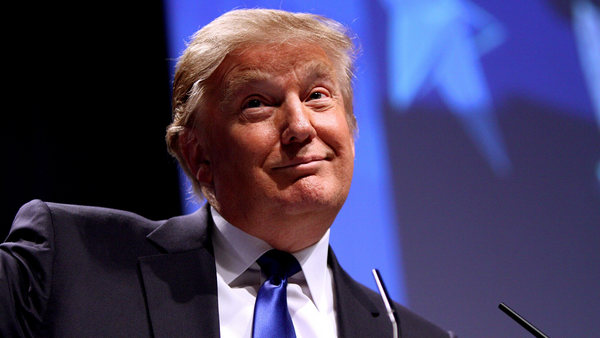
On 20 October Albanese had a long-awaited and occasionally hotly debated meeting with Donald Trump. The prime minister was chuffed at the outcome, despite a slightly awkward moment for Australia’s ambassador, the former PM Kevin Rudd.
Weirdly, the loudest criticisms came when Albanese arrived back home wearing a Joy Division T-shirt. It took Sussan Ley five days after the fact to launch her failed attempt to tear the PM apart over the matter.
November
Somehow, after all the uproar over antisemitic acts during the year, neo-Nazis were allowed to gather outside the NSW parliament, clutching a banner reading “Abolish the Jewish lobby” and chanting a Hitler Youth Slogan.
After the National party dumped its commitment to net zero emissions by 2050, the Liberals followed suit, despite that position being described by its own former MPs as a “nail in the coffin” for the party’s hopes of regaining the urban seats it will need if it hopes to form government again.
The Coalition faced another challenge to its environmental credentials weeks later when Labor and the Greens teamed up to pass long-awaited new nature laws – the Environment Protection and Biodiversity Conservation Act.
Two less confrontational events bookended the month: Helen Garner added international recognition to her local status when her diaries won the Baillie Gifford prize for nonfiction; and Anthony Albanese married his partner Jodie Haydon in Canberra, the first prime minister to celebrate a wedding while in office.
December
The Aukus deal is “full steam ahead”, Trump said, as the US handed down a review of the alliance meant to deliver nuclear-powered submarines to Australia. But not everyone was convinced the boats will come.
The world was watching as Australia enacted the first-of-a-kind social media ban, making the tech companies boot under-16s off their platforms. Even the government admits it’s not perfect, but plenty of grownups seem to love the idea (meanwhile the relevant minister, Anika Wells, was firmly in the headlines over her use of parliamentary expenses).
There was stark and distressing news on Indigenous deaths in custody. More people died in 2024-2025 than in any year since 1980, despite known dangers and vulnerabilities.
And the year ended with the terrifying, devastating terror attack on Sydney’s Jewish community as people celebrated the first day of Hanukah next to Bondi beach. Two men allegedly killed 15 and injured dozens in the massacre, the worst since Port Arthur in 1996.
As the nation mourned, recriminations began over the government’s response to antisemitism and the adequacy of gun laws, but the heroic acts of those caught up in the violence, including some who lost their lives, provided slivers of comfort in a dark time.