Get all your news in one place.
100's of premium titles.
One app.
Start reading
Digital Camera World
Sebastian Oakley

Telephoto lenses are making you a lazy photographer. The uncomfortable truth is that they kill your creativity

Sebastian Oakley gear.

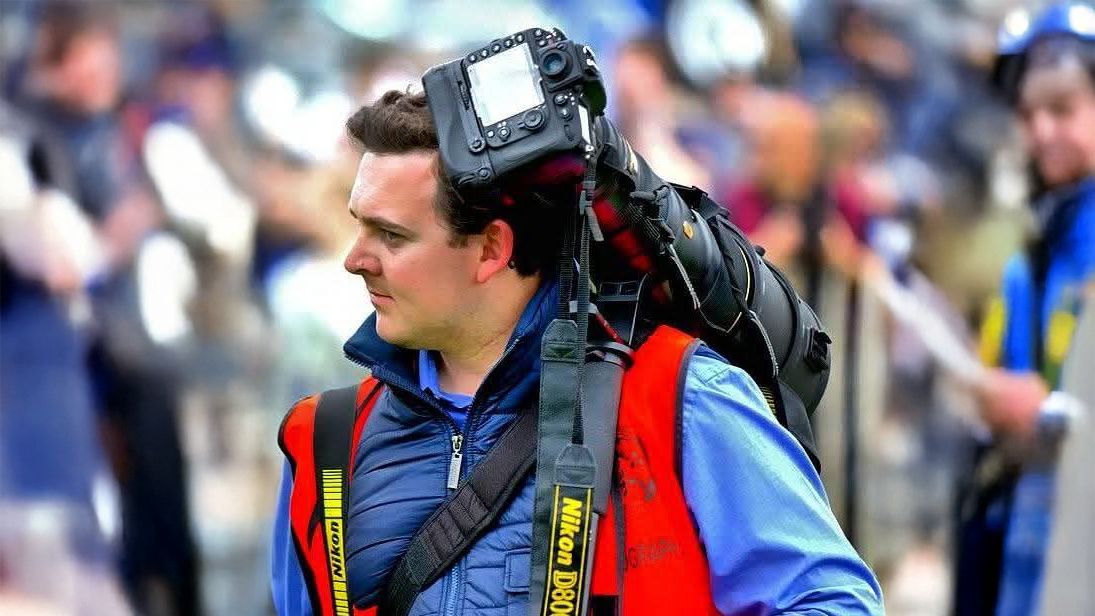
Telephoto lenses make you a lazy photographer. There, I said it. That might sound like a strange admission from someone who spent years working as a professional sports photographer, particularly when I was fortunate enough to use some of the finest long lenses ever made. At different points in my career, I had access to a 600mm f/4 lens and a 200mm f/2, and both were absolutely fantastic lenses in their own right.

They were fast, sharp, beautifully made, and capable of producing images with a level of clarity and subject separation that cheaper lenses could only dream of matching. When you are standing beside a sports field and need to deliver a certain photograph, there are few better tools for the job.

However, what those lenses offered in optical quality, I sometimes felt they took away from my imagination.

(Image credit: Future / Sebastian Oakley)

A 600mm lens could bring almost any part of the action straight to me. During a show jumping competition, I could stand in one position and photograph as many as six different fences around the course. That sounds fantastic, and in many ways it was. If I needed a strong image of a particular rider, having six opportunities to capture the perfect moment dramatically increased my chances of delivering the shot.

For a working sports photographer, that reliability matters. Clients are not always interested in how hard you worked to get an image. They simply want the photograph. A long telephoto lens gives you reach, consistency, and the ability to cover more of the action without constantly changing position. The problem is that it can become too easy.

Once I knew I could photograph most of the course from one place, there was less incentive to move. I did not need to walk to the far side of the arena, crouch beside a fence, search for a cleaner background, or think about how the light might change from another angle. The lens solved the problem of distance, but in doing so, it sometimes removed the challenge that forced me to be creative.

Earlier in my career, when I was working with a 70-200mm f/2.8 or even a simple 50mm f/1.8, I had no choice but to move. I had to anticipate where the action would happen, decide which fence might produce the most dramatic image, and physically put myself in the best possible position. Those limitations made me work harder, but they also made me see more.

(Image credit: Future / Sebastian Oakley)

With a shorter lens, I would look for ways to include the atmosphere around the action. I might photograph a rider approaching through the crowd, frame a horse against the architecture of the venue, or use foreground elements to give the photograph greater depth. I was not simply trying to fill the frame with the subject. I was thinking about the entire scene.

That is where telephoto lenses can make us lazy. They encourage us to believe that getting closer is the same as making a better photograph. It is not. A tightly framed image of a rider clearing a fence can be technically perfect, but technical perfection does not automatically make it interesting. If every photographer is standing in the same position with a similar long lens, everyone is likely to come away with a variation of the same photograph.

The images that stand out are often the ones created by photographers who were willing to move, experiment, and occasionally risk missing the safe shot in pursuit of something better.

This is not an argument against telephoto lenses. I loved using the 600mm f/4, and the 200mm f/2 remains one of the most extraordinary lenses I have ever worked with. Both were professional tools that helped me deliver photographs under pressure, and there were plenty of situations where nothing else would have done the job as effectively. However, I also think photographers need to recognize when a tool begins to dictate the way they work.

(Image credit: Future / Sebastian Oakley)

A long lens can quickly become a comfort zone. You find a suitable position, attach the biggest lens in your bag, and wait for the action to arrive. The photographs might be sharp, correctly exposed, and commercially usable, but the process can become repetitive. You stop exploring because the lens allows you to remain exactly where you are.

Photography should involve more than pointing expensive glass at a distant subject.

Sometimes the best thing you can do is leave the telephoto lens behind. Take a 50mm lens, move closer, and accept that you might miss a few photographs. Force yourself to think about backgrounds, light, composition, and timing rather than relying on reach to solve every problem.

You may not come away with six safe opportunities at the same image, but you might come away with one photograph that nobody else saw. Telephoto lenses are incredible tools, but they should not become substitutes for movement, curiosity, or imagination. The moment a lens makes photography feel too comfortable is probably the moment you need to take it off the camera.

Sign up to read this article
Read news from 100's of titles, curated specifically for you.
Already a member? Sign in here
Related Stories
Top stories on inkl right now
One subscription that gives you access to news from hundreds of sites
Already a member? Sign in here
Our Picks
Fourteen days free
Download the app
One app. One membership.
100+ trusted global sources.