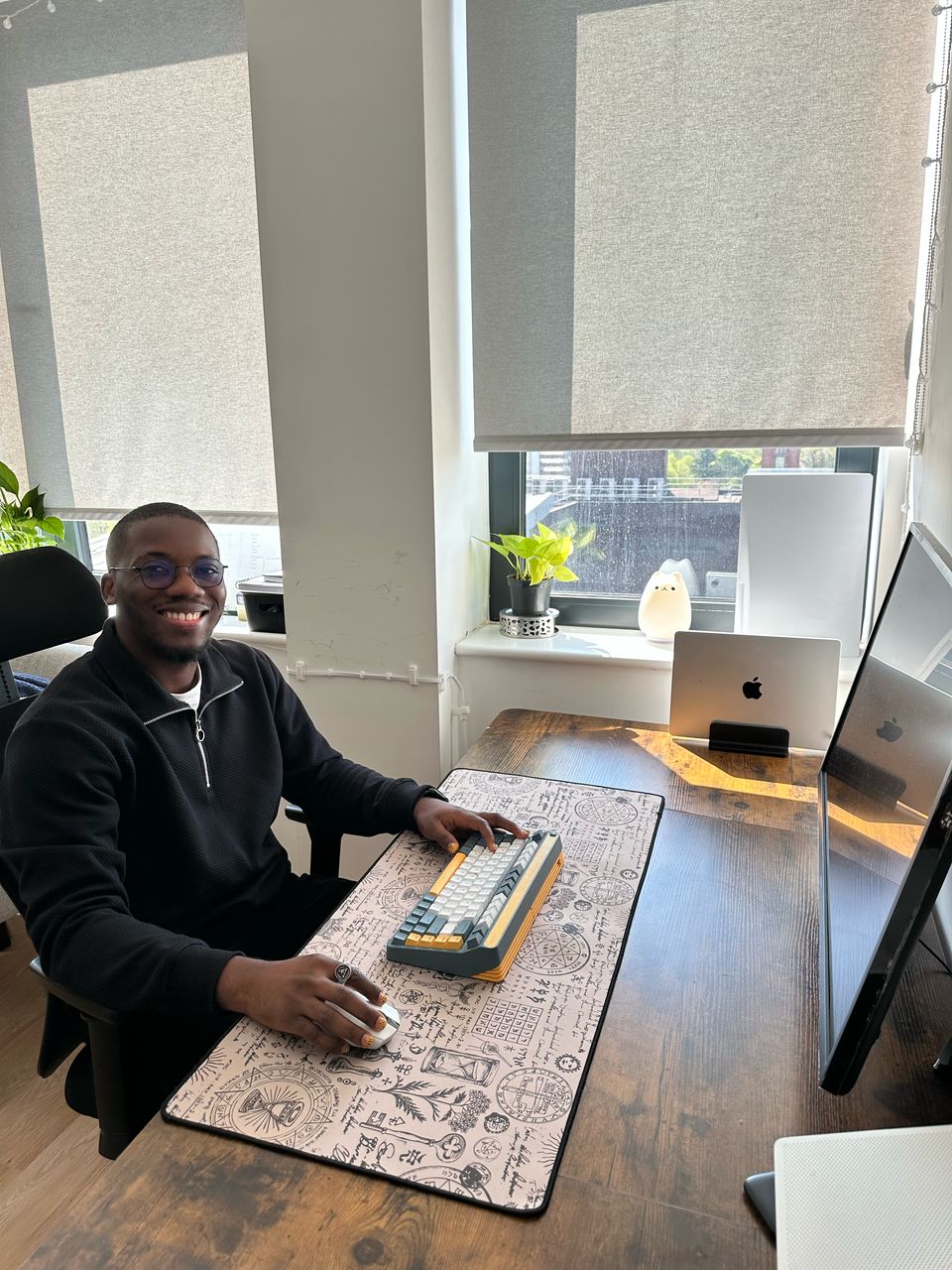
In a world where new tech, tools and frameworks seem to pop up every other week, knowing how to pick the right one for each project isn’t just about skill, it’s about intuition. Today, we’re chatting with Bolaji Olajide, a Multifaceted software engineer with over five years of experience building powerful software at companies like Sourcegraph and Pluralsight. Bolaji’s work recently earned him the Global Luminary Award in Technology and Design 2025, a recognition for pushing the boundaries of what’s possible in software development. We sat down with Bolaji to talk about how he decides what tools to use, how he builds systems that actually work, and how he keeps up in a world that never stops evolving.
Mr. Olajide, your experience includes languages such as Go, TypeScript, Python, and many frameworks. What is your fundamental philosophy when choosing a technology stack for a new project? Are there universal criteria, or does each case require a completely unique approach?
When I think about programming languages, my mind immediately jumps to something we all know about: Cooking. Think about it, every great dish needs the right blend of flavors. And the ultimate choice of flavors boils down to a bunch of other factors.
Imagine trying to cook a complex meal with four chefs who speak different languages, coordination would be a total nightmare and would prove extremely difficult. This is why in software, the team’s experience with certain tools along with its framework genuinely matter when trying to create a solution that’s not just efficient but also easy for everyone to maintain down the line.
The industry constantly offers new tools. How do you manage to stay at the forefront of technological progress and effectively master new frameworks and languages without losing focus on the fundamental principles of development?
I make it a priority to stay up to date with what’s happening in the tech space. I’m active in professional communities, I attend conferences and workshops. Plus, I love to play around with new tech on my own just so I’m aware of what’s trending and how the digital scene is evolving.
I also spend a lot of time on YouTube and Udemy, and I read technical blogs and articles from trusted voices in the industry. Hacker News and TechCrunch newsletterhelps me stay in the loop on the latest trends.
That said, I’ve learned that tools are secondary. What really matters are the fundamentals, the core principles behind building very reliable and scalable systems. Frameworks and trends will always change, but if you understand the basics deeply, you can adapt to anything and make the most of new innovations.
Your project “Annie,” which won at the Global Luminary Awards in Technology and Design 2025, addresses an interesting problem — fragmentation in the music streaming ecosystem. What technological challenges did you face, and what dictated your choice of tools to create such an elegant solution?
“Annie” is a project that means a lot to me because it started with a personal frustration, I just wanted an easy way to share music with friends, no matter what streaming platform they used.
The tricky part was making all those different platforms talk to each other. I had to integrate multiple APIs and handle links in a way that felt seamless to the user. Every decision I made came down to one goal: building something reliable, scalable, and easy to maintain.
Thanks to my background in Go, TypeScript, React, and Node.js, I was able to build a service that felt exactly what I’d imagined when I first had the idea.
The Global Luminary Awards particularly highlighted that “Annie” is not only a technically refined product but also a solution that puts user experience front and center, challenging closed ecosystems. In your view, what is the core value of “Annie” for the end user, and how did this human-centered focus influence the architectural and technological decisions during development?
The major benefit of “Annie” for users is the simplicity and freedom in sharing music, removing unnecessary barriers between platforms. My motivation for creating Annie was very personal. As a DJ, I often wanted to share tracks with friends but ran into incompatibility issues across platforms. Our human-centered approach served as the foundation for everything we built. From the start, we prioritized an intuitive interface and an architecture capable of seamlessly processing links from multiple platforms and “redirecting” them to the right destination.
To achieve this, we chose certain tools that offered both flexibility and reliability, with particular attention to integrating various streaming service APIs.
User feedback also played a key role. When users shared that copying and pasting links felt frustrating, we solved this by introducing a direct sharing feature from streaming platforms to Annie. This is just one example of how user experience directly informed our technical decisions.
Your win in the “Technological Innovations” category at the Global Luminary Awards highlights not only engineering excellence but also entrepreneurial vision. How has your experience as the founder of “Annie” and other projects like the technical publication “Backticks & Tildes” shaped your approach to choosing technologies that create genuine innovation?
Being a founder really means taking responsibility for everything, from the first spark of an idea to building it out, launching it, and constantly improving it over time. It’s not just about the tech side; it’s also about understanding people, what they need, and how it all fits into the bigger picture.
Working on Annie and Backticks & Tildes really taught me something important. Technology should always have a clear purpose, it’s not about using fancy tools just because they’re new or popular. Whenever I choose a technology, I think about how well it can grow with us, how easy it’ll be to maintain, and how quickly we can adapt when users give feedback.
For me, the real innovation happens when technology quietly solves a real problem. That’s what we set out to do with Annie, to make sharing music simple and effortless for everyone. At the heart of it all, everything I build starts from empathy. If you can understand what people truly need, you can create products that feel natural, accessible, and genuinely helpful.
Development is often done in cross-functional teams. How is the technology selection process carried out in such an environment, and how do you find a balance between technical excellence, design requirements, and product goals to create experiences like “Annie” that transform the user experience?
In my opinion, real success starts with effective collaboration. Before writing a single line of code, I like to slow down and really understand what we’re building, not just from a technical point of view, but from every angle. That means researching, asking questions, and understanding both the knowns and the unknowns of what we’re trying to build. Talking with designers, product managers, and other teammates help create a shared understanding of what we’re trying to achieve.
I remember working on an update to one of our user interfaces, I’d made a quick sketch that seemed perfectly fine to me. But after a brief discussion with the design team, we found a way to make it much better. That experience reminded me how powerful it is when different perspectives come together early in the process of building stuff.
Choosing technologies in that kind of environment is always about balance. It’s not just what’s technically possible, but what feels right for users and aligns with the product’s goals. In my opinion, the best tools are the ones that give us room to adapt and evolve, to listen and respond as people actually use what we’ve built. That’s exactly what happened with Annie: user feedback led us to introduce direct sharing from streaming platforms, a small change that made a huge difference in how people experienced the product.
In your work at Sourcegraph, you’re responsible for the development and maintenance of critical components like the RBAC system. How do you approach choosing technologies for such systems where reliability and security are top priorities?
When you’re building something as critical as a role-based access control system (RBAC), there’s no room for mistakes. Reliability and security have to come first, so I prefer proven, well-supported technologies over the latest trends. My process usually starts with understanding the full scope of what we’re trying to build, its risks, dependencies, and how each part connects to the larger system. Sometimes, that means tackling deeper issues before the main work begins.
I also believe communication is just as important as code. Keeping everyone involved throughout the process helps make sure they understand not only what decisions are being made, but why. And to tie it all together, testing isn’t something I compromise on. Because strong tests early on helps catch problems early and keep the system stable.
At the end of the day, building secure, dependable systems is about mindset as well as technology. You have to approach it with patience, curiosity, and respect for the responsibility that comes with handling something so central to a product’s integrity.
To conclude, how do you see the future of programming, and which technological trends do you believe will have the greatest impact on developers' tool choices in the coming years?
Artificial intelligence is already one of the biggest forces shaping our world, and its impact will only grow. I believe it will reshape how we live, create, and make decisions, helping people act with more clarity and purpose.
For developers, AI opens up exciting possibilities. We’re talking faster, smarter tools that speed up our creative process, but also challenging us to think deeply about ethics and responsibility. It’s not just about what we can build with AI, it’s about how thoughtfully we build with it.
AI is also changing how we learn. It’s making it easier for professionals to upskill faster, and design solutions that genuinely make life easier. Going forward, I think technology choices will increasingly depend on how well they work alongside AI, how they enable automation, intelligent insight, and ultimately, meaningful innovation that serves the people.