Driver: Coaxial 2-way 15cm cone, 1.9cm ring tweeter
Max power: 100W per channel
Max resolution support: 24-bit/192kHz
Dimensions (hwd): 31.3 x 20.1 x 27.6cm (primary) / 31.3 x 20.1 x 27.2cm (secondary)
Weight: 9.1kg (primary speaker) / 8.9 kg (secondary speaker)
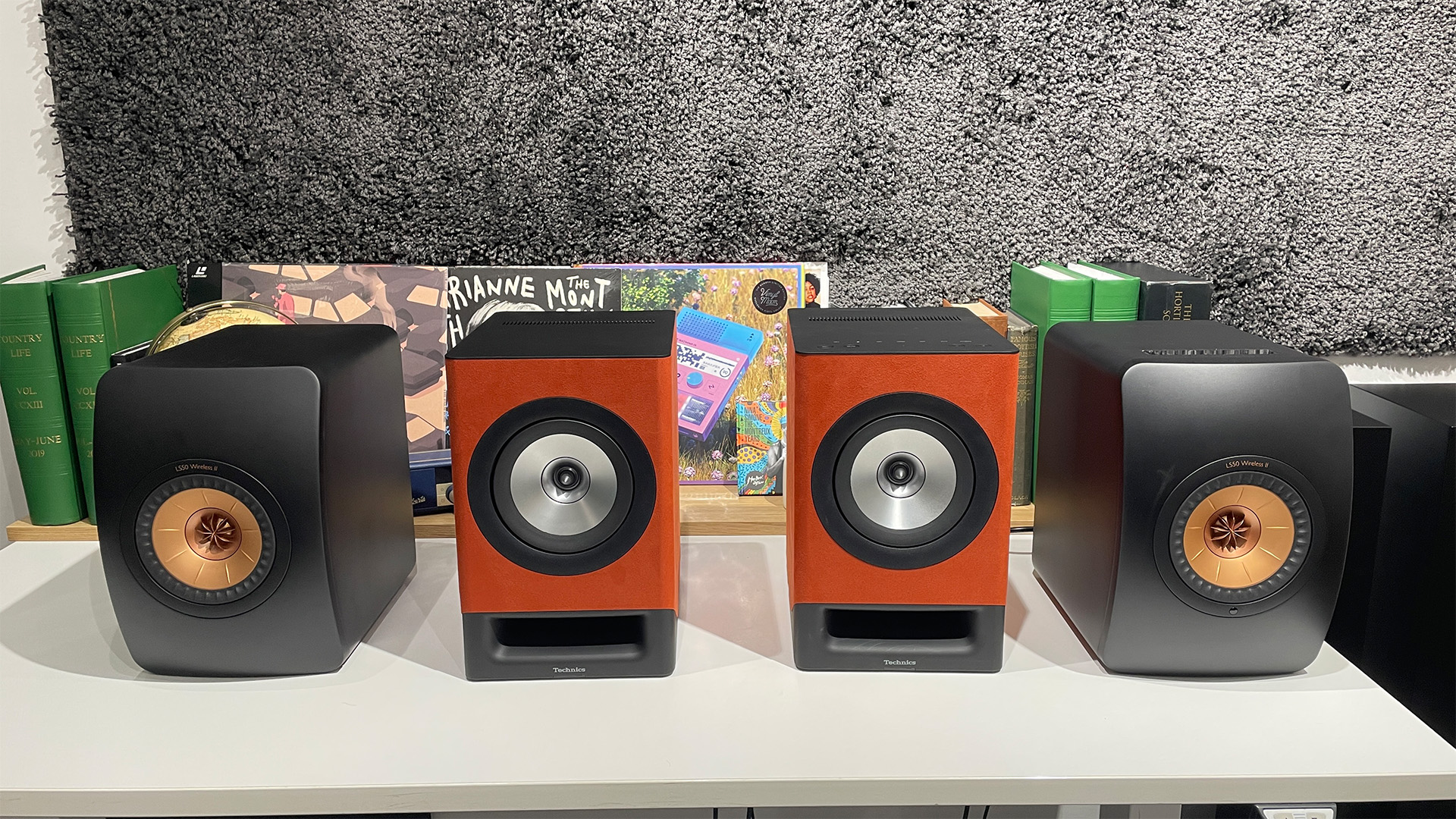
The Technics show plenty of promise, but come up short against the class leaders. They're not as well made, don't operate as seamlessly and don't sound as good. And they're more expensive to boot. If you prize bass above all else, they will serve you well, but otherwise the choice is clear.
For
- Seriously punchy, powerful bass
- Expansive stereo image
- Impressive sense of scale
- Good connectivity
Against
- Coarse upper-mid/lower treble
- Lack of dynamic contrast
- App feels laggy
Driver: Uni-Q driver array (25mm aluminium tweeter; 13cm aluminium mid/bass)
Max power: 380W per channel
Max resolution support: 24-bit/384kHz, DSD256, MQA
Dimensions (hwd): 30.5 x 20 x 31.1cm
Weight: 20.1kg
The KEF claim another scalp. Their app works better, they're slightly better equipped, and their build quality is a cut above. But it really comes down to the sound quality, which is first class – the Technics have more bass, but can't compete across the rest of the frequency range. The KEF are cheaper too.
For
- Big performance leap
- Clean, punchy sound
- All-encompassing connectivity
Against
- Best placed on dedicated stands
- Won't suit smaller rooms