Counter-Strike 2 shattered every viewership record in 2025. The BLAST.tv Austin Major 2025 became the most-watched Counter-Strike tournament of all time with 76.11 million Hours Watched, while the StarLadder Budapest Major 2025 followed with 71.31 million Hours Watched. Austin’s grand finals peaked at 1.79 million concurrent viewers, and Budapest reached 1.59 million, according to Esports Charts’ year-end report. For the first time, four Counter-Strike 2 teams cracked the global top 10 most-watched esports organizations—double the representation from 2024.

Vitality’s dominance and the new Counter-Strike elite
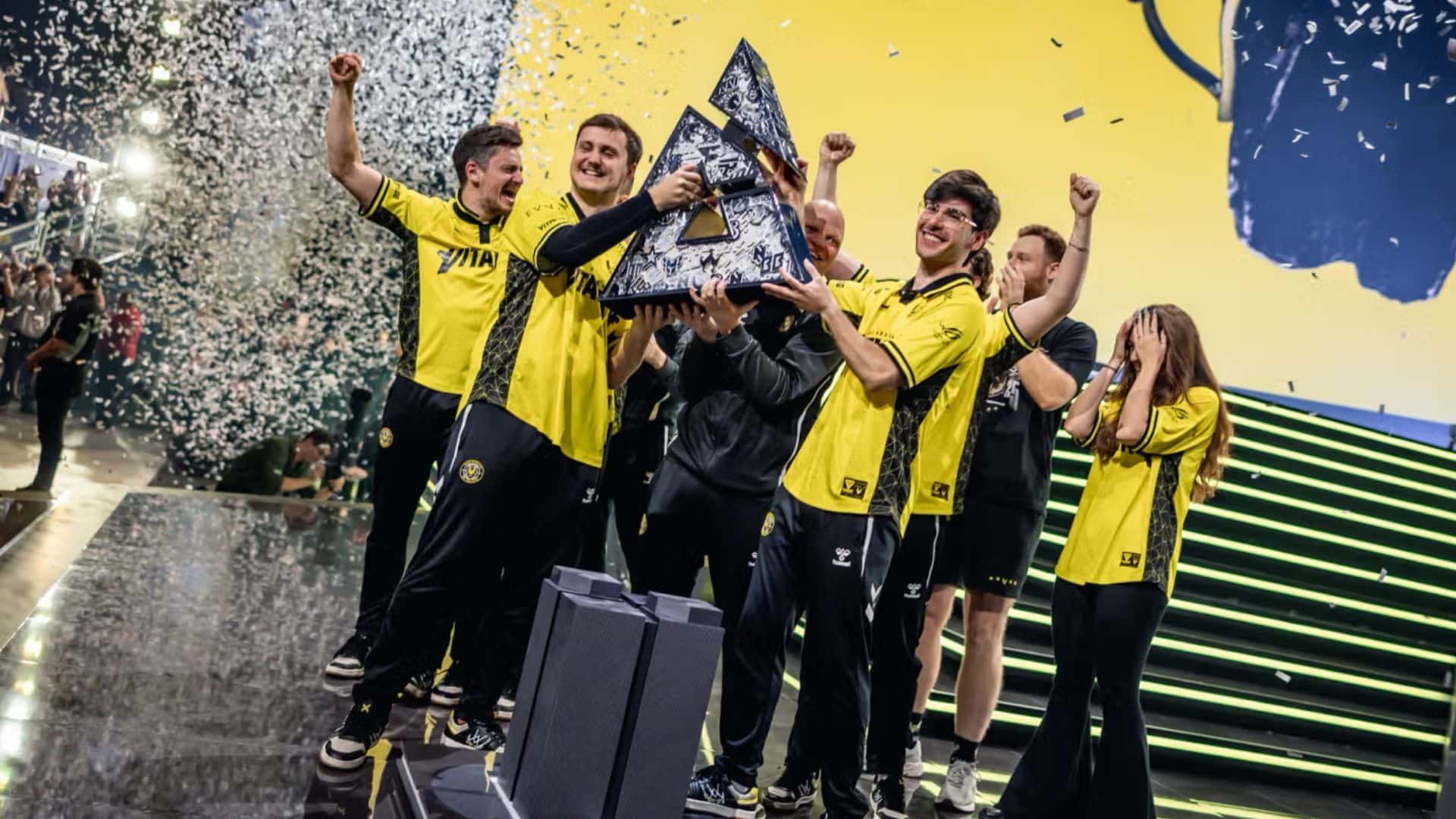
Team Vitality finished 2025 as the fifth most-watched esports team in the world with 90.3 million Hours Watched, the highest Counter-Strike showing in overall rankings since Natus Vincere’s 2021 peak. The French-led organization delivered back-to-back Major championships at Austin and Budapest, nine tier-S trophies, and headlined every major viewership milestone including the IEM Katowice grand finals (1.3 million peak viewers) and the Intel Grand Slam at IEM Melbourne (1.24 million peak viewers).

The ecosystem transformation extended well beyond Vitality. In 2024, only two Counter-Strike teams appeared in the global top 10: Natus Vincere at seventh with 64.8 million Hours Watched and G2 Esports at tenth with 60.1 million. By 2025, four Counter-Strike 2 teams secured top-10 positions. Team Spirit finished eighth with 79.2 million Hours Watched despite roster instability.
MOUZ claimed ninth with 69.9 million Hours Watched, and Team Falcons rounded out the list at tenth with 68.7 million Hours Watched, as their high-profile superteam featuring Nikola “NiKo” Kovač and Ilya “m0NESY” Osipov generated massive interest despite limited silverware. Combined, the top four Counter-Strike teams accumulated 308 million Hours Watched.

How Valve’s Regional Standings reshaped Counter-Strike
Valve introduced sweeping changes to the tournament ecosystem through the Valve Regional Standings system, which replaced the traditional RMR and Major legend status qualification path. Like the ATP in tennis, the VRS established performance-based rankings, eliminating the ability for teams to get invites to events based on partnerships or past glory. Majors also expanded to 32 teams with direct qualification through the VRS.
Related—The new 32-team CS2 Major format, explained
With the best teams guaranteed attendance at major tournaments based on their rankings, fans could follow clear storylines throughout the year—rivalries developed naturally as top squads faced each other repeatedly at the biggest events. This predictability made it easier for casual viewers to understand the competitive landscape and follow the teams’ journeys, while tournament organizers gained confidence knowing elite matchups would consistently deliver high viewership.
The results speak for themselves. When compared to 2021, previously Counter-Strike’s most successful year, the transformation becomes even more impressive. PGL Major Stockholm 2021 held the viewership record for nearly four years, achieved during a perfect storm: the return of LAN Counter-Strike after 18-plus months of COVID-19 cancellations, pent-up audience demand, and Natus Vincere’s emotional underdog narrative. Yet 2025 exceeded those records without pandemic novelty or artificial scarcity, proving the new Counter-Strike model could generate sustainable success through systematic competitive excellence.

Why Hours Watched became the industry’s most important metric
The esports industry has shifted to prioritizing Hours Watched over Peak Viewers. Peak viewership represents a fleeting snapshot that might last 30 minutes during a grand finals. Hours Watched captures cumulative engagement throughout an entire tournament, representing actual time viewers spend with sponsor logos on screen. For brands calculating return on investment, this provides far more actionable data.
In 2025, Austin Major’s 76.11 million Hours Watched translates to sustained brand exposure across multiple days. If the average viewer watched five hours, that represents more than 15 million engaged individuals—far more valuable than a single 1.79 million concurrent viewer peak. StarLadder Budapest Major followed Austin’s success with 71.31 million Hours Watched, proving the system could deliver sustained viewership across multiple flagship events.
| Tournament | Hours Watched |
|---|---|
| BLAST.tv Austin Major 2025 | 76.11M |
| StarLadder Budapest Major 2025 | 71.31M |
| IEM Cologne 2025 | 35.23M |
| IEM Katowice 2025 | 30.67M |
| ESL Pro League Season 21 | 28.12M |
Those incredible peaks in Hours Watched, and the overall upward trends across events, set the stage for continued growth for Counter-Strike viewership in an era where most esports are struggling to even maintain their numbers.

The Valve Regional Standings system transformed Counter-Strike from an esport with two globally elite teams to one with four in a single year. Vitality’s dominance provided the marquee storyline, but the ecosystem’s depth created the foundation for record-breaking engagement. By beating the seemingly unbeatable 2021 records through systematic competitive excellence, Counter-Strike 2 proved it has built a sustainable model for the future. As the scene looks ahead to 2026, the question is no longer whether Counter-Strike can maintain these heights—it’s whether any other first-person shooter can catch up.