Get all your news in one place.
100's of premium titles.
One app.
Start reading
Golf Monthly
Golf Monthly
Sport
Joe Ferguson

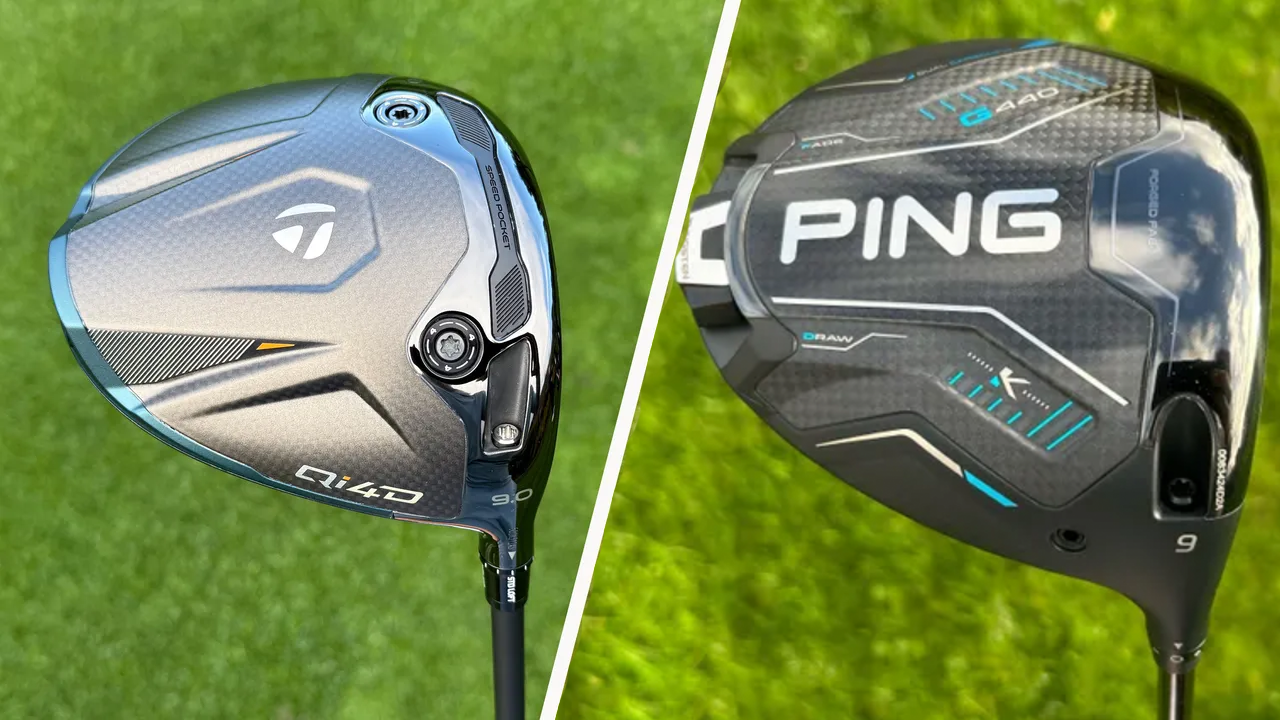
TaylorMade Qi4D vs Ping G440 K Driver: Read Our Head-To-Head Verdict

Ping G440 K vs TaylorMade Qi4D.

I have tested all of the new big sticks to hit the market so far in 2026 and two of the best are the TaylorMade Qi4D, and the Ping G440 K.

TaylorMade and Ping are always in the conversation for the best golf drivers and this year is no exception. Despite being aimed at the more skilled player, both of these drivers will actually suit quite a broad range of golfers. They aren't ideal for those with slower swings, but anyone in the moderate-fast bracket who is looking to upgrade their driver this year should give strong consideration to these two offerings.

Without giving too much away, these drivers are both exceptional but they have a different focus - one prioritizes speed, the other is all about stability. Which one is best for you? Read on and hopefully your decision will be made easier.

Technology

The Qi4D is built with one clear objective in mind: maximising speed off the tee. According to TaylorMade, this latest driver family, which also includes the Qi4D Max and Qi4D LS, is more than just a visual update. It represents a meaningful step forward in terms of aerodynamics, feel, and overall performance.

At the heart of the design is what TaylorMade calls four dimensions of speed, spanning the face, head, shaft, and fitting options. Starting with the clubface, the Qi4D uses a 60-layer carbon fibre construction, paired with a revised roll radius that’s designed to deliver more consistent spin, particularly on strikes high or low on the face.

The standout advancement, though, comes from TaylorMade’s continued push for greater speed. Considerable effort has gone into refining the head shape to improve aerodynamic efficiency, helping the club move faster through the air and ultimately generate more ball speed across the entire range.

(Image credit: Future)

Interestingly, the new Qi4D drivers are offered in two face options: a standard version and a custom-fitting variant with reflective markers embedded directly into the face. Known as Launch Monitor Enabled (LME) heads, these markers allow for more precise measurement of face angle, rate of rotation, and other key data points when paired with camera-based systems like the Foresight Sports GCQuad, eliminating the need to repeatedly apply impact stickers.

This development feeds into a broader fitting strategy from TaylorMade, particularly around shaft selection. Drawing on data from more than 11 million driver shots, the company says it can now classify golfers based on their release pattern and rate of face rotation through impact, grouping them into High, Mid, and Low rotation profiles. To support this approach, TaylorMade has teamed up with Mitsubishi Chemical to produce a tailored range of shafts under the revived REAX name, each designed to suit a specific release style.

(Image credit: Future)

From a technology standpoint, the G440 K has been engineered with maximum speed and forgiveness in mind. A key addition is a new 32-gram adjustable back weight, designed to help deliver what Ping is calling its straightest and highest-MOI adjustable driver to date.

This back weight is 4g heavier than the fixed version found in the G430 Max 10K (previously Ping’s most stable driver) with the intention of pushing more mass to the perimeter of the head to boost stability and forgiveness.

That adjustable weight sits at the centre of the G440 K’s technology story, supported by features like Dual Carbonfly Wrap and Free-Hosel Technology. Together, these innovations free up discretionary weight from key areas, including the sole (3.5g), crown (1.5g) and hosel (3g), allowing the center of gravity to be positioned lower and deeper. The result is a combination of higher MOI and increased ball speed.

Another notable addition is the use of a composite crown bridge and acoustic sole ‘ribs.’ These elements are designed to refine the sound and feel at impact, creating a more muted, solid sensation by reducing unwanted vibrations.

Surpassing the stability of the G430 Max 10K is no small challenge, but that’s clearly the benchmark Ping set out to exceed with the G440 K.

Which one comes out on top in this category? Tough call, but the TaylorMade driver does deliver on it's promise of increased clubhead speed and it's the fastest model I've tested, so it's a very narrow win for the Qi4D.

Looks

Visually, the Qi4D moves on from the Qi35 driver in two main ways: its colorway and the shaping of the head at address. From a purely aesthetic standpoint, I probably leaned slightly toward last year’s Qi35. The Qi4D opts for a more understated palette, and while I might still give a marginal nod to the previous model’s look, that preference quickly disappears once the club is set behind the ball. The shaping of this new Core model is a clear step forward.

One of the worst-kept secrets in recent seasons was that players like Scottie Scheffler and Rory McIlroy were using a tour-only 'dot' version of the older Qi10 Core head. That more compact, traditional profile was evidently preferred by those who prioritise a cleaner, more refined look at address.

The big takeaway here is that TaylorMade seems to have almost perfectly replicated that tour-only ‘dot’ shape in the new Qi4D Core. When I compared a Qi35 dot head side by side with the Qi4D during my fitting, the profiles were nearly indistinguishable. That’s a major plus, offering a playing shape that should appeal to a wide spectrum of golfers.

(Image credit: Future)

Picking up the G440 K for the first time, I was pleased to find that its overall footprint and look at address are every bit as strong as the original G430 Max 10K. The 460cc head retains that same rounded, substantial shape, which really boosts confidence over the ball. There’s something about these fuller, rounder heads introduced since the ‘10K MOI revolution’ that appeals to my eye more than the traditional pear-shaped designs.

That said, as I noted in my other G440 driver reviews, the blue colorway isn’t quite to my personal taste. It’s a small and entirely subjective detail, though, and one that many golfers will likely appreciate, especially since it’s subtle and used sparingly.

A narrow win for the TaylorMade here due to the compact, clean look at address which really suits my eye.

(Image credit: Future)

Feel

Ping's engineers have worked hard to lower the pitch of their recent driver releases. The G425 had a higher-pitched impact sound but that changed with the G430, as key sections of the clubhead were reinforced to aid the acoustics on strikes. That said, the G430 Max 10K struck a louder, higher pitched sound than the rest of the G430 family, whereas the G440 K offers a friendlier feel and acoustic than its predecessor.

In fact, the feel of the G440 K driver is up there with the very best golf drivers on the market. It has a very powerful feel and an easy-to-hit sensation on the course.

While the headline story with the Qi4D is its speed gains, the standout for me was actually the feel. My one real criticism of the previous Qi35, which I otherwise rated very highly, was that it could come across a touch harsh, especially on off-centre strikes.

I’m not entirely sure what specific change has driven the improvement in the Qi4D, whether it’s one key tweak or the combined effect of the updated materials and shaping, but it’s immediately noticeable. The feel is spot on, striking that difficult balance between being lively and responsive while still remaining soft at impact. That’s no small achievement. The acoustics are just as well judged, sitting neatly between overly high-pitched and ‘clangy’ or too dull and muted.

Put simply, it feels superb, and that alone does a lot to enhance the overall experience. These two drivers offer distinctly different sound and feel profiles, both of which stand out in their own way, but my personal preference leans toward the more muted ‘thud’ from TaylorMade, which I absolutely love.

(Image credit: Future)

Performance

Of course, it’s essential that a driver’s technology, looks, and feel all come together, but performance is what really matters and both of these models delivered in testing, both on the launch monitor and out on the course.

At the media presentations for the TaylorMade Qi4D, aerodynamics was the central theme, captured by the idea that there’s “no limit on clubhead speed.” While regulations place caps on factors like ball speed (COR) and forgiveness (MOI), a player’s ability to swing faster remains unrestricted and that’s clearly where TaylorMade has focused its efforts.

Significant work has gone into refining the head shapes across the Qi4D range to improve aerodynamic efficiency, and encouragingly, that focus translated directly into real-world gains in my testing. I saw an increase of around 1.5mph in clubhead speed compared to any other driver I’ve tested this season, which genuinely caught me off guard. Having also reviewed raw data from players like Scottie Scheffler and Rory McIlroy, it’s clear this isn’t just an isolated result.

While the head itself isn’t necessarily ‘hotter’ than competing models, the ability to swing it faster translated into a 2-3mph increase in ball speed for me, along with an extra 5-8 yards of carry. That’s a meaningful, on-course gain that players should genuinely notice.

(Image credit: Future)

I tested the G440 K both indoors and out and the numbers were very much in line with its predecessor in terms of spin, ball speed, and carry distance. That said, there are a couple of subtle performance gains worth highlighting.

The addition of the adjustable back weight introduces a new level of tunability. It allows you to shift the center of gravity between neutral, draw and fade settings, which Ping says can help fine-tune shot shape. In my testing, I didn’t notice a dramatic change in ball flight bias when moving the weight, but I did find real value in positioning it behind my typical miss. Placing it in the heel, where I tend to strike it, noticeably improved ball speed retention. This is something I’d strongly recommend experimenting with if your strike pattern is consistent.

Another interesting change is the increase in standard build length. Ping has added a quarter of an inch, taking it up to 46 inches. Normally, I’d advise caution here as longer shafts can lead to less consistent strikes, but Ping has offset this by slightly reducing the head weight from 206g to 203g, keeping swing weight unchanged. Given how stable and forgiving this head is, the extra length didn’t feel like a drawback. If anything, it’s an easy way to pick up a little extra clubhead speed.

Crucially, and perhaps most impressively, this driver more than many other ultra-high MOI options can comfortably handle higher swing speeds. It offers plenty of forgiveness on off-center hits without producing the excessive spin that often plagues drivers in this category.

Too often, faster players are forced into very low lofts just to keep spin under control when opting for a more forgiving head. Here, though, Ping has managed to strike a smart balance, maintaining playable spin levels while still delivering the stability benefits. It’s a combination that opens the G440 K up to a much broader range of golfers.

So in terms of performance, the Qi4D has significant edge in speed and distance, but if forgiveness is your priority the G440 K offers that in abundance.

(Image credit: Future)

Conclusion

These are the two outstanding drivers and it's difficult to separate them. For me personally the Qi4D just shades it as the speed gains translate to real world distance increases while still offering high levels of forgiveness on strikes that aren't quite flushed. If you value forgiveness and stability more than extra yards though, the G440 K is as good as anything on the market.

Which one is best for you? The only way to find that out is to get fitted and hit plenty of different types of shots with both. You may find that the Qi4D gives you added distance, but the G440 K finds more fairways and cuts you a bit more slack when you miss the sweet spot. Then there’s the difference in feel and sound, which is a matter of personal preference, not to mention how it looks at address.

You won't be disappointed with either of these drivers but which one you choose comes down to personal preference.

Which club should you choose?

Choose the TaylorMade Qi4D driver if...

- You want strong performance at a slightly lower price.
- You’re chasing maximum clubhead speed.
- You like a touch more fade bias.

Choose the Ping G440 K driver if....

- You prioritise maximum forgiveness and stability.
- You want more adjustability to fine-tune your strike.
- You need a forgiving driver that still manages spin well at higher speeds.

For more driver buying advice, be sure to have a read of our guides on the most forgiving drivers, best drivers for seniors, or the best high handicap drivers.

Sign up to read this article
Read news from 100's of titles, curated specifically for you.
Already a member? Sign in here
Related Stories
Top stories on inkl right now
One subscription that gives you access to news from hundreds of sites
Already a member? Sign in here
Our Picks
Fourteen days free
Download the app
One app. One membership.
100+ trusted global sources.








