Get all your news in one place.
100's of premium titles.
One app.
Start reading
Guitar World
Guitar World
Entertainment
Phil Weller

“Tariffs will not shift purchases to US-made beginner instruments. They will price beginners out of the market”: NAMM President John Mlynczak testifies about the impact of tariffs in Washington DC

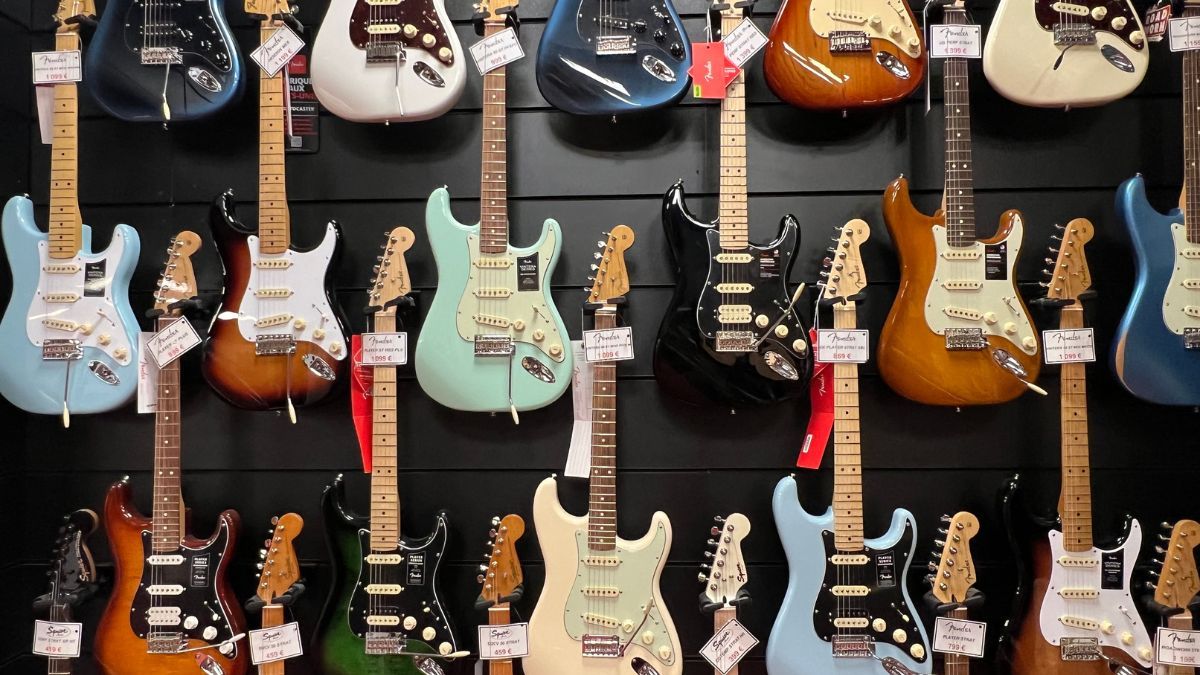
A guitar store wall displaying Fender guitars .

NAMM President John Mlynczak has delivered testimony in Washington, DC, regarding the impact of Donald Trump’s tariffs on the music industry.

Speaking before the Office of the United States Trade Representative (USTR) Section 301 Committee in the Capitol on May 8 on behalf of the NAMM and the 10,000 companies it represents, Mlynczak echoed sentiments he expressed last year.

He had said that the “unpredictability and suddenness” of the tariffs did not give firms “the time to plan, adapt or evolve,” leaving a lasting, negative impact on a multi-billion-dollar industry.

“Tariffs are tilting the playing field against American businesses and the millions of students who rely on affordable access to musical instruments,” Mlynczak said in his statement. “Our industry depends on a global supply chain built over generations.

“Policies that increase costs without expanding domestic capacity ultimately reduce participation in music education and weaken long-term U.S. competitiveness.”

Guitar, amplifier, and pedal manufacturers often buy at least some of their parts from overseas, meaning that even US-made products are being affected by the tariffs. That's seen Electro-Harmonix founder Mike Matthews question whether it could continue to turn a profit, and EarthQuaker Devices speak of fears of bankruptcy.

And as firms were left to debate whether to absorb the increased costs or pass them on to consumers, Morgan Amps said the tariffs would add an extra $1,000 to the cost of its amp heads.

(Image credit: Fender)

As such, Mlynczak has emphasized that the US music products industry accounts for $9 billion of the $19.5 billion global market. Global supply chains for musical instruments, he adds, rely on specialized materials and craftsmanship that cannot be replicated domestically, which ultimately gives foreign competitors pricing advantages.

Entry-level instruments are said to be “disproportionately affected” with imports of wind instruments down 27% and pianos down 20% in 2025, with Mlynczak also underscoring that reduced access to beginner instruments “threatens the pipeline that sustains US-made professional instruments and the broader music ecosystem.”

“With 44% of all global musical products sold in the US, there is not enough domestic capacity to meet the demand,” he details. “Many companies that manufacture professional instruments in the US also rely on overseas production to meet the demand of entry- and mid-level students and musicians, creating American brand and retailer loyalty from the first touch.

(Image credit: Matt Lincoln/Future)

“Tariffs will not shift purchases to US-made beginner instruments. Instead, they will price beginners out of the market, which will hurt the American students, retailers, and manufacturers that depend on today’s students becoming tomorrow's customers.”

NAMM is one of 151 associations and companies making the trip to Washington to deliver in-person testimony, with the United Auto Workers Association among them.

As announced on March 17, the Administration has indicated this investigation could lead to the restoration of tariff levels previously imposed under the International Emergency Economic Powers Act (IEEPA).

Sign up to read this article
Read news from 100's of titles, curated specifically for you.
Already a member? Sign in here
Related Stories
Top stories on inkl right now
Our Picks
Fourteen days free
Download the app
One app. One membership.
100+ trusted global sources.