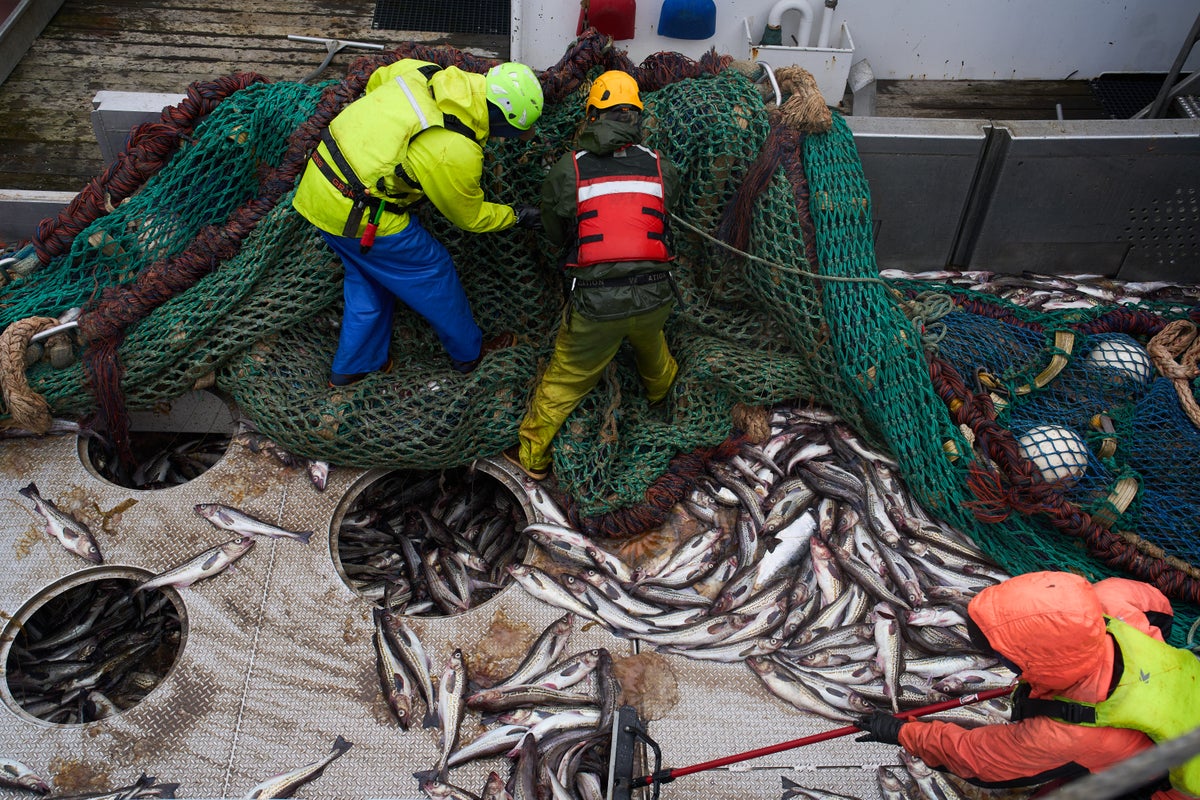
Alaska pollock is the second-largest fishery on Earth and supplies everything from McDonald’s Filet-O-Fish sandwiches to fish sticks and imitation crab. The fishery uses methods that it — and McDonald’s — say are aimed at minimizing environmental impacts, but the nets that catch pollock catch other marine life, too.
That bycatch — the marine life caught unintentionally while fishers target something else — has become especially contentious as salmon runs across western Alaska have collapsed, leading to a seven-year ban on Chinook fishing along the Yukon River, where dozens of Alaska Native communities have relied on salmon for generations.